
More than R2.66bn in investments bears fruit for Distell
The Springs factory has tripled its capacity to become a major cider-processing hub exporting to neighbouring markets and earning precious foreign exchange.
Capital investments of more than R2.66bn by Distell over the past six years have resulted in a growth of its South African production capacity to 1 449 million litres a year.
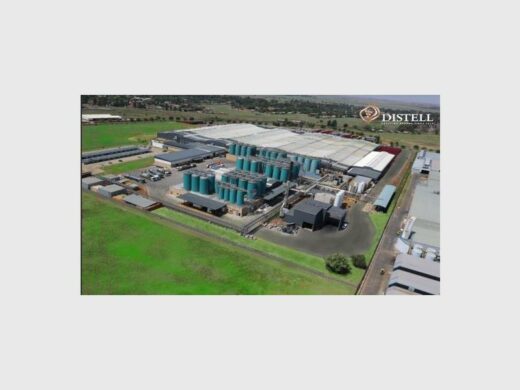
This while its Springs factory has tripled its capacity to become a major cider-processing hub exporting to neighbouring markets and earning precious foreign exchange.
The world’s second-largest cider maker and producer of popular brands have increased procurement spend with black-owned suppliers to R3.28bn (28%) and R1.76bn (15%) with black women-owned suppliers, creating opportunities for emerging entrepreneurs.
“Notwithstanding the extreme economic uncertainty of the past few years, Distell has continued strategic investments in supply network optimisation, procurement transformation and sustainability, which have significantly increased production capacity while empowering black suppliers and reducing our environmental footprint for long-term sustainable growth,” said Johan van Zyl, Distell supply chain director.
“As the Distell business grows, our supply chain grows with us, creating opportunity throughout the value chain and empowering communities around us,” said van Zyl.
Investments in environmental sustainability totalling R503m since 2016 have cut water usage by 23% and electricity by 21%.
Also read: Distell employees to be vaccinated against Covid-19
This includes the installation of solar generating capacity, biogas and CO2 recovery plants and a wastewater treatment plant at Springs, which have increased CO2 recovery by 49% and decreased the factory’s water use ratio (water used to make a litre of product) from 3.8 to 2.8, further reducing the effluent ratio from 2.35 to 1.5.
“Our goal is to achieve net-zero carbon emissions by 2040, reduce our water usage by 50% compared to the 2014 base year, use 50% renewable energy and reduce the effluent load by 70%,” said van Zyl.
With 502 permanent employees, the Springs factory is capable of producing more than 4.5 million hectolitres a year, including Savanna, Hunters, Bernini and Klipdrift and Cola. Key export markets from Springs are Botswana, Lesotho, Namibia and eSwatini.
Established in 1997, the Springs factory has expanded the number of production lines to eight over the past 14 years and doubled fermentation capacity over the past six years, while investing in skills development to grow a pipeline of world-class talent.
Follow us on our social media platforms: