SAMBRA urges drivers to inspect vehicles after even minor collisions
SAMBRA says even vehicles that appear roadworthy after an accident may have dangerous hidden structural damage.
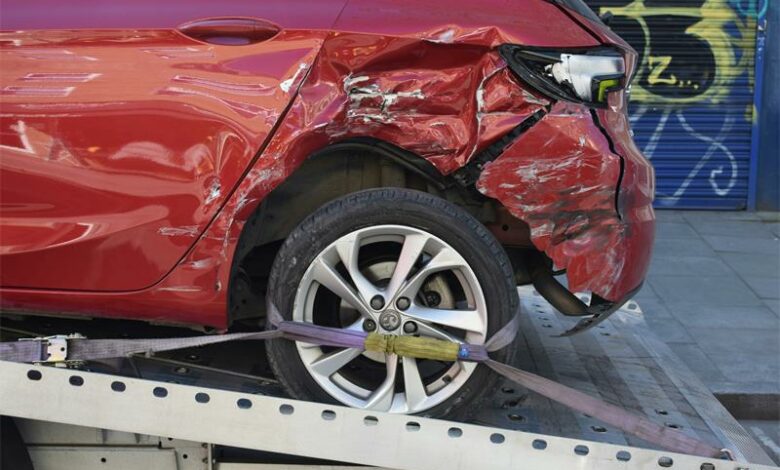
Many motorists assume that if their vehicle still drives after an accident, particularly a minor collision or “fender bender”, the damage is only cosmetic.
But according to the South African Motor Body Repairers’ Association (SAMBRA), the real danger often lies beneath the surface.
National Director of SAMBRA, a proud association of the Retail Motor Industry Organisation (RMI), Juan Hanekom, said that modern vehicles are engineered with highly sophisticated structural systems designed to absorb and disperse impact energy during a collision.
“Even what appears to be a relatively minor impact can compromise the structural integrity of the vehicle’s frame or chassis, which can significantly affect safety, handling and long-term performance,” said Hanekom.
SAMBRA explained that while the terms “frame” and “chassis” are often used interchangeably, they refer to different structural components. The chassis forms the main support structure of the vehicle and incorporates critical systems such as the drivetrain, suspension and wheels.
The frame, meanwhile, forms part of this structure and acts as the rigid skeleton supporting the body and key mechanical components.
“When a vehicle’s frame is bent, twisted or weakened in an accident, it can create a domino effect throughout the vehicle.”
“Drivers may notice uneven tyre wear, vibrations, pulling to one side, steering instability or unusual noises. In severe cases, the vehicle may no longer provide the level of occupant protection it was originally designed to deliver,” explained Hanekom.
Hanekom said the biggest risk is that structural damage is not always visible to the naked eye. This is why motorists should never delay having their vehicle professionally assessed after any significant impact.
“Proper frame diagnosis and repair is highly specialised work. Today’s reputable repair facilities use advanced measuring and diagnostic systems that combine laser technology and computerised scanning to determine whether the frame can safely be repaired or whether replacement is necessary.”
These precision systems allow technicians to measure even the slightest deviation from the manufacturer’s specifications. Once repairs are completed, the vehicle is re-measured to confirm that the frame has been restored to its original alignment and structural integrity.
The actual repair process also requires specialised equipment such as hydraulic frame straightening benches and computer-guided pulling systems capable of applying controlled force to exact points on the vehicle.
“Without the correct technology, expertise and repair procedures, there is a real risk that the vehicle may never be fully restored to safe operating condition.”
“This is why consumers should always choose a properly accredited and OEM-approved repairer wherever possible,” said Hanekom
Hanekom also cautions motorists against focusing only on visible bodywork damage when dealing with insurance claims and repairs.
“A vehicle may look perfectly repaired externally, but if the underlying structure has not been restored correctly, the safety of the vehicle remains compromised.
“A poorly repaired frame can also negatively impact resale value and lead to costly mechanical problems down the line.”
Hanekom advises motorists to do their homework before selecting a repair facility. In addition to checking online reviews and industry reputation, consumers should confirm that the workshop is properly licensed, uses approved repair methods and employs trained technicians familiar with modern vehicle construction materials such as high-strength steel and aluminium.
“Structural repairs are not an area where you want to take a shortcut. Your vehicle’s frame is effectively its backbone and ensuring it is repaired correctly is critical not only for performance, but for the safety of everyone on the road,” concluded Hanekom.