
Vaal River System supply strong
The Department of Water and Sanitation warns to use water sparingly, even though supply is currently stable.
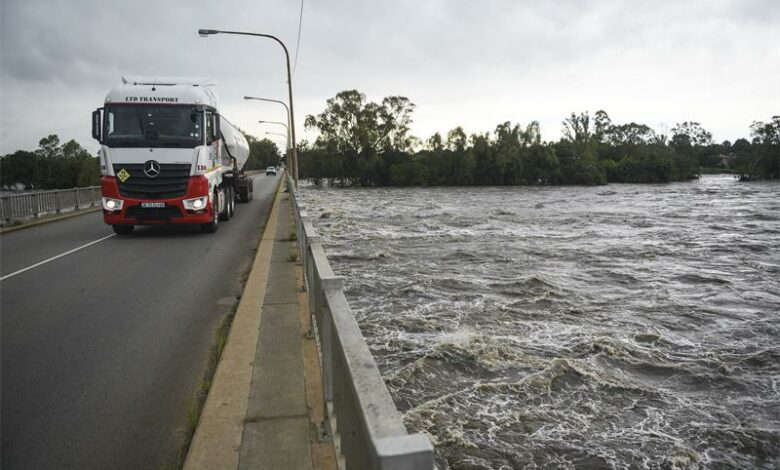
The Department of Water and Sanitation (DWS) continues to monitor water storage levels across the Integrated Vaal River System (IVRS), which remains close to full supply capacity despite slight fluctuations in several major dams.
The latest assessment indicates that the IVRS declined marginally from 100.2% last week to 99.8% this week.
Although the system remains in a relatively strong storage position, the Department urges water users to conserve water, particularly as South Africa enters the summer rainfall season amid forecasts of warmer, drier conditions associated with the developing El Niño phenomenon.
Vaal Dam increased slightly from 108.1% last week to 108.2% this week, remaining above its Full Supply Level (FSL).
As a strategic component of the IVRS, the dam plays an important role in supporting water supply requirements
across the system.
Grootdraai Dam recorded a marginal decline from 101.2% to 100.7%. Despite the decrease, the reservoir remains above its FSL and continues to hold substantial water reserves. Water storage levels fluctuate in response to several factors, including inflows, releases and operational requirements.
Bloemhof Dam declined from 99.9% last week to 98.4% this week, placing it slightly below its 100% FSL. Despite the decrease, the reservoir retains significant water reserves and remains an important part of the broader water-resource system.
Sterkfontein Dam remained stable at 99.0%, maintaining the same storage level as the previous week. Its position close to FSL reinforces its importance as a strategic reserve within the wider water-resource network.
Mohale Dam fell slightly from 102.4% to 102.0%, remaining above its FSL. The dam is part of the Lesotho Highlands Water Project, which supports water transfers to the Vaal River System.
Katse Dam decreased marginally from 88.9% to 88.3%. Although the reservoir remains below its FSL, it still holds substantial water reserves.
Together with Mohale Dam, Katse forms part of the Lesotho Highlands Water Project, which plays an important role in augmenting water supplies to the Vaal River System.
The overall IVRS storage level reflects the combined position of the interconnected reservoirs and water infrastructure that support domestic, industrial, agricultural and other socio-economic water requirements, particularly in Gauteng and surrounding supply areas.
The system’s overall percentage does not mean every individual dam is at the same storage level. The prospect of reduced rainfall and higher temperatures underscores the need to use available water resources responsibly.
While current storage levels across the IVRS remain relatively high, they should not be viewed as a reason to relax water-conservation efforts.
Reservoir levels can change because of water demand, operational releases, inflows and prevailing weather conditions.
Furthermore, rainfall does not immediately translate into increased dam storage, as this depends on the amount and location of rainfall, catchment conditions, runoff, and the volume of water reaching rivers and reservoirs.
The Department therefore calls on households, businesses, industries, farmers and municipalities to adopt and maintain water-wise practices, particularly during the current dry period and in preparation for the coming summer season.
Practical measures include repairing leaking taps and pipes, avoiding unnecessary water use, using water efficiently for gardening and cleaning, and ensuring that municipal water infrastructure is properly maintained to minimise losses.
The DWS will continue to monitor dam levels, river flows, catchment conditions, and the operational status of the IVRS to support the sustainable management of the country’s water resources.
Water users are encouraged to follow official weather and water-resource updates and to make water conservation a daily practice.
The Department emphasises that water security is a shared responsibility. By using water wisely today, South Africans can help protect available supplies and strengthen the country’s resilience against possible dry conditions in the months ahead.