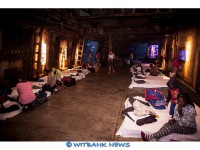
Children of the night treated to a camp
One special woman, who has also been diagnosed with Xeroderma Pigmentosum (XP), started a society as she lost her brother to this genetic disorder.
Maryna de Beer from Ogies started this organization as many children are misdiagnosed and die at a very young age.
XP is an autosomal recessive genetic disorder of DNA repair in which the ability to repair damage caused by ultraviolet (UV) light is deficient.
There are about 1000 cases worldwide and about 20 cases in Southern Africa. Because children with XP experience severe sunburn after a short exposure to the sun which leads to changes in skin and eye conditions, they are never able to enjoy normal daylight activities. In extreme cases, all exposure to sunlight must be forbidden, no matter how small. As such, individuals with the disease are often colloquially referred to as Children of the Night.
Children from Bethal, Nelspruit and the rest of South Africa with XP were treated to a night camp, as they can’t be out in the sun.
The group of 55 people who attended this camp took place from March 14 to 17 included 18 children, their family members, caregivers, volunteers, a social worker and two doctors.
The first night the children visited Ushaka Marine World, who kept the aquarium open the whole night for these children.
Once the sun went down and the UV detector signaled the all clear everyone headed off to the dolphinarium for a specially scripted dolphin show where each child got to meet and interact with one of the dolphins.
Most of the 18 children and their parents had never seen a marine animal before and as one could imagine the sight of a dolphin up close was at first a little frightening but they soon relaxed as the group’s enthusiasm and joy became contagious.
Then it was off to the seal stadium where the seal team had put together a special seal show for them. Under the ever watchful eyes of the XP volunteers, uShaka Sea World staff, their mom’s or grannies they received their first seal kiss. Touching, smelling and feeling a seal which is as big if not bigger than you are takes a lot of courage if your vision is impaired and you have to rely solely on the voices of those around you to guide you through the experience. This was a new experience not only for the children but for the seals as well as this was their first night show. What an incredible audience for the seals debouch night show.
After all that excitement Ushaka laid out 60 beds in the aquarium where they slept amongst the sharks and fish for the night. When the children woke up at six the next morning everyone was up and headed off to enjoy a lavish breakfast and some indoor fun at uShaka Kids World before heading off to their next destination.
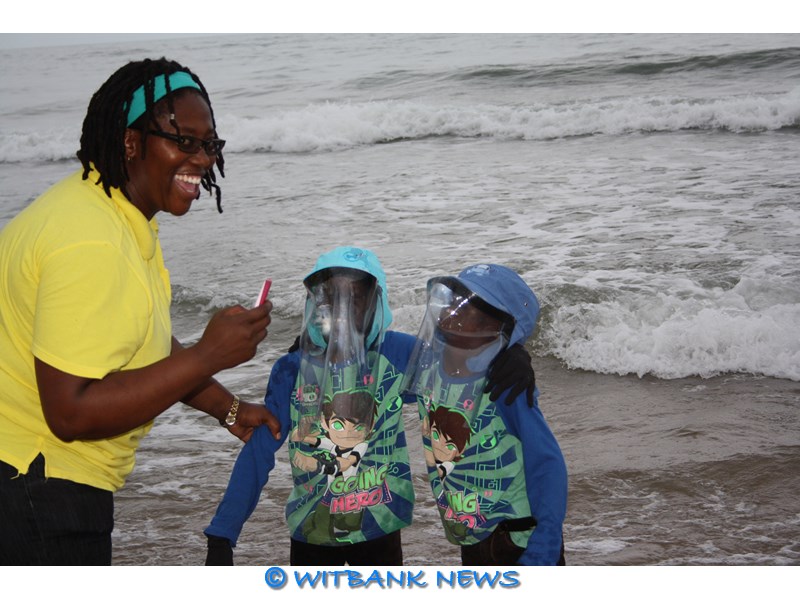
Then at their next destination woman came and showed the children how to make special hats for themselves so that they can go out into the sun.
After hats were made, it was time to play in the sea.
All the children really had a good time on the camp.
The most common defect in xeroderma pigmentosum is an autosomal recessive genetic defect in which nucleotide excision repair (NER) enzymes are mutated, leading to a reduction in or elimination of NER. If left unchecked, damage caused by ultraviolet (UV) light can cause mutations in individual cell’s DNA. If tumor suppressor genes or proto oncogenes are affected, the result may be cancer. Patients with XP are at a high risk for developing skin cancers, such as basal cell carcinoma, for this reason.
Normally, damage to DNA in epidermal cells occurs during exposure to UV light.
uShaka Marine World salutes the Xeroderma Pigmentosum Society and all that it is achieving in offering support, hope, confidence and guidance to XP sufferers from all over Southern Africa.