
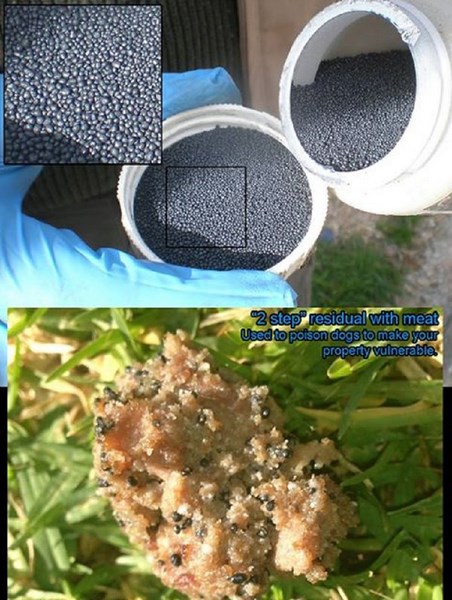
So what does the toxin look like, the most commonly perceived product being misused for malicious poisoning contains the active ingredient aldicarb (2-Step), which is formulated as small black granules that resemble poppy seeds.
However other granular products may resemble the aldicarb granules (2-Step) and in some cased differently coloured granules may be coloured black by criminals.
Be very caustious when dealing with 2-Step, if your animal is suspected to be poisoned, the area should be searched for bait, usually meat based, which contains these granules. Vomit and /or fur soiled with vomit or saliva should be examined for the presence of the 2-Step granules.
Ensure that pets and children are kept away from that area until it is cleaned. If you have to wait to get the animal to the vet, then ring your local vet and see if they can come out to you and assist. Alternatively you can buy charcoal from the vet that has been made up for animals and you can administer the charcoal to the animal while waiting to get the vet.
This will bind the poison so that it cannot get into the blood stream, thus giving the animal a better chance of survival.
The signs to look out for include salivation, muscle tremors, vomiting, diarrhoea. difficult breathing, seizures, weakness and paralysis, slow heart rate and/or small pupils.
What needs to be done:
The animal must be taken to the vet as soon as possible for them to administer the antidote. Treat the area with extreme caution until it is cleaned. Do not use pool acid or bleach to clean the affected area.
Once you have cleaned the area, the items used to clean up with must be disposed of in a plastic bag and taken to the vet for them to correctly dispose of the toxin. It is not advised to mow the lawn as this will contaminate the lawnmower blades.
Should your animal already be dead, using rubber gloves, take the animal to the vet to be incinerated. If that is not possible then bury the animal at least one meter deep, away from food and water supplies.
Cover the dead animal with lime or soda ash before covering with soil, this will ensure that the toxin is destroyed.
They say that prevention is better than cure, so on a daily basis check your perimeter wall for any signs of the granules and dispose of it.
For more information contact the Witbank SPCA on 013 650 2321 or visit their Facebook page.