TRAC assists drought-stricken farmers
The drought experienced in some parts of South Africa has sunk its sharp teeth into livestock farmers causing them severe financial problems and destabilising food security throughout the country.
The drought experienced in some parts of South Africa has sunk its sharp teeth into livestock farmers causing them severe financial problems and destabilising food security throughout the country.
In a bid to bring some alleviation to this crisis, Trans African Concessions (TRAC) recently donated more than 48 bales of grass to Free State farmers. This was after they were contacted by a Barberton farmer who offered to sponsor the transportation of the grass.

Grass being rolled into bales by TRAC employees.
According to farming organisations, commercial and subsistence farmers have lost thousands of cattle as a result of lack of fodder. Although the majority of affected farmers are based in the Free State, quite a distance from the N4 Toll Route, this situation has created a national crisis not only causing food scarcity, but also escalating food prices.
TRAC’s donation was made possible through grass cuttings undertaken routinely by TRAC as part of its concessionaire responsibilities. TRAC teams cut and baled grass in the Schoemanskloof area for more than three weeks. These bales were loaded and transported to the affected areas last week.
In Middelburg TRAC has also packed more than 400 bales which have been donated to AgriSA’s Project Hope Grass.

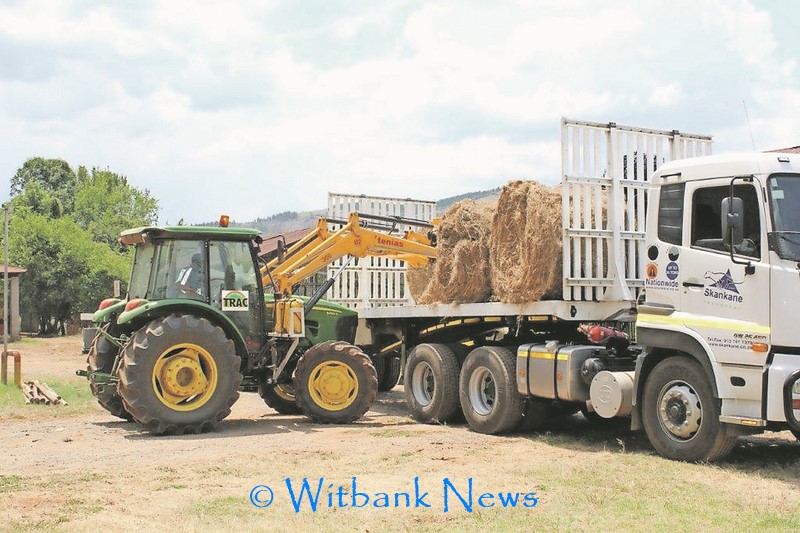
The bales of grass were loaded onto a truck for transport to the drought stricken areas of the Free State.
“The drought is a harsh reality for South African farmers. In the cities we are, to a large extent, shielded from the devastating consequences of the worst drought in 30 years. However it affects every single one of us in one way or another,” said Graham Esterhuysen, TRAC CEO.
He continues,
“TRAC believes in lending a helping hand and we have often donated our grass off-cuts to those who request it. It only made sense to send the grass to those most in need this year – the farmers – and we sincerely hope it alleviates their plight.”