
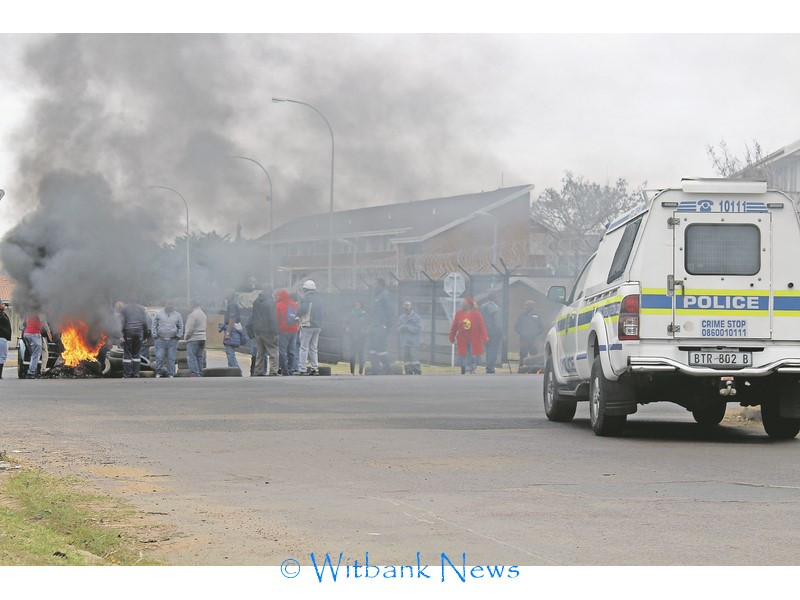
Last week’s strike left our city with many problems. Not only eMalahleni, but the whole country felt the impact of the striking Eskom employees.
eMalahleni also participated in the national strike which took place on Thursday, June 14. This followed after a 0% wage increase was announced.
On this day, a media statement was released by Eskom stating that the generation and distribution of electricity across Eskom’s network is constrained, due to the acts of sabotage and intimidation that characterise the current industrial action by members of the trade unions.
There were several incidents of road blockades, attacks on staff and wilful damage of electricity infrastructure.
The power stations that were the worst affected by the industrial action were Hendrina, Camden, Kendal and Arnot.
ALSO READ
Eskom not allowed to supply electricity directly
Eskom has contingency measures to mitigate against the planned industrial action
Load shedding commenced on June 15, and stage 1 started at 11:29. This was due to the impact of the illegal protest action by some Eskom employees at various sites. Eskom worked around the clock, with all stakeholders to keep its plant operating optimally throughout the strike period.
Eskom estimated that the system would take approximately 10 days to recover from the effects of the recent industrial action, once all staff returned to work on Monday, June 18.
The estimated 10- day prognosis for full restoration is due to the effects of the industrial action which interrupted continuous processes at the power plants. These processes have now to be cleared out and restarted which would take additional time. These include the coal management and transportation.
The smell of burning tires filled the air.
For example the inability to transport coal from our coal stock yards to our coal bunkers due to the absence of operating staff. In addition the already low coal stockpiles at some stations were exacerbated by road closures as coal delivery had to be suspended.
This also includes a significant increase in plant outages and a bottleneck in routine maintenance due to the lack of resources to optimally operate the plant; such as ash clearing and mechanical failures that occurred during the period. For example smaller stations can only return units more or less every 24 hours due to demineralised water limitations and some stations that are operating at high output have to manage their ash levels to achieve optimal productions. These stations are expected to only return to normality by Thursday this week.
In addition, Eskom is currently managing diesel levels at our peaking plants at 50% to ensure that sufficient diesel generation is available for emergencies.
Customers are advised to keep checking their loadshedding schedules on the Eskom and their municipal website, and plan on the assumption that loadshedding will take place.
Loadshedding is conducted as a measure of last resort to protect the power system from a total collapse or blackout.
Municipal customers can contact the customer call centre on 0860 037 566 and visit the Eskom website for loadshedding schedules: loadshedding.eskom.co.za.