
Coffee with Reverend Maans – what South Africa can learn from Jesus today
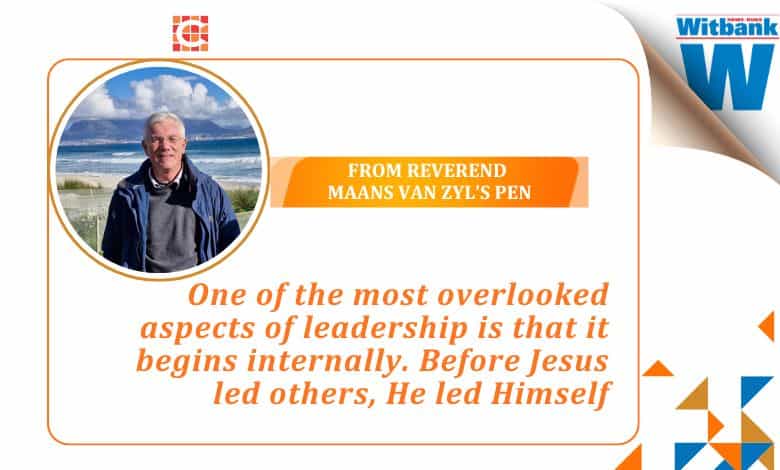
One of the most overlooked aspects of leadership is that it begins internally. Before Jesus led others, He led Himself.
South Africa is at a turning point.
We’re a religious country – about 85% of people here call themselves Christian.
But when you look at how things are, it’s a different story.
We’ve got a lot of problems that won’t go away, like poverty, unemployment that erodes people’s pride, crime that scares everyone, and big issues like corruption, bribery, and abuse of power that erode people’s trust in the system.
It’s like we’re stuck between what we believe in and what’s really happening around us.
We need to align our values with our actions and start solving these problems for real.
This contradiction raises an uncomfortable yet necessary question: How can a country so deeply shaped by Christian identity still struggle so profoundly with integrity in leadership and social justice?
The answer may lie not in what we believe, but in how we lead.
The leadership crisis beneath the surface
It’s simple to point fingers at the system, policies, or the economy when things go wrong in South Africa.
But let’s be honest, these aren’t the real problems.
The truth is, every system is made up of people – individuals who think, make decisions, act, and shape what happens.
When leadership falls short, the entire system eventually suffers.
Leadership isn’t usually about being stupid or unskilled.
Lots of leaders are smart, experienced, and capable.
The real problem is often that they’re not doing what they’re supposed to. Instead of helping others, they’re just trying to get ahead themselves.
It’s like they think being a leader is just about getting a better job, not about making a difference.
When leaders are mostly looking out for themselves, the whole system starts to show it.
They make decisions that might make them look good now, but aren’t good for the future.
They want to keep all the power for themselves, instead of sharing it with others.
And when things go wrong, they try to avoid taking responsibility.
This kind of behaviour can really hurt people’s trust in the system, weaken institutions, and make it even harder for people who are already struggling.
Over time, it can create big problems that are hard to fix.
If South Africa is to move forward, the conversation must shift from what policies we need to what kind of leaders we are becoming.
A different model of leadership
In this setting, Jesus Christ’s life shows us a completely new way of leading others, one that is deeply connected to our spirits and very useful in everyday life.
Jesus did not lead through position, wealth, or political power.
He led through relationship, service, and purpose.
His leadership was not about control, but about transformation.
One of the most powerful examples of this can be seen in the last days of Jesus’ life.
At a time when He could have easily used His authority to get what He wanted, He did something completely unexpected – He washed the feet of His disciples, a job that was normally done by the lowest servant.
This wasn’t just a symbolic act, but a real lesson in how to lead.
The truth is, being a leader isn’t about getting others to do things for you; it’s about serving them and putting their needs first.
By washing His disciples’ feet, Jesus showed them what it really means to be a leader, and it’s a lesson that still applies today.
This principle stands in stark contrast to many modern leadership patterns, where influence is often measured by visibility, status, and control.
Jesus redefined influence as the ability to uplift, empower, and develop others.
Leadership begins within
One of the most overlooked aspects of leadership is that it begins internally. Before Jesus led others, He led Himself.
He withdrew regularly for reflection and prayer.
He remained anchored in purpose, even under pressure. He did not react impulsively but acted intentionally.
This highlights a crucial truth: leadership is not first about managing others; it is about mastering oneself.
In South Africa, the demands on leaders are incredibly high, and the stakes are huge.
This is where a strong inner foundation is crucial.
When leaders don’t have a good sense of themselves, can’t control their impulses, and lack a strong moral compass, they’re more likely to cave in to outside pressures – whether that’s from politics, money, or social forces.
If human capital is to improve, leadership development must go beyond technical training. It must include character formation – integrity, humility, and accountability.
Power redefined: from control to responsibility
A central problem in many leadership contexts is the misuse of power.
Power becomes something to protect rather than something to steward. Positions are defended at all costs.
Decisions are shaped by what is popular or beneficial to the leader, rather than what is right.
Jesus offers a different perspective.
He viewed power not as control over people, but as responsibility for people.
His leadership consistently prioritised the well-being of others – especially the vulnerable, the marginalised, and the overlooked.
READ MORE HERE: Over a cup of coffee, Reverend Maans van Zyl observed that strong character also reshapes how leaders relate to power
He engaged with those society often ignored: the poor, the sick, the excluded.
Leadership, for Him, was inclusive. It crossed boundaries and addressed real human needs. In South Africa, inequality is a huge problem that needs to be solved.
Leaders need to stop just talking about it and do something to help people.
They should make policies and take actions that really make a difference in people’s lives.
It’s time for leaders to show they truly care, not just with words, but with tangible actions that improve the lives of their people.
READ MORE HERE: Over a cup of coffee, Reverend Maans van Zyl digs into time management failures
The courage to do what Is right
Another defining feature of Jesus’ leadership was courage.
He did not shape His decisions around public approval.
He spoke the truth even when it was unpopular.
He remained committed to His mission despite opposition, misunderstanding, and personal cost.
READ MORE HERE: Over a cup of coffee, Reverend Maans van Zyl says being a great leader is not about what you get, but about what you give
This kind of courage is essential for effective leadership. It is easy to make decisions that maintain popularity.
It is much harder to make decisions that are right but costly.
When leaders face tough choices, they must decide what’s more important: doing what’s right or taking the easy way out.
If they choose to avoid making hard decisions just because it’s comfortable, they’re not really leading at all. In the end, that kind of leadership lets everyone down.
It’s about having the courage to make tough calls, even when they’re unpopular or difficult.
Over a cup of coffee, Reverend Maans van Zyl offers a quiet but piercing observation about how true leadership fails not for a lack of competence, but for a lack of character https://t.co/DLQVUjbdKM #reverendmaans #leadership #witbanknews
— WitbankNews (@WitbankN) April 6, 2026
By choosing integrity over convenience, leaders can build trust and respect with the people they serve, and that’s what truly matters.
Building people, not just systems
One of the most profound aspects of Jesus’ leadership is His focus on developing others.
He did not attempt to do everything Himself. Instead, He invested in people – teaching, mentoring, and empowering them.
He saw potential where others saw limitation.
He trusted ordinary individuals with extraordinary responsibility.
And importantly, He prepared them to lead beyond His own lifetime.
Making a real difference in South Africa is a big job, and it can’t just rely on a few people in charge.
Over a cup of coffee, Reverend Maans van Zyl highlights Jesus’ leadership was also marked by compassion
— WitbankNews (@WitbankN) April 10, 2026
Read more here: https://t.co/ADEyxRePqF pic.twitter.com/hZJPZMK0Mw
What’s needed is a strong foundation of leaders who are skilled, honest, and dedicated, and they need to be found at all levels – in communities, businesses, schools, and even families.
This way, change can be lasting and far-reaching. Leadership must therefore be multiplied, not centralised. It must be shared, not hoarded.
A leadership of hope and renewal
Perhaps the most powerful aspect of Jesus’ leadership is His ability to bring hope.
Even after failure, betrayal, and apparent defeat, He restored His followers.
He did not discard them; He rebuilt them.
This introduces a vital leadership principle: people are not defined by their mistakes, but by their capacity to grow.
In a time when lots of people feel let down, hopeless, or forgotten, leaders need to step up and be a reason to believe in a better future.
This isn’t about making big promises that don’t mean anything, but about taking real, consistent action that shows people they can trust again.
Hope is not created through words alone.
It is built through integrity, service, and visible commitment to the common good.
What must change?
If South Africa is to move toward a better future, leadership must change in five key ways:
• From self-interest to service
• From power to responsibility
• From short-term gain to long-term vision
• From control to empowerment
• From position to purpose
These are not abstract ideals.
They are practical shifts that influence decisions, relationships, and outcomes.
The future of South Africa depends on leadership
South Africa has a lot to offer, but it’s also facing significant challenges.
The good news is that the country is home to diverse cultures, strong people, and talented individuals.
What’s missing is a leader who can bring out the best in everyone and help the country reach its full potential, rather than holding it back.
With the right leadership, South Africa can overcome its challenges and achieve great things.
The way Jesus Christ lived and led is not just for the church. It’s a way of leading that can be applied in all areas of life, such as government, business, schools, and neighbourhoods.
It calls leaders to serve, act with integrity, build others, and lead with purpose.
What will really shape the future of South Africa is not just about having the right policies or systems in place, but about the people who live there – it’s about the kind of leaders they become and the choices they make every day.
Because when leadership improves, human capital improves.
When a country invests in its people and helps them grow, it can lead to big changes and a better future.
This column is the opinion of the writer and does not represent the views of Witbank News.
Your city, your story, as it happens. Stay in the loop with WITBANK NEWS.
Find us on our website, Facebook, X, Instagram or TikTok
Got a tip? Email: info@witbanknews.co.za