Eye Care Awareness with Dr Singh: Seeing Clearly Changes Everything
Dr Shaneel Singh is a dedicated local ophthalmologist, shining a light on eye health and care this Eye Care Awareness Month.
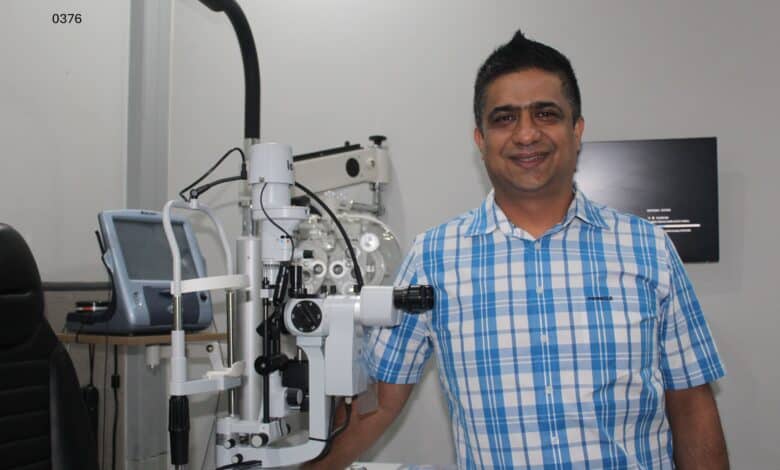
This Eye Care Awareness Month, we spotlight Dr Shaneel Singh, a dedicated local ophthalmologist with expertise in eye health and care.
After earning his MBChB, Dr Singh completed his internship at Addington Hospital, followed by community service at Ngwelezane Hospital. From 2009 to 2012, he undertook registrar training through the University of KwaZulu-Natal’s Department of Ophthalmology and qualified as a specialist ophthalmologist. He then returned to Ngwelezane Hospital, where he progressed from consultant to Head of the Department of Ophthalmology.
After almost 10 years in full-time private practice, Dr Singh continues to serve as a general ophthalmologist. Based at the Richards Bay Medical Institute (RBMI), he treats patients with a wide range of eye conditions. His services include intraocular injections and laser treatments, while the on-site eye theatre is equipped for various surgical procedures.
Drawing on his extensive experience and commitment to patient care, Dr Singh diagnoses and treats a wide range of eye conditions using the latest surgical and treatment techniques to achieve the best possible outcomes for his patients.
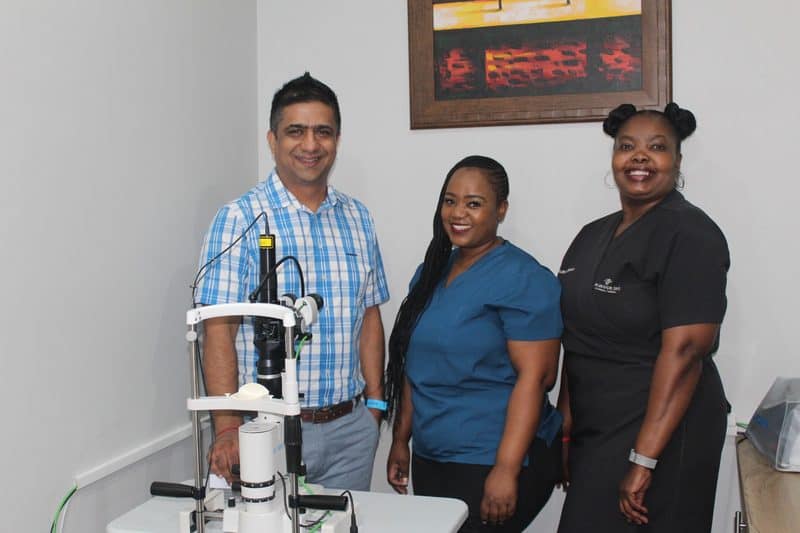
Known for their compassionate approach, Dr Singh and his team prioritise patient education, ensuring that patients understand their eye conditions and the treatment options available to them.
“I work with a committed and dedicated team who prioritise every patient’s care and well-being,” says Dr Singh. “From the moment you enter the practice, our friendly, helpful and caring staff will make you feel welcome.”
“We look forward to welcoming you to our practice – because seeing clearly changes everything.”
Eye Care Q&A with Dr Singh
Why is eye health often overlooked until a problem develops?
Some eye conditions, such as glaucoma, may not cause noticeable symptoms until they are advanced. As a result, people may be unaware of a problem or dismiss early warning signs as minor. Vision changes are also often regarded as an inevitable part of ageing. However, advances in technology and research now make it possible to diagnose many conditions earlier and offer a wider range of treatments. This is why comprehensive eye examinations and patient education are so important.
Why are regular eye examinations important?
Regular eye examinations are important at every stage of life. They are especially valuable during the preschool years, when undetected vision problems can affect a child’s learning and school performance or lead to more serious difficulties if left untreated.
More frequent screening may be needed if you have a strong family history of conditions such as glaucoma or macular degeneration, or if you have diabetes, high blood pressure or high cholesterol.
Adults should have a baseline eye examination at age 40, followed by annual examinations from age 60. Those with any of the risk factors above may need to be examined more often.
Which eye conditions do you most commonly see in your practice?
Children: The conditions I see vary by age group. In children, squints and refractive errors that require glasses are particularly common.
Environmental factors and digital eye strain: Because we live in an industrial area, I also treat many patients with allergic eye conditions and dry eyes. Complaints of eye fatigue and eye strain are increasing as people spend more time using computers, televisions, mobile phones and tablets.
Diabetic eye disease: Diabetic retinopathy is another condition I frequently see. People with diabetes should schedule an eye examination at least once a year as part of their diabetes management, even if they have no symptoms.
Age-related conditions: Age-related macular degeneration (AMD) is becoming increasingly common as life expectancy rises. It most often affects people over the age of 70.
What are cataracts, and how are they treated?
Cataracts are common, usually affecting people over the age of 60, although they can develop earlier. They occur when the eye’s natural lens becomes cloudy, causing painless and progressive changes such as blurred, hazy or dim vision.
Cataracts are treatable with surgery, which is often performed as a day procedure. Patients can usually return home on the same day, and recovery is generally quick.
How does prolonged screen time affect eye health?
Prolonged screen use can cause eye fatigue, eye strain, redness, dryness and a gritty sensation. I am seeing these symptoms increasingly among school-age children and young adults.
Follow the 20-20-20 rule: after every 20 minutes of screen time, look at something 20 feet away for 20 seconds. This helps relax the eye muscles.
People often blink less frequently while looking at a screen, which can lead to dry eyes and a scratchy sensation.
Blue-light filters: Although these filters are often promoted as a way to relieve screen-related symptoms, I do not believe there is currently enough evidence to support their effectiveness.
Risks for children: Excessive use of phones and tablets can accelerate the development of myopia (short-sightedness) in children. Too much screen time may also affect cognitive development, physical well-being and emotional health.
What are your top pieces of advice for protecting your eyesight?
- Maintain a healthy lifestyle through a balanced diet and regular exercise, and manage chronic conditions such as diabetes, high blood pressure and high cholesterol.
- Have comprehensive dilated eye examinations to detect conditions such as glaucoma, diabetic retinopathy and macular degeneration early. Schedule a baseline screening at age 40, followed by annual examinations from age 60.
- Wear appropriate eye protection: choose UV-blocking sunglasses outdoors, and use safety glasses or goggles for DIY tasks and workplace hazards.
- Limit excessive screen time and give your eyes regular breaks by following the 20-20-20 rule.
- Practise good eye hygiene by removing contact lenses before sleeping and washing your hands before touching your eyes.
- If you smoke, take steps to quit.
Ultimately, maintaining a healthy body plays an important role in keeping your eyes healthy.