ISIMANGALISO Wetland Park has brought in new blood for its pride of 16 lions.
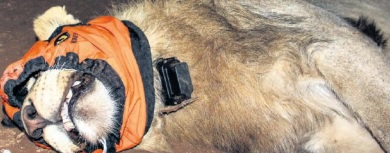
A coalition of three big cats, all the way from the Tswalu Kalahari Reserve in the northern cape, were on Thursday collared and released into the Mkhuze game reserve.
They are genetically distinct from the family presently residing in the park, all of which are from the same blood line.
The move will boost the making of a viable population in iSimangaliso after the last lion was shot by conservationists 47 years ago for ‘going rogue’ in what was then an unfenced park.
Lions were only reintroduced back in December 2013 and 2014, catapulting the reserve to Big 7 status.
To avoid prolific breeding, females underwent partial hysterectomies, which entails the removal of one horn of the uterus.
This is expected to halve the number of litters, obviating the need for translocations to other parks in the short-term. ‘Since 2013, three sets of cubs have swelled the ranks,’ said Park CEO Andrew Zaloumis.
‘The rewilding of iSimangaliso through major eco-systems restoration and the introduction of historically occurring species like lions, cheetah, wild dog, elephant and buffalo, is resulting in more sustainable conservation and economic turnaround of the park with meaningful empowerment and benefits to the local communities.
‘The arrival of lions has also boosted tourism arrivals at the uMkhuze section of iSimangaliso.’
All the adult lions are fitted with satellite collars to monitor their movements for biological and safety reasons.
They are tracked daily by park staff supported by Wildlife Act volunteers with the information channelled into park management.
‘This historic introduction brings us closer to achieving our conservation vision – the full restoration of functioning ecosystems and the re-establishment of the migratory patterns of the historically occurring animal populations, from the top of the Lebombo mountains to the sea.
‘This will be as it was in the times of Shaka and before fencing fragmented the landscape and constrained animal movements.
‘It is a reversal of the historic decimation of game for apartheid military bases, commercial plantations and other agriculture.’
Wild dog pups
But the cats are not taking all the shine at the park. Zaloumis was thrilled to announce the sighting of a new litter of 14 healthy wild dog, or African Painted Dog.
‘With only an estimated 1 400 fully grown wild dogs left globally, the two packs established in the uMkhuze reserve form a vital part of South Africa’s metapopulation,’ said Zaloumis.
‘Another special resident in Mkhuze is the cheetah, which is also a reintroduction success story despite initial challenges.
‘They are categorised as vulnerable by the IUCN (International Union for Conservation of Nature) with a population of around 1 500 adults in South Africa.
‘Today, 15 live in this area and there is a good chance of seeing them on game drives within the park.
‘On Wednesday, no fewer than four individuals were spotted while the previous weekend, a visitor at the Mantuma Rest Camp captured photographs of cheetah within metres of the huts.
‘The success of the lion, wild dog and cheetah is really rewarding for staff – they have overcome early setbacks that placed them in jeopardy.
HAVE YOUR SAY
Like our Facebook page and follow us on Twitter.
For news straight to your phone invite us:
WhatsApp – 072 069 4169
Instagram – zululand_observer