Yielding to emergency vehicles: Are you doing it right?
Learn how to react safely when emergency vehicles approach, and navigate active response scenes calmly, predictably and without causing delays.
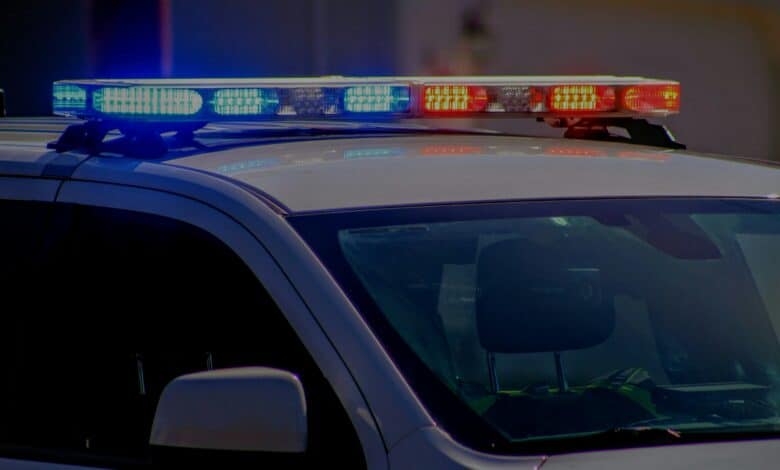
When travelling on any road, all motorists will at some point encounter an emergency vehicle responding to a medical emergency, car crash, fire, crime scene or other incident.
Emergency vehicle crews rely on motorists to remain calm, predictable and cooperative.
General advice
– Regularly check your mirrors and be aware of what is happening around and behind your vehicle.
– As soon as you notice an emergency vehicle displaying flashing emergency lights, with or without a siren, begin looking for a safe opportunity to move to the left.
– Stay calm and make your intentions obvious. Smooth, predictable movements are far safer than sudden actions.
– Avoid distractions such as using your cellphone while driving.
If the emergency vehicle is approaching from behind
– Move to the left as soon as it is safe to do so.
– Do not brake suddenly.
– Do not wait until the emergency vehicle is directly behind you before moving over.
– If you are travelling in the right-hand lane, move left when it is safe, especially if you intend turning right further ahead.
– Maintain a steady speed while creating space.
If the emergency vehicle is overtaking, do not:
– Speed up.
– Attempt to overtake the vehicle in front of you.
– Move into the gap that other motorists have created for the emergency vehicle.
– Try to keep up with or follow the emergency vehicle.
At intersections
– Slow down, even if your traffic light is green.
– Remember that emergency vehicles may have to enter the intersection against a red traffic light.
– Leave enough following distance (you should be able to see the rear tyres of the vehicle in front touching the road). This gives you room to move if necessary.
– Do not block open lanes that an emergency vehicle may need to use – this includes the emergency lane.
– If traffic is stationary, do not overtake other vehicles to force your way through the intersection.
– Never enter an intersection unless you are sure you can clear it safely.
After the emergency vehicle has passed
– Do not immediately move in behind the emergency vehicle.
– Do not tailgate or attempt to use the space it has created in traffic.
– Continue driving normally and obey all speed limits and traffic signs.
– Be alert for additional emergency vehicles responding to the same incident.
Around emergency scenes
– Slow down and remain alert.
– Watch for emergency personnel working on or near the roadway.
– Follow the directions of traffic officers and emergency personnel.
– Allow merging traffic where lanes are reduced.
– Never stop at the roadside to watch the incident or check whether someone involved is a family member, unless instructed to do so. This creates additional hazards and traffic congestion.
– Do not use the emergency lane or shoulder to bypass traffic.
What to expect from emergency vehicles
Emergency vehicles responding to emergencies may:
– Brake suddenly to avoid another road user.
– Exceed the speed limit when it is safe and legally justified to do so.
– Overtake on either the right or left if traffic conditions require it.
– Use emergency lanes or road shoulders when necessary.
– Change direction quickly if traffic conditions change.
– Travel in groups, with police, fire and ambulance vehicles arriving one after another.
– Continue responding even after the first emergency vehicle has passed. Always check carefully before moving off or entering an intersection.
Around an emergency scene
– Do not drive into oncoming traffic (contra-flow) unless specifically instructed to do so by a traffic officer or emergency services. Allow emergency responders to manage the flow of traffic safely.
– Do not force your vehicle through an accident scene. If lanes are partially blocked, wait patiently and follow the directions of traffic officers or emergency personnel.
– Do not squeeze between damaged vehicles, emergency vehicles or responders in an attempt to get through. This places emergency personnel and other road users at significant risk.
– Never drive over debris, fire hoses, medical equipment or other emergency equipment unless specifically directed to do so.
– Watch for emergency personnel on foot. They may be treating patients, directing traffic or carrying equipment between vehicles.
– Reduce your speed well before reaching the scene and remain alert until you have completely passed the incident.
– Do not stop to watch or take photographs. Rubbernecking causes unnecessary congestion and increases the risk of secondary collisions.
– Do not park at the roadside to see whether those involved are family or friends. This creates additional hazards and delays emergency services.
The safest thing a motorist can do is to be predictable. Emergency drivers are trained to anticipate normal driving behaviour.
Sudden braking, swerving or unexpected lane changes make it more difficult for emergency vehicles to pass safely.
Don’t have the ZO app? Download it to your Android or Apple device here:


HAVE YOUR SAY
Like our Facebook page and follow us on Twitter.
For news straight to your phone invite us:
WhatsApp – 060 784 2695
Instagram – zululand_observer
TikTok – @zululand_observer