
Drought fears resurface as strong El Niño looms
Drier and warmer summer conditions are predicted, sparking fears of a possible drought across the Zululand region
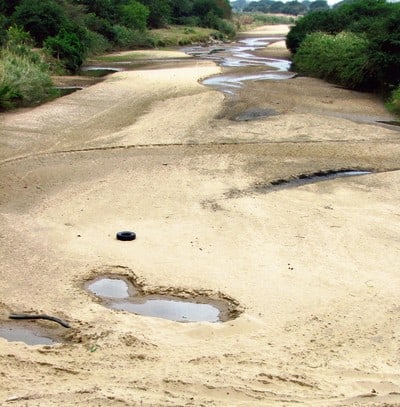
As talk of a ‘super El Niño’ event gains momentum globally, the thought on many Zululanders’ minds is, ‘Will there be a drought?’
This is particularly pertinent amid forecasts of a hot, dry summer, with many residents – farmers especially – recalling the sweltering summers of 2014/15 and 2015/16, and the severe drought across the region.
ALSO READ: Stay safe as weather service warns of heatwave and extreme UVB for KZN
Residents of the greater Mtubatuba area will recall how the Mfolozi River – usually wide, raging and treacherous in summer – reduced to a stream and even a dry riverbed at times, forcing uMkhanyakude District Municipality to excavate the riverbed for water to try to prevent taps from running dry.
Putting it into figures, historical data available on the Department of Forestry, Fisheries and the Environment (DFFE) website records KZN’s rainfall in 2014 and 2015 as less than 75% of normal, with 2015 particularly low, at around 50% of normal.
Of the 1921 – 2018 period captured, 1992 and 2003 are the next driest years, having received just over 60% of normal rainfall.
In its long-range forecast covering November 2026 to March 2027, the South African Weather Service (SAWS) confirmed the likelihood that South Africa will experience the ‘typical tendency towards drier and warmer summer conditions’, with higher-than-normal minimum and maximum temperatures, and lower-than-normal rainfall.
The SAWS further said the dry signal is particularly widespread across the interior and north-eastern parts of the country, where substantial rainfall is normally experienced during summer.
Don’t jump to drought conclusions
According to Dr Marshall Mdoka, meteorologist and senior lecturer in geography and environmental studies at Unizulu, the forecast hot, dry conditions do not necessarily translate into drought.
“There are many factors to consider, including dam levels, soil moisture and vegetation prior to the season, as well as soil moisture retention capability and ground water levels,” he said.
The high temperatures coupled with long, dry spells – which are common – will increase evaporation rates.
“But even one rain event due to other drivers, such as cloud bands, tropical cyclones, cut-off lows, may replenish the ecosystem’s water reservoirs,” he said.
“However, communities have to be cautious and proactive, considering most of the warmest years have occurred since 2015,” he emphasised.
“Climate change is also a factor complicating the predictability of these events as there is a likelihood of increased drought occurrence, heat waves and wildfires for the 2026/27 season.”
He went on to say, we should, however, be more concerned if El Niño’ extends beyond this summer.
Farmers prepare
Meanwhile, Empangeni avo and cane farmer, Lee Pedlar, said they are prepared for the forecast dry conditions to negatively impact their crops through reduced soil moisture, increased plant stress and lower yields.
“For sugar cane, drought conditions may result in slower growth, reduced stalk development, lower sucrose content and decreased overall production. Water stress can also increase susceptibility to pests and diseases,” explained Pedlar.
“For avocados, insufficient water during flowering and fruit development may lead to poor fruit set, increased fruit drop, smaller fruit sizes and reduced fruit quality. Prolonged drought can also affect tree health and future productivity.
“To reduce these impacts, effective irrigation management, soil moisture conservation and ongoing crop monitoring will become essential throughout this dry period,” he said.
Climate change or cyclical?
While climate change is not the driver behind cyclical El Niño and La Niña events, scientists are investigating if climate change is making El Niño events more intense or frequent.
According to the IPCC (Intergovernmental Panel on Climate Change), human influence on global climate went from ‘discernable’ in 1995, when it published its Second Assessment Report, to ‘clear’ in its Fifth Assessment Report published in 2013.
The IPCC concluded that human activities were responsible for more than half of the global warming recorded between 1951 and 2010, with natural climate variations alone unable to explain the temperature rise.
In essence, while El Niño is a naturally occurring climate phenomenon, it is unfolding against a backdrop of human-induced global warming.
While scientists have not established that climate change is responsible for stronger or more frequent El Niño events, rising global temperatures can exacerbate some of the associated weather impacts.
Don’t have the ZO app? Download it to your Android or Apple device here:


HAVE YOUR SAY
Like our Facebook page and follow us on Twitter.
For news straight to your phone invite us:
WhatsApp – 060 784 2695
Instagram – zululand_observer
TikTok – @zululand_observer