Embrace the twists and turns of your learning journey: Becoming a medical doctor
We aim to shine light on different career paths every week, to educate and allow young people to discover new interests.
Choosing the right career is a crucial decision with far-reaching consequences. It shapes your future, making it essential to make an informed choice.
The African Reporter engages with businesspeople, professionals, and other key figures, focusing on a different career each week.
Our goal is to provide valuable guidance to younger readers as they navigate their careers. Through this, we aim to provide valuable guidance to our younger readers as they navigate their career choices.
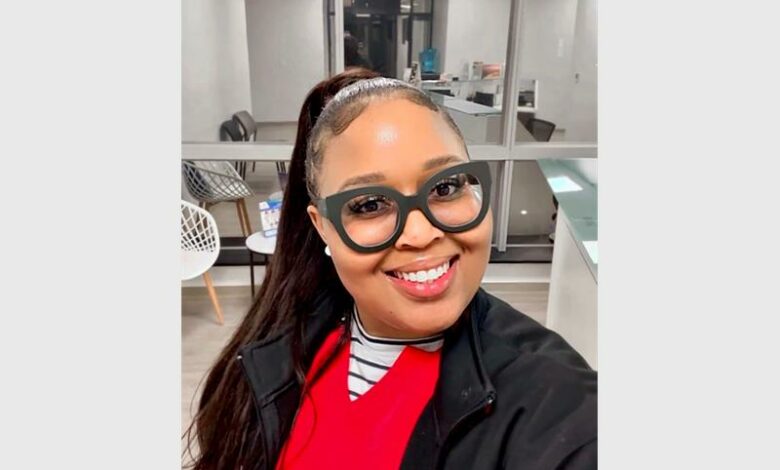
This week, we feature the career of a medical doctor. Dr Thandeka Dakalo Malange has been a doctor for the past four years and says her mother inspired her.
“My mom was a nurse and would take me to the hospital when I was younger, so I was exposed to the field at a young age.
“I would read her books and play with her tools. She was a stellar nurse, passionate about the care of people and always worked to improve the systems in place.
“This inspired me. I enjoyed biology, and I also wanted a career that would challenge me throughout my life,” she explained.
“I am more than a doctor. I am a therapist and confidant. I educate people about health in ways they understand. I love making people feel not only physically better, but emotionally as well. I enjoy the physiology and anatomy, but above all, the people I am serving make it all worth it.”
Her advice to aspiring doctors is to shadow at a public hospital because that is where they will be for the bulk of their career.
“This will help one gather a realistic picture of healthcare in South Africa. Do not give up. The university did not accept me in the first intake, but I worked to make sure that they had no choice but to accept me. I am a first-generation doctor, and you can be one as well.
“It will be hard. There are days you hate what you are doing, but there are some beautiful moments where you realise why you are there. Hold on to those moments. They are the fuel you will use when times are tough.
“Find a mentor. It does not have to be me – even your local GP let you shadow for a Saturday. I am available on Instagram: @thandeka.md, should you have any more questions or require guidance.
“You have got this. You can do this,” she said.
ALSO CHECK: Embrace the twists and turns of your learning journey: Becoming an Adobe Illustrator
What is a medical doctor?
A trained and qualified professional who examines, diagnoses, and manages healthcare conditions appropriately.
What do they do?
They see patients, do the appropriate investigations – such as blood tests, imaging, among others – to accurately diagnose conditions and treat or refer appropriately.
What kind of work does a general practitioner (GP) do?
This involves mostly screening, consulting patients and referring them appropriately – if needed. GPs can see “simple” conditions (such as flu, gastroenteritis) to stabilise critical patients in heart failure or having heart attacks before referring patients to the appropriate healthcare facility. They are pillars of society and see patients through much of their lives.
Where can I study to become a doctor?
In South Africa, the following universities offer a degree in medicine and surgery:
• University of Stellenbosch
• University of Cape Town
• University of Witwatersrand
• Walter Sisulu University
• University of KwaZulu-Natal
• University of Pretoria
• Sefako Makgatho University
• Nelson Mandela University.
There is also the Nelson Mandela-Fidel Castro scholarship, where a student can study in Cuba and return to complete their studies in South Africa.
ALSO CHECK: Embrace the twists and turns of your learning journey: Becoming a development practitioner
Which high school subjects do I need?
• English
• Physical Sciences
• Mathematics
• Life Sciences are advised.
University-specific requirements are also important; one should look at them before applying.
How long does the qualification take?
It takes six years to obtain a bachelor’s degree.
Furthermore, you have to complete a mandatory two-year internship and one year of community service before being able to register as an independent practitioner.
What are the different types of doctors one can become?
There are various specialties. One can become a surgeon, a physician or an obstetrician-gynaecologist, to name a few. The field continues to grow, and even within these broad specialities, there are subspecialties one can pursue.
What is the difference between a Bachelor of Medicine and Bachelor of Surgery (MBChB) and a specialist qualification?
An MBChB is essentially the starting point. One needs to be an independent practitioner – having completed community service and internship – before becoming a specialist. Being a specialist requires extra training (a minimum of four years in a registrar programme), passing examinations and completing a Master of Medicine to become one.
What are some of the day-to-day tasks of a doctor?
These include consulting with patients. Depending on where you work, these tests vary.
Medical Officers in the hospitals manage ward patients and go on ward rounds with the consultant (a specialist) to ensure everything is on track. Some hospital posts also include teaching students (should they rotate there), academic presentations and running outpatient clinics.
This is aside from the overtime done in the form of calls.
What is the workload like during medical school and internship?
Studying medicine is no easy feat. The workload can be a shock to the system, but the type of work changes as your career continues.
For example, in medical school, you are more focused on solidifying theory and gaining practical skills, whereas in an internship, you are working day-to-day.
ALSO CHECK: Meet ‘Mama Action’: The 60-year-old powerhouse behind a women’s movement that heals, unites, and inspires
What are career options are available to medical doctors besides working in a hospital?
One can branch out to ‘clinical medicine’. There are many careers in research and at corporate organisations. You can work as a medical advisor in many companies. You can opt to work with the United Nations, for example.
It is a multifaceted career with the potential to diversify how one navigates it. They can work in clinics or private practice, and their skills differ according to their speciality.
Is it possible for a doctor to work internationally?
Definitely. Especially now, many have migrated to countries such as Ireland to further their careers.
This does require separate examinations to be certified to work in those countries.
What qualities and skills are important for someone who wants to be a doctor?
One needs to have an analytical mind, be adaptable and able to work under pressure. You need perseverance because it will not be easy. One must be resilient because one sees a lot at a young age.
Medica students need to be passionate about caring for people because that is what we do it for. You must be courageous to try again, even if you do not get a procedure right the first time.
A strong internal moral compass is key because you must be able to do the right thing even when no one is watching.
Empathy is crucial because people will always remember how you make them feel. Skills can be developed through training.
What are the advantages and disadvantages that come with the job?
There are many advantages to working in healthcare. You possess a skill that helps people, and you are with them in some of their most vulnerable moments. This is a gift, and people remember how you treat them, and you can be a positive part of their experience.
You do save lives. You help people, which is a blessing with no price attached. There is diversification with an MBChB degree.
Disadvantages are that you give up a lot to become a doctor. You sacrifice time, memories with friends and family, and even parts of your life to become a doctor.
Your mental health is also detrimentally impacted because you see many traumatic things and have to tell people things that break their hearts. It is difficult to leave work at work. You work extremely hard.
Can doctors open their own private practices, and how does that work?
Doctors do open their own private practices. You must be an independent practitioner registered with the HPCSA (Health Professionals Council of South Africa).
Obtain certifications such as Basic Life Support and Advanced Cardiovascular Life Support, among others. You also need indemnity insurance and require a practice number.