Ekurhuleni Fire Services rescue team earns bronze at national competition
Ekurhuleni Fire Services’ specialist extrication team impressed at the 2026 South African Medical Rescue Organisation (SAMRO) competition, finishing third after a closely contested vehicle rescue challenge in the Western Cape.
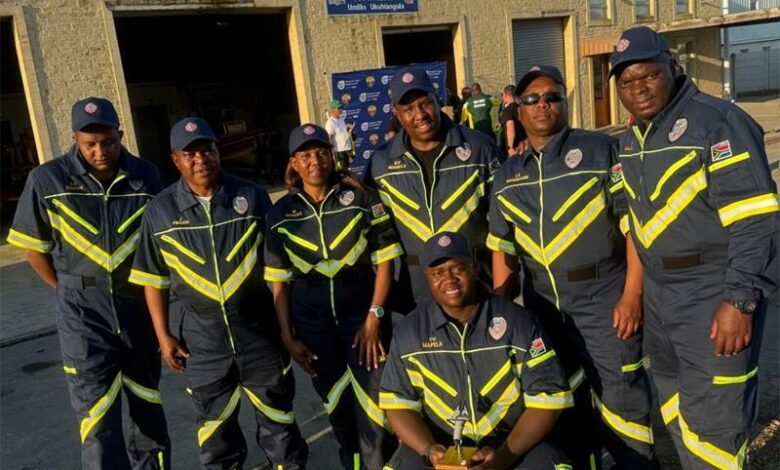
The City of Ekurhuleni Fire Services Extrication Team has secured third place at the South African Medical Rescue Organisation (SAMRO) competition, putting its specialist vehicle rescue skills to the test against some of the country’s most experienced teams.
The competition was held in the Overberg in the Western Cape from August 12 to 13, where the Ekurhuleni team competed in the vehicle extrication category.
Although it was only the team’s second competition, the bronze-medal finish is being hailed as a significant achievement, particularly given the experience of some of the teams they competed against.
According to William Ntladi, the Disaster and Emergency Management Services spokesperson, the competition was extremely close, with only one point separating first and second place and another separating second and third.
“The third-place finish is still an acceptable finish as this was only the second competition that the Extrication Team entered,” said Ntladi.
The team previously finished second at its first SAESI competition earlier this year.
“Being third, having participated amongst teams that have vast experience and have represented South Africa, is such a big achievement,” Ntladi said.
Five teams competed on the day, although more than 10 teams had registered for the competition.
Ntladi said weather conditions and the travelling distance may have contributed to teams from other municipalities and provinces not arriving.
Despite the smaller field, the competition was assessed by both international and national assessors.
Ntladi said Ekurhuleni stood out for its focus on safety, with the team being the only one not to receive an unsafe-act warning during its operational time in the pit.
“This shows how the Ekurhuleni team has polished up on the need for safety in such incidents. The team operated within the stipulated time frame and never panicked,” he said.
Tested under pressure
The vehicle extrication challenge tested far more than simply removing people from damaged vehicles.
Teams were assessed on their ability to arrive at and assess a scene, stabilise a multiple-vehicle accident, manage incident command, use technical skills to stabilise vehicles and gain access, and provide medical care to trapped patients.
Ntladi said competitions such as these help firefighters become better equipped mentally and technically for complex crash scenes, particularly incidents involving multiple vehicles.
They also provide an opportunity for rescue teams from different jurisdictions to exchange techniques and learn how similar equipment can be used in different ways.
The changing design of modern vehicles also makes continued training important, according to Ntladi.
“Newer vehicle models are built with different material strengths and tensions,” he said, adding that competitions help firefighters understand how to operate newer hydraulic and pneumatic rescue equipment.
Training despite operational demands
The team had less preparation time than it would have preferred ahead of the competition.
The members had been working together since 2025. Still, after their first competition, their focus shifted to other specialised rescue disciplines, including high-angle, confined-space, wilderness, swift-water and heavy-machinery rescues.
For vehicle crash rescues, however, the team continued communicating, sharing training videos and exchanging ideas on how to improve.
Ntladi said they had just under two months to prepare specifically for the SAMRO competition.
“We made the most of it,” he said, while noting that the team would have preferred to maintain a continuous training regime between competitions.
Shift schedules and the firefighters’ normal operational responsibilities also had to be taken into consideration.
Skills that can save lives
While competitions provide a controlled environment, the skills developed can have a direct impact on real-life rescue operations.
Ntladi explained that practice sessions, competition assessments and actual emergencies are different environments.
During training, firefighters may work with dolls rather than real patients, whereas competitions use live vehicles and uninjured volunteers.
Real crash scenes, however, involve injured people and unpredictable circumstances.
The experience gained through competitions helps firefighters develop what Ntladi described as “muscle memory” when operating rescue equipment.
“Handling equipment isn’t something you can just do on a whim, but going to these competitions creates muscle memory and makes it easier to work with any equipment at any time,” he said.
Ekurhuleni has 30 fire stations, and while the frequency of trapped-motorist incidents varies from station to station, vehicle rescue remains an important part of the service’s emergency response.
Specialised extrication training is particularly important because rescuers need to free trapped victims as quickly and safely as possible.
Ntladi said the golden hour following a serious crash is critical and rescue teams need to work efficiently to get victims to safety while allowing medical treatment to continue as soon as possible.
“Specialised vehicle extrication is important because it helps rescue the patient faster and in the safest way possible,” he said.
Looking ahead
Thabo Vincent Mafela, Tshepo Innocent Makua, Kahlolo Vitalis Ndebele, Letsilana Alfred Mashangoane, Kgopotso Abie Chuene, Jonas Molefi Finger and Mercy Chauke represented the Ekurhuleni team.
The team members said competing against experienced teams from different parts of the country was an important learning opportunity.
“Being in a different place and competing with teams that have travelled the world doing what we did was a great experience.
“We look forward to working harder and doing even better as a team, and showing the world that Ekurhuleni is truly the best in what we do,” the team said.
Ntladi said the benefits of the competition extend beyond the six or seven firefighters who competed.
The department follows an “each one teach one” philosophy, with the knowledge and experience gained by specialist teams shared with other emergency services personnel.
“Other teams are formed from within emergency services and they as well need our experience, which will benefit the entire city alike,” said Ntladi.