
Johannesburg EMS delivers vital fire safety guidance to township traders
Officer Collen Machete urged informal business owners to adopt safer structures, proper ventilation, and strict limits on flammable storage to protect lives and communities.
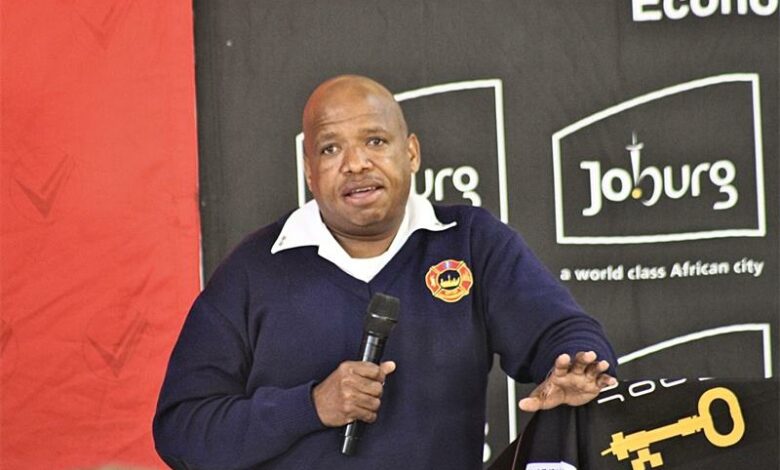
Johannesburg Emergency Management Services officer Collen Machete recently delivered targeted fire safety guidance for informal and formal business owners operating in township settings.
Speaking at the Spaza Shop and Informal Traders’ Summit and Expo hosted by the City of Johannesburg in Alexandra on 25 May, Machete emphasised practical prevention measures, regulatory compliance, and risk reduction strategies suited to high-density environments where flammable substances are commonly handled.
Read more: Johannesburg EMS officer shares important fire safety rules for township businesses
Machete stressed the importance of proper building structures. He noted that most spaza shops operate from garages rather than standalone buildings and urged operators to separate their living quarters from business premises. According to Machete, this separation, sometimes achieved with full-height dividing walls, can slow fire spread, buying valuable time for containment and evacuation even if one section becomes involved.
He explained that structures meeting specific standards are far more likely to secure a fire permit. These include fire-resistant walls designed to prevent fire propagation, adequate access for emergency vehicles, effective ventilation, and a favourable overall safety evaluation.
On the dangers of smoke, Machete warned that smoke inhalation remains one of the leading causes of death in fires. He highlighted that materials such as PVC produce highly toxic fumes capable of claiming lives even while people sleep. Machete repeatedly underscored the need for proper ventilation, both to clear smoke and to ensure safe oxygen levels when using gas appliances.
Furthermore, Machete provided precise storage limits for flammable substances. For lithium petroleum gas, he stated that a maximum of 19kg is permitted indoors. He said that while 48kg cylinders may be used, they require a manifold system and must be stored outside the building. Machete cautioned that larger quantities demand formal registration. He described gas as a silent hazard because it consumes oxygen, making adequate ventilation through open windows or equivalent airflow essential.
Also read: EMS says Alex blaze spread from shacks to recycling site
Machete also outlined clear restrictions for liquid fuels, noting that petrol storage is limited to 40l for personal use, while diesel and paraffin are allowed up to 210l for personal consumption, not for resale. When asked about selling paraffin from residential premises, Machete advised against it, stating that paraffin trading requires formal business rights and is not a low-risk venture for homes and families. He emphasised the serious dangers flammable materials pose to both business operators and surrounding communities.
Follow us on our Whatsapp channel, Facebook, X, Instagram, and TikTok for the latest updates!