Rats: consider a safer way of eradication
The influx of rats in local suburbs has led to an increased use of poison, some of which is killing cats and owls.
People are urged to consider “greener” or safer ways of eradicating rats to avoid the death of pets and birdlife.
The influx of rats in local suburbs such as Malvern and Cyrildene has led to an increased use of poison, some of which is killing cats and owls.
The NEWS’ sister publication the EXPRESS previously published an article in which local resident, Ms Michelle Nel, raised concerns about owls being poisoned.
She shared a photograph of a dead owl in Cyrildene, stating it was catching rats until it was poisoned.
She urged people to use Bayer’s Racumin and hide the poison away from pets and children.
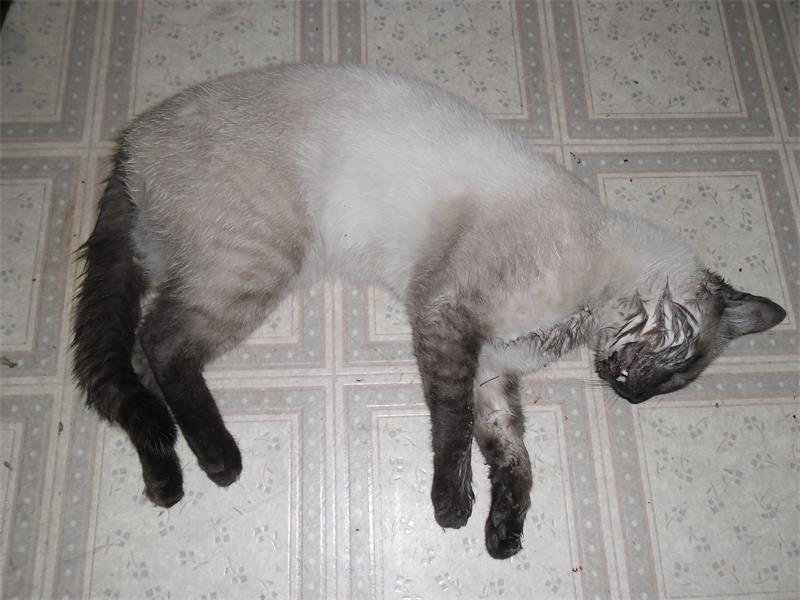
Following this article, Ms Mary Geddes, from Malvern, told the EXPRESS she experienced a devastating death in her pet family.
“My young Siamese cat died of poisoning on May 7. It was especially horrible as he was just 1½ years old and had a lovely, friendly nature. My two young cats are great ratters, therefore they do the neighbourhood a lot of good. The Siamese killed at least 12 to 18 rodents in the five months from mid-December until his death.
“I had the horror of seeing my cat die in front of me and I was unable to help. He bit me several times in his traumatised state, so I had to go to the local hospital for treatment,” said Ms Geddes.
She said she had a post-mortem done on his body later that day but his stomach was empty of food.
“The conclusion was that he must have walked on or rubbed against a strong poison, then licked it off, rather than deliberate poisoning.
“My opinion is that whoever used the poison did not bother to consider that other animals that might be killed, nor did they apply the poison in the prescribed way, which is to put it into containers that only rodents can get into,” said Ms Geddes.
Inspector Rulof Jackson, from the Anti-Animal Cruelty League (AACL), said some poisons used to kill rats could have a harmful effect on other animals.
“The impact on other species can be devastating, depending on the type of poison used and can be fatal if veterinary treatment is not urgently sought. Some symptoms to look out for include disorientation, foamy salivation and unbalanced movements,” said Insp Jackson.
He added if poison is to be used to combat the rat problem currently prevalent in several suburban areas, something along the lines of Racumin should be used as this does not cause secondary poisoning.
“However, we as an organisation advocate that the “greenest and safest” solution to eradicating rats would be cats and owls,” he said.
Among its various initiatives, the AACL has a feral cat project that is considered a “greener” way to address the increase in the rat population.
“Feral cats are a seldom seen and often a forgotten aspect of urban society. Where human populations exist, one generally finds those animals which are co-dependent upon humans. This can result in cities and towns becoming overrun with animals, some wanted, others not. One of the unwanted animal group categories would be that of rodents, which are known to spread a number of infectious diseases. Enter the feral cat: In an age where a lot of focus is placed on green solutions, this is possibly one of the ‘greenest’ solutions to the rat problem out there. Feral cat colonies eliminate the use of poisonous substances, which in turn, run the risk of causing harm to a number of other animal species,” said Insp Jackson.
The AACL’s Trap, Neuter, Release (TNR) project focuses on maintaining healthy, viable feral cat populations.
“Our intervention covers the trapping, sterilisation and return of these cats to their colonies, at the same time working where possible, with the management and employees of office parks, warehouses and schools towards the sustainability of healthy cat populations,” he said.
If you would like to learn more about the project, contact Insp Jackson on 011 435-0672 or 082 892 2776.
@JoziReporter