No conclusive report on death of fish
The reports came after a resident reported the state of the dam to the City of Ekurhuleni (COE) after her visit to the park.
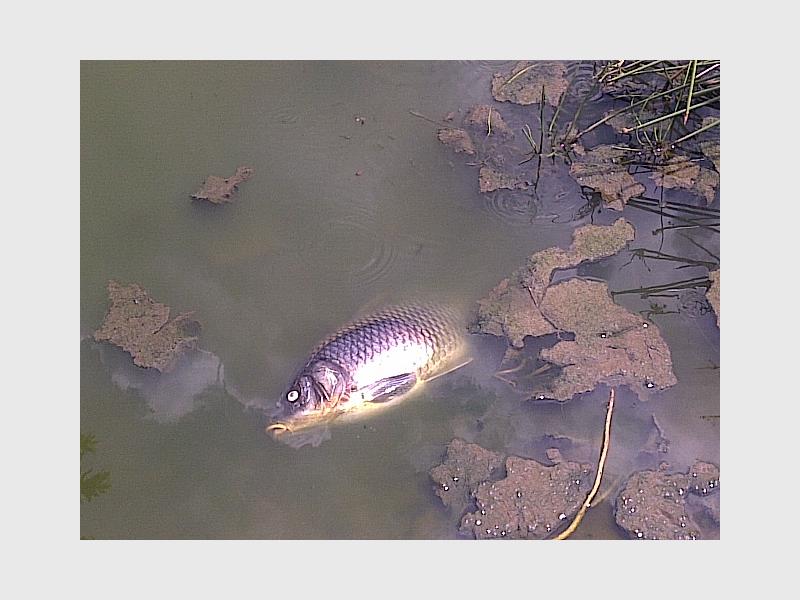
Contradicting statements have been issued concerning the recent death of fish at Gillooly’s Dam.
The reports came after a resident reported the state of the dam to the City of Ekurhuleni (COE) after her visit to the park.
She said she was heartbroken by the state of the dam as there were dead fish and debris floating on the water.
In an email sent to the NEWS, the resident said the water was discoloured and the stench was also unbearable from the river flowing into the lake.
“It smelt like sewage water and it was discoloured,” she said.
In a reply to her report, an environmental health practitioner within the municipality’s Department of Health and Social Development contacted the resident.
According to the official, the cause of the fish dying in the dam is twofold.
“One is a natural phenomenon that occurs whenever there is heavy rainfall. This causes a sudden influx of a strong stream of water flowing into the dam which stirs up the sediment at the bottom. Normally the inflow of water is relatively slow so that a sediment accumulates at the bottom where it is not disturbed. A natural balance then develops regarding the amount of free oxygen available to which the fish population adapts. Their numbers grow according to this particular level of free oxygen. Of course, other factors like the availability of food, etc. also plays a role. When there is a sudden influx of water into the dam after heavy rains, the strong flow of water causes turbidity, picking up the sediment on the bottom and drives out some of the free oxygen. This then disturbs the balance and there is not enough oxygen for the number of fish, causing some of them to die off,” read the email.
He said there is no quick solution for this phenomenon and in a manner of speaking, it is nature’s way of controlling the fish population, as sad as it may be.
“In this recent event there was the additional problem of sewer overflows on the Gillooly’s grounds up-stream, which added raw sewage to the inflow. This, to some degree, further worsened the situation,” said the official.
He said the blockages have been rectified and should no longer cause a problem to the natural life in and around the dam.
“There was no evidence of any chemical pollution contributing to the dying of the fish life,” he said.
However, after the NEWS contacted the COE’s communications department for comment on the matter, a contradicting statement was issued.
The spokesperson, Mr Themba Gadebe, said the fish died due to a sewer spillage.
Asked what measures would be taken to address the problem he said, “The Metro is investigating the possibility of moving the pipes away from the stream.”
At the time of going to press, it was still unclear as to what caused the death of the fish.