Online exclusive: Mischa talks about life off the grid
"We are eating more and more from our area and I feel we will be 100 per cent food self-sufficient before the end of this year."
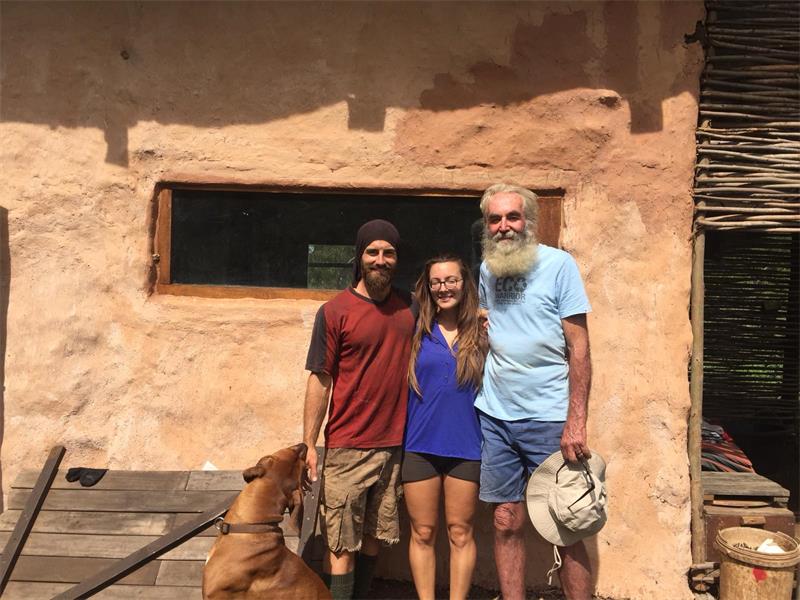
Former local resident Mischa Dubrovo, who now lives in the Eastern Cape, talks about living off the grid.

“I usually wake up between 4am and 5am, depending on the seasons. I will help Tim Wigley, the godfather of permaculture in SA, and my wife, Indira, at about 5.45am with taking the cows to their designated grazing area for the day.
“When we first started herding the cows, this exercise sometimes took two to three hours because of a rebel cow escaping the herd. I did not know a cow could run that fast.

“We have mastered the art of herding cows since then, so it only takes between 10 to 20 minutes every morning.
“After the cows, I will have breakfast, which currently consists of any fruit we can find on the farm, at the moment this is mangos, num-nums, persimmons and granadillas. Afterwards, we will have a bowl of rice from the night before.

“Then I will join up with Tim again and move swiftly along to tasks which we have outlined for the day ahead.
“We both aim to eat 100 per cent from the area around us, and doing so in the most eco-regenerative way possible.
“This means growing a food forest and building up the health of the soil, as opposed to depleting the soil, which is what our current agricultural system does.

“Each day is different, but the tasks for the day will either be planting fruit trees within the already-existing food forest, caring for previously planted trees which may need some extra attention, preparing an area for growing mielies, planting vegetables in the zone two vegetable garden, or working on our living fence which we are building up to keep the bushbuck and warthog out.
“We usually begin work around 9am until between midday to 1pm.

“Once that is done, Indira and I cook lunch.
“We currently do this over an open fire, but we have plans to build a rocket stove and cob oven in our kitchen from natural materials.
“This will enable us to cook all the gourmet dishes we want, except we will be using fire instead of gas or electricity.
“A rocket stove is a system that uses the draft of cold air being pulled through a chamber with a fire in it.
“There is an opening at the beginning of the horizontal chamber.
“The top part of the chamber, which is right above where the fire is, is a solid steel plate which acts as the stove plates.
“The heat gets pulled through the chamber to the point where the chamber diverts upwards horizontally, where the hot air and smoke can escape through a chimney opening outside the house. All the benefits of a normal stove without any of the unhealthy consequences.

“At the moment we are eating about 50 per cent of our lunches from our own garden.
“We unfortunately still need to buy some food from town, and rice is our choice staple at the moment. However, everything we add to our rice is from our own gardens – pumpkins, butternuts, spinach, tomatoes, eggs and moringa leaves.
“We are eating more and more from our area and I feel we will be 100 per cent food self-sufficient before the end of this year.
“Once we finish lunch I continue to either building the house, I am still finishing the kitchen and bathroom, but it is liveable and comfortable, or I will work in the zone one vegetable garden. The zone one garden is the vegetable garden that is closest to the homestead.

“We are growing a wide variety of vegetables in our zone one garden, including runner beans, pumpkins, potatoes, sweet potatoes, butternut, tomatoes, moringa, peppers, eggplant, mielies, paw-paw, and turmeric.
“After a couple of hours working on the house or garden, Tim, Indira and I will fetch the cows and take them back to the kraal for the night, after which we will peg out the grazing camp for the next day.
“After that, I usually have a cold shower, which I choose to do for health reasons. The shower is made of a black 20-litre bucket to which I have attached a showerhead. I hang the bucket up and it resembles a normal shower.

“We go to bed around 7.30pm and usually are asleep before 8.30pm for a well-deserved sleep after a rewarding day of honest hard work.
“For light, we currently use solar jars and rechargeable head torches.
“We do know these won’t last forever, so once they become obsolete we will live according to the hours of sunlight.
“To charge our phones we use a basic solar panel that doesn’t store power, but instead directly charges the phone as long as there is sunlight.
“Again, once either the panel or the phone breaks, I plan on living without these devices.”
Watch as Mischa Dubrovo builds his home with traditional Xhosa daub, which is a mud mix.
For more news and interesting articles, like Joburg East Express on Facebook or follow us on Twitter. Email joburgeast@caxton.co.za