Years of warnings ignored as Jukskei embankment collapses
Ward 20 Clr Jill Humphreys warns of escalating environmental and infrastructural risks — as failed reinforcements, poor planning, and neglected runoff control push the area closer to disaster.
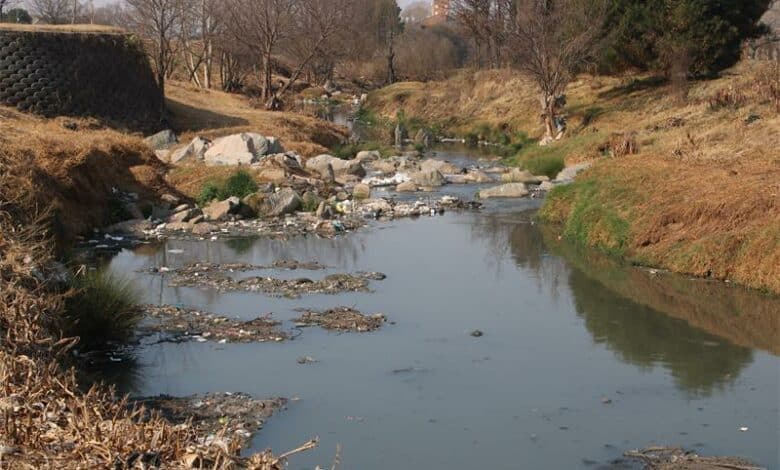
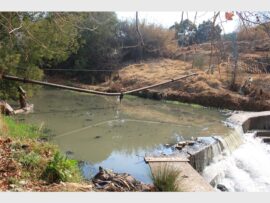
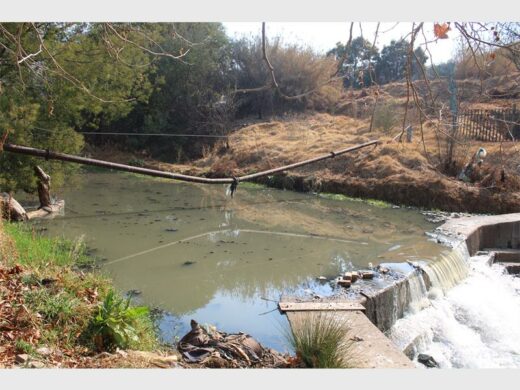
The Jukskei River embankment in Morninghill is collapsing and according to Ward 20 Clr Jill Humphreys, this is not a new development.
She said the issue has been reported and inspected for years, yet to date, the City of Ekurhuleni (CoE) has not effectively taken action to stabilise the riverbanks or mitigate the growing environmental risks.
Humphreys highlighted some of the challenges, including the collapsing embankment, failure of the gabion reinforcements, lack of effective inter-city coordination, and escalating environmental health hazards.
ALSO READ: CoJ responds to sewage contamination at Jukskei River
“I’ve been reporting this for years, and it is definitely collapsing. Gabions are no match for the torrential velocity of water in this river. Now they’re just skeletons of rock and concrete littered along the embankments,” explained Humphreys.
She said ongoing discussions have occurred between the CoE and the City of Johannesburg (CoJ) regarding managing upstream flooding and pollution in the Jukskei River, which directly affects Morninghill.
“CoJ has installed extensive infrastructure to mitigate pollution and flooding. They have not been successful. I have done, and continue to do, my part by engaging with officials from both cities.”
There was also an initiative by the CoE Parks Department involving EPWP workers who were tasked with weekly clean-ups.
Skips were filled and removed during these efforts.
Humphreys recommended that upstream water attenuation should be addressed by constructing dams and ponds throughout the area, which could also serve as recreational facilities.
“I don’t believe the Cities are paying enough attention to this aspect of urban planning. When densification occurs, little to no attention is paid to stormwater runoff. It all goes into existing systems that are outdated and, in many cases, poorly maintained.
ALSO READ: Locals demand action as Jukskei River pollution worsens
“Vagrants live in the stormwater drains. They keep their belongings in them, which leaves minimal space for water,” she said, adding that City Planning should enforce stricter attention to on-site attenuation.
She expressed concern over the lack of oversight regarding the runoff generated by new developments.
“Rainwater should be harvested, attenuated, and allowed to seep into the ground to recharge our aquifers.
“It should not all be running into our streets and rivers as runoff — this is what turns our streams and rivers into raging torrents.
“When there are acres of non-permeable parking areas for new developments, where is all that runoff water supposed to go? Straight into the rivers.”
“Sewage should be treated using bioremediation. I passed a motion in council two years ago to support implementing this method, but nothing has been done.
Our 200-plus pump stations and 19 wastewater treatment plants could be far more efficiently and economically managed through this process. Yet, resistance to change remains total,” said Humphreys.
ALSO READ: Resident laments poor state of Jukskei River
On May 5, the CoE’s Water and Sanitation Department visited the Jukskei River in Morninghill and provided the following statement:
“No current or recent sewer spillage or pollution could be detected. The water in the Jukskei River appeared clean, with no odour or visible signs indicative of a recent incident,” said CoE spokesperson Zweli Dlamini.
“The sewer manhole located on the southern embankment of the river was still intact, with no indication of imminent collapse. Rocks protect the manhole on the upstream side, and the surrounding embankment shows no signs of deterioration.
“In case of any pollution incidents, public members are urged to contact our call centre at 0860 54 3000,” Dlamini added.