
Empowering women is the key towards achieving gender equality
As Women's Day celebrations are underway, issues of women's equality has been an issue for multiple decades, but not much has been done to provide women with the same benefits as their counterparts.
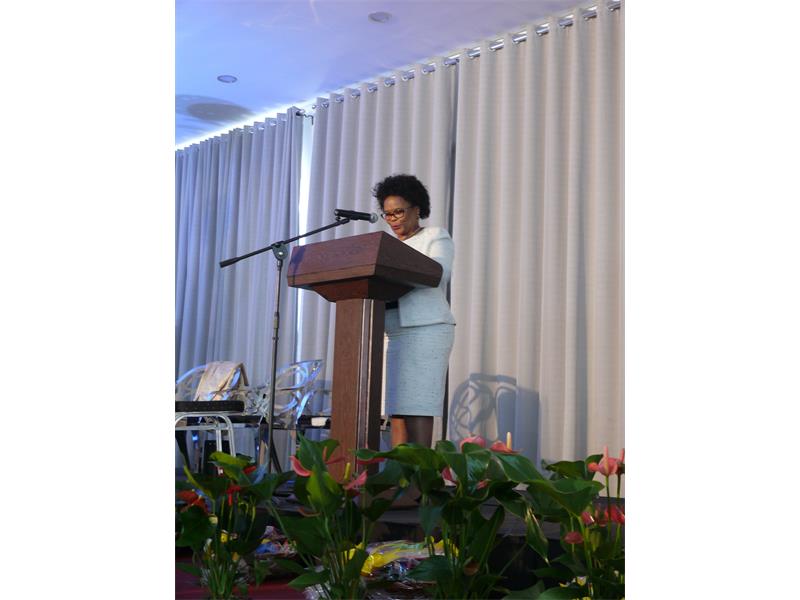
This is according to deputy minister of Water and Sanitation, Pamela Tshwete.
Tshwete was speaking at an event held to celebrate the contribution made by women of Rand Water at The Lakes Hotel in Lakefield, on Thursday, August 7.
The deputy minister stated that not enough work is being done by the public and private sector to protect and highlight gender issues within society.
“Beyond family arrangements, there are still difficulties to protect women by various institutions, whether in the private sector or public sector.
“Some women are still denied certain responsibilities because of their gender,” said Tshwete.
Even with the various challenges, the deputy minister also highlighted the strides made by government in terms of equality.
“We can safely say that we have more women in leadership positions than before, such as councillors, executive mayors, members of parliament, ministers, board members and executive directors,” said Tshwete.
She praised Rand Water for the progress it has made with increasing the number of women in leadership positions in the organisation.
“In keeping with the leadership of Rand Water, more women are found in strategic positions of the board, and this includes the chief financial officer Matshidiso Nyemebe, strategic human resources executive Wayida Mohamed and group governance executive Fikile Sithole,” said Tshwete.
She said we are only going to see changes with regards to gender, if all aspects of society actively engage on the gender status of women in society.
She highlighted the importance of events celebrating women, such as Rand Water’s women celebration.
“In carrying forward our work on the emancipation of women these kinds of celebrations must be part and parcel of a year-round programme on gender education and training.
“We need to target schools, churches, traditional institutions, workplaces, families and, generally, all sectors of our communities to openly engage on the gender status of women in society,” said Tshwete.
The deputy minister added that the Department of Water and Sanitation and Rand Water have various opportunities directed towards training and development,and to create awareness within communities.
One such opportunity, is the adopt-a-river programme, which the Department of Water and Sanitation has introduced.
“This programme works with women in building capacity in environmental management, through mobilising women in communities along the rivers of our country.
“The women involved graduate to become environmental managers in their own communities, and are offered a stipend, which contributes to their own economic development,” said Tshwete.
She highlighted the importance of stopping water leaks, which she believes can only be stopped if women are involved, and are responsible for the identification and maintenance of water leaks within communities.
Currently, the country is losing 40 per cent of its water in the distribution and supply of water to consumers.
According to Tshwete, through the adopt-a-river programme, water will be saved and municipalities will be able to cut the costs in providing water.
Matshidiso Hashatse, chairperson of the Rand Water Board, also reiterated the importance of women taking an active part in society.
“What made the women of 1956 different, is that they did not sit out – they took collective action.
“And when we think about water and sanitation, the women of Rand Water should remember their mandate to society,” said Hashatse
She encouraged the importance of discussing, engaging and celebrating Women’s Day until an active change is seen within society, and believes that day is still far from being realised.