One million rand a year for 13 years and still nothing but leaks
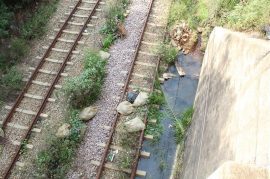
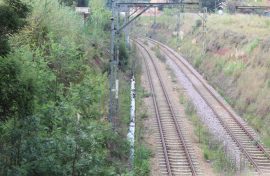
The water flows north from Avenue Station, in Main Reef Road, along the stormwater gully and is fed by additional leaks along the line.
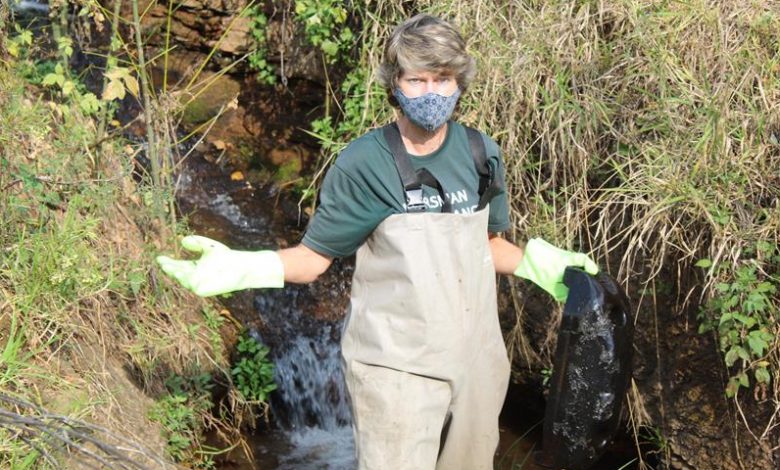
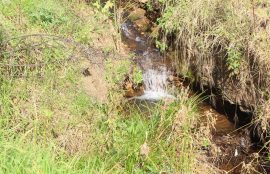
For over 10 years, residents have been requesting the Ekurhuleni Water and Sanitation Department to find and repair the source of a water leak that originates along the railway line in Western Extension.
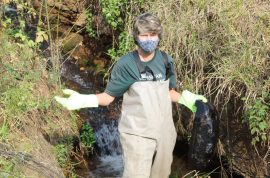
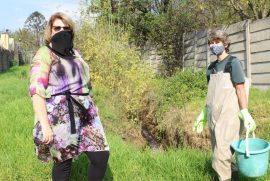
“Not only is it a massive waste of water, but it is also causing environmental problems in the Korsman Bird Sanctuary, a nature reserve,” explained Jane Trembath, chairperson of Korsman Conservancy.
“The water carries in litter, invasive plants and keeps the water level artificially high, which has other associated environmental problems. Our flamingos (our biggest attraction at Korsman) are fleeing due to the water being too deep.”
ALSO READ:
Rainwater harvesting saves municipal water supply
The water flows north from Avenue Station, in Main Reef Road, along the stormwater gully and is fed by additional leaks along the line.
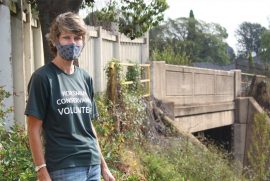
A strong visible leak discharges from under the railway bridge in Woburn Avenue.
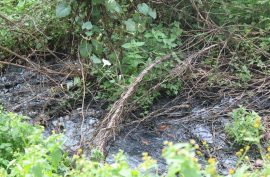
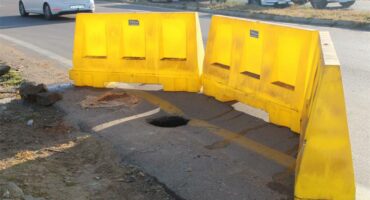
“The water turns down a stormwater gully at Drury Lane, then through the stormwater system into Korsman Bird Sanctuary.
“It has been tested and is confirmed to be chlorinated. The water and sanitation department has confirmed it is water from one of their main pipelines.”
Gangs
According to Trembath, the flow at Drury Lane is measured to be about 90 million litres a year (non-revenue loss of R1-million, at estimated bulk water rate R13/kl) and the flow strength has increased over the years as the infrastructure breaks down.
“The water and sanitation department has been aware of this for many years due to residents’ complaints, but could not find the source of the leaks,” she said.
“I alerted them to the Woburn Avenue railway bridge leak where they did some leak detection at the beginning of 2019 but got no results and were unhappy with the quality of the service provider.
“They also have concerns about security while working at the railway line, as it is prone to gangs stealing cables; however, trains are not operating.
“I am prepared to ask the local security company to be on site while council works at the bridge, and even clear vegetation that obscures the railway line at my own cost.”
Trembath recently approached the Ward 28 councillor, Mary Goby, and the two of them have been working together to stop the leak or at least find it.
“I am assisting Jane on this matter,” she said. “We have hit a few walls in the process but, luckily, we are fighters and will continue to do anything we can to put a stop to this water leak that is costing the metro over R1-m per year.
“I would be happy to assist as a citizen in asking the mayor to help prioritise fixing the leak as it would be cheaper in the long run to fix the leak as soon as possible to prevent further wasteful expenditure on water.”
At the special council meeting in which the auditor-general’s report was presented on March 31, Goby stated:
“Water losses of 30 per cent to the value of R1-billion were incurred – I can take you to one in Lakefield that is nearly R1-m a year – and electricity losses of R1.8-b were incurred.
“It is because eight per cent of the value of the assets have not been allocated for maintenance that the infrastructure is falling apart, and with this failure, our communities suffer.
“It does not help to say the maintenance budget is now at 6.4 per cent because it now needs to be closer to 20 per cent to catch up the backlog.
“The water loss is a major concern, as a few years ago we were on water restrictions and this water is just flowing. I wait patiently for the metro to do something about this matter.”
Research
After doing some extensive research, Trembath concluded that the branch of the railway line was opened in 1910 and the water reticulation was supplied to Benoni in 1908.
It is, therefore, possible that the water main, laid along the railway, was supplied from the reservoir that was built in 1908.
“If the Northmead reservoir was originally built in 1908 then the water supply will certainly originate from Northmead and run south towards Avenue Station.
“The fact that the gully water runs from the Avenue Station direction towards the pan is due to the watershed being at Avenue Station and doesn’t necessarily mean the water is piped from that direction.”
ALSO READ:
10 easy-to-follow water saving tips
Trembath and Goby are eager to hear the council’s plan to solve the problem and when work will recommence.
“I am desperate to stop the water continuing to rise at Korsman and many people are questioning the waste of drinking water and the accumulating cost to metro,” said Trembath.Suggestions
Trembath has suggested excavating the bank north of the Woburn Avenue bridge, just north of where the seepage is from the bank, instead of the Avenue Station area, which may actually be downstream.
“As one should be aware, the field has open access for equipment and should be easier than at the bridge itself,” she said.
“I happened to meet some Prasa officials at the Woburn Avenue bridge recently, who said the wayleave is approved and they were expecting Water and Sanitation as well as the contractor to meet them for the induction.
“However, the meeting did not go ahead. The Prasa officials are also very keen for the leak to be fixed as they said the water has damaged the railway foundations and they want to start running diesel trains along the line in January.
“I am desperate to have this sorted. Many places are being affected but my main concern is Korsman.”
The City Times has approached the metro for comment and awaits their response.