
Ekurhuleni Bus Services staff walk in the shoes of the disabled
Fifty employees from the CoE Bus Services participated in the training programme.
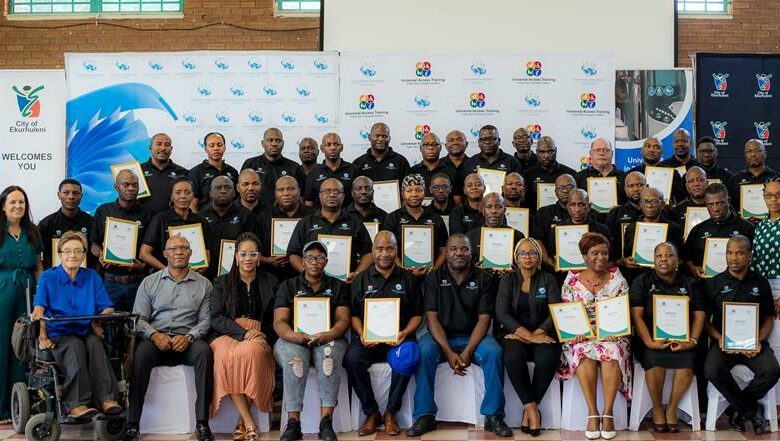
As South Africa marked National Disability Rights Awareness Month in November, the Transport Education Training Authority (TETA), in partnership with the CoE, celebrated the completion of the universal access skills and capacity building programme.
A certification ceremony was held in Boksburg to reflect on the programme’s outcomes and how all participants will use the knowledge and insight gained.
The CoE’s MMC Transport Roads and Stormwater, Andile Mngwevu, was in attendance.
He delivered a message of support and highlighted the municipality’s focus on providing quality, safe, reliable, and consistently available transport systems.
The eight-week programme sought to develop the working knowledge of bus drivers and the Ekurhuleni Bus Services management team about people with disabilities and enable them to deliver a more inclusive public transport service.
The training intervention also addressed latent and overt non-compliance by the sector to key legislation, such as the National Land Transport Act and the Constitution.
Fifty employees from the CoE Bus Services participated in the training programme, including bus drivers and management.
The training for management staff focused on the business case and legislative compliance reasons for implementing universal access in bus operations.
Drivers and support staff training focused on increasing awareness of behavioural barriers and how to support passengers with special needs in general and people with disabilities in particular.
James Motha, TETA’s senior manager of strategic projects and stakeholder relations, outlined the organisation’s critical role in delivering outcomes-based training, enabling stakeholders in the transport sector to acquire skills that can be used in the workplace and society.
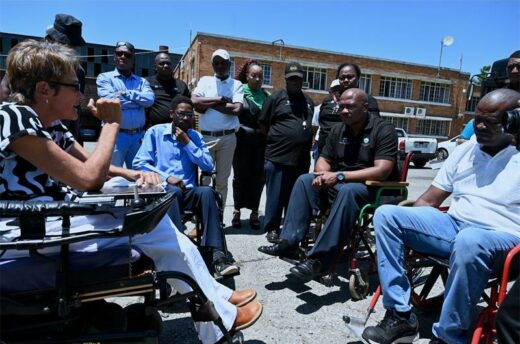
Lisa Venter, a universal access consultant who supported the design and implementation of the training programme, drew attention to key pieces of legislation, chief among these being the Constitution and the Land Transport Act, which are very specific about the realisation of universal access and disability rights.
The Act focuses on the requirement for the entire travel chain of a passenger to be universally accessible and factor in how people move from one point to another.
Representatives from the South African National Deaf Association (DeafSA) and Blind SA shared their experiences as users of public transport systems, their challenges, and the basics of dealing with persons with a disability.
Drivers who participated in the programme were open about some of their misinformed misconceptions before participating in the training.
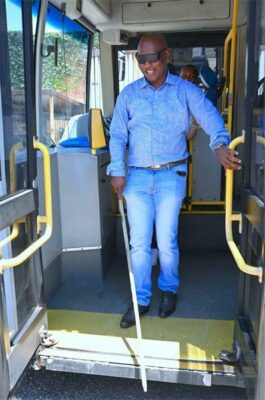
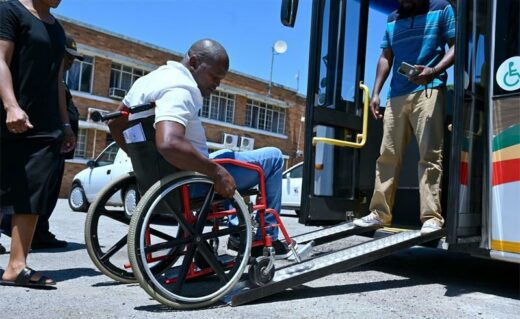
All trainees got to use a wheelchair or opaque glasses and a white cane to get on and off the bus.
Lefa Moremedi, one of the Ekurhuleni Bus Services managers who took part in the training, said the municipality has been gradually phasing out busses that are not universally accessible.
Since 2016, all new buses procured are universally accessible.
Budget limitations greatly impact the phasing in of universally accessible buses and must be approached as a process, not an event.
ALSO READ: Harambe Bus services restored
ALSO READ: Disabled people can add value within the motoring industry