
Call to ban the export of scrap metal
Fikile Mbalula, Minister of Transport, says banning the export of scrap metal could limit the market that encourages criminals to target railway infrastructure.
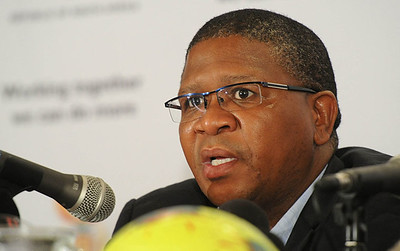
Minister of Transport, Fikile Mbalula, has called for a ban on the export of scrap metal as the theft and vandalism of critical rail infrastructure sabotage the country’s economy.
“We are unequivocal in our call to ban the export of scrap metal and will support any measure that will bring us closer to this reality,” the minister said on Monday.
Addressing a media briefing on the White Paper on the National Rail Policy in Pretoria, he said taking this step will reinforce government’s interventions aimed at protecting public assets and making the theft of cables and other metals less lucrative.
“The criminality behind the rampant theft and vandalism of railway infrastructure that has stripped bare our stations and rail network requires extraordinary interventions that go beyond merely stepping up security.
“We must eliminate this perverse incentive by banning the export of scrap metal and therefore limit the market that aids this criminality. The corporate sector must come to the party and bolster our efforts to deal a decisive blow to this criminality that is enabled by scrap dealers buying stolen scrap metal,” Mbalula said.
National Rail Policy to support economic recovery efforts
The minister said the National Rail Policy is critical for fast tracking the implementation of priority structural reforms in the economy to support economic recovery.
“The key policy position on the introduction of third-party access on the rail network is one of the key thrusts to drive efficiencies and improve competitiveness.
“The National Rail Policy will guide the building of the local industry capacity thereby boosting the manufacturing capacity and localisation.
“Government will ensure that industrialisation and the local production of steel and other inputs, rail lines and supplies, and rolling stock is promoted through policies that will require state and private operators to procure all supplies from South African-based manufacturers,” the minister said.
The policy also encourages the entry of black, female and young industrialists as local manufacturers, including through manufacturing joint ventures.
The minister said a localisation strategy will be used to develop the industrial base for an active export strategy, particularly to other African countries.
This will also support the Steel Master Plan of government.
The department working with the Department of Trade, Industry and Competition (DTIC) will set up a joint committee to develop the strategy and will engage the private sector on investment plans required to unlock opportunities in the sector.
Rolling stock as a key pillar to railway operations will be an integral part of this approach.
“Government supports the provision of own rolling stock by freight and passenger train operators as an additional funding source in kind, to close the gap between existing funding sources and overall funding requirements, as well as the provision of extra capacity by private sector rolling stock leasing companies.
“Train operators and State-Owned Enterprises (SOEs) can lease their rolling stock to any other party and to encourage new entrants in the market. With regard the role of Private Sector Participation in railways, the department will spearhead the development of a Private Sector Participation (PSP) Framework for the rail industry,” Mbalula said.
This framework will aim to guide the collaboration between the major SOEs and private sector companies to deliver new economic infrastructure projects to augment the current level on infrastructure projects.
“The pursuit of PSP should, however, not be construed as the privatisation of the South African Railways, as there is no such policy on the table. Central to the passenger rail reforms is the introduction of High Speed Rail into the service mix,” the minister said
The department will develop a High Speed Rail Framework to provide the foundation for the prioritisation of high speed rail corridors in South Africa.
“The framework will determine the strategic objectives for high speed rail in the country and determine the criteria to be used in determining and prioritising these corridors. Feasibility studies on proposed high-speed rail services will be conducted by the department guided by the framework,” the minister said.
Implementation of the policy
The implementation of the White Paper on National Rail Policy will be segmented along short, medium and long-term policy reforms.
In the short-term, over the next three years, policy reforms include:
- Accounting separation of Transnet Freight Rail’s Infrastructure Manager and Train Operator, introduction of the National Rail Bill,
- Introduction of third-party access,
- Concessioning of branch lines,
- Finalisation of the National Rail Master Plan and
- Finalisation of the Commuter Rail Devolution Strategy.
Mbalula said the Policy further unpacks medium and long-term policy reforms that will place the industry on a sustainable growth path.
“Giving practical expression to the objectives of the White Paper on National Rail Policy requires of us to pay particular attention to skills development and growing the requisite capacity in the country.
“Our long-term vision of an institution of higher learning specialising in rail engineering and operations will be built on the foundation of interventions such as the Centres of Excellence model the Department has developed in partnership with universities in the country and the Transnet Freight Rail’s School of Rail.
“This will go a long way in ensuring that there is adequate capacity to respond to the current challenges and giving the implementation of the National Rail Policy the necessary,” the minister said. – SAnews.gov.za
Read original story on bereamail.co.za