Bid to rescue Umbilo’s Flamingo Court
Despite concerns over Flamingo Court turning into a slum, the buildings administrator believes a relief High Court order would put the building back on track.
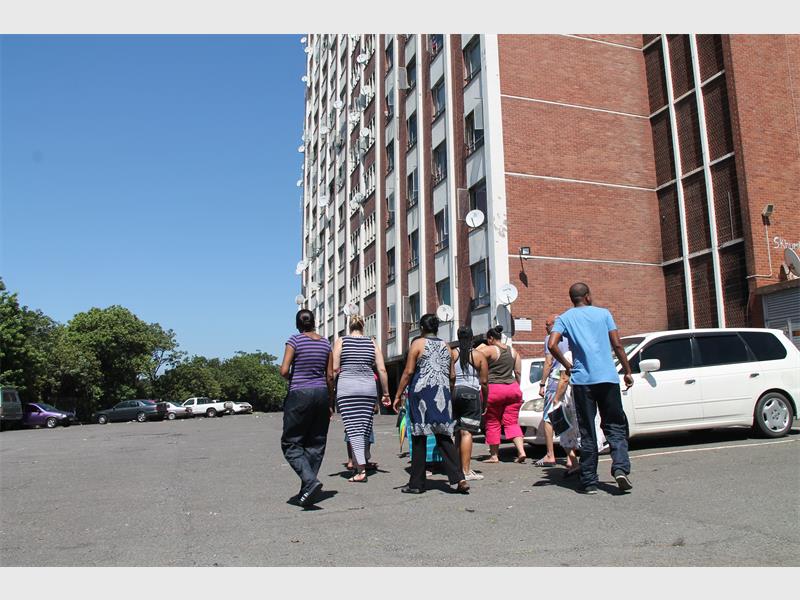
WHILE the water may have been restored at Umbilo’s Flamingo Court, after water-cuts earlier this month, serious problems still loom, which have flat dwellers gravely concerned that their severely neglected block may degenerate into a slum.
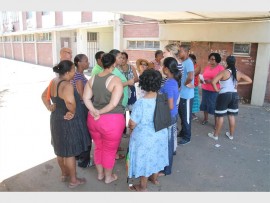
A resident, who wished to remain anonymous, told Berea Mail there were serious issues with illegal activity and non-payment of levies, electricity and water, which was of concern for residents.
He added, “You can’t penalise everyone when only some people don’t pay and not everyone in this building is involved in illegal activity!”
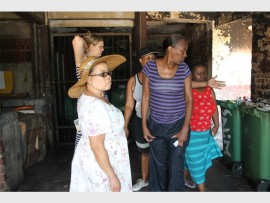
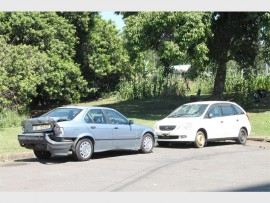
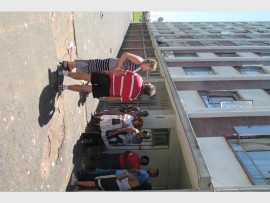
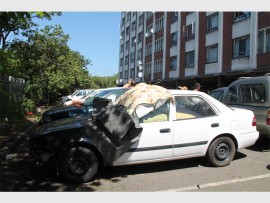
On a recent walkabout with Berea Mail and local councillor, Nicole Graham, residents pointed out cars from old crashes illegally parked in the parking lot for months on end, some waiting to be fixed, others providing a shelter where people slept at night.
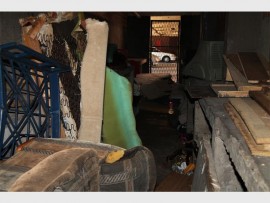
The residents also alleged vagrants slept in a former store room which had made things “very unhygienic.” There were also reports of cars being washed in their parking lot which was not permitted.
The resident said before signing the sectional title deeds in 2002, residents were informed that individual water meters would be installed and flats would be repainted.
“It is unfair for people who pay their levies and bills to have one shared water meter that allows the same bill for a flat with two people or a flat with ten people and overcrowding is a big problem,” he said.
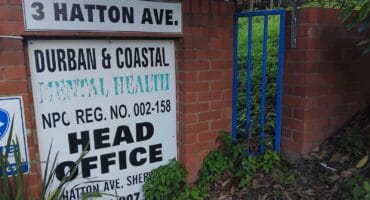
André Grundler, a local property expert who is the building administrator addressing the issues at Flamingo Court, in an interview with Berea Mail, said the problems he has to deal with in trying to rescue the block of flats from slum status was a “government created disaster.”
“The move to sectional title was doomed to failure from inception for the poor, yet it was meant to give them long term housing security.
“It is obvious that a person with limited income cannot afford the long term costs of ownership, there are a host of similar government housing initiatives with major financial challenges,” he explained.
Grundler was appointed as administrator of Flamingo Court in 2010, inheriting one of Durban’s “bad’ buildings with bountiful problems.
“We created a task team with the eThekwini municipality to constructively pursue solutions and mechanisms for the challenges Flamingo Court faced.
“These included strong recommendations to support relief to mitigate the challenges facing the flat owner, especially the water situation and re-plumbing to create separate meters going forward.
“Unfortunately, two years and 26 meetings later, the process became unstuck when eThekwini municipality decided to reduce the water supply because of the water arrears,” he said.
The administrator felt it was inhumane to stop the water supply to the building as many residents were frail and old and had to use the stairs to carry buckets to their units in the 13-storey high rise building.
In January 2013, after going to court to put an end to the disconnection of water, eThekwini stopped the restriction until a more comprehensive application dealing with the challenges facing Flamingo Court was available.
“We filed an application for wider relief to benefit Flamingo Court against eThekwini and KZN Human Settlements to try to limit the loss of homes and recover levy debt.
“Basically, every owner needs to cover common costs but extreme cases show some are unemployed and cannot contribute to the common cost at all.
“Then there are those who receive social grants who have fallen substantially in levy debt with limited income. Can they expect their equally poor neighbours to pay for them?”
Both eThekwini and the Human Settlements opposed the application which is to be heard in Durban High Court in September this year.
“The paying owner is suffering the greatest prejudice due to non-payment from neighbours. For example, the water problem. In this environment, you cannot recover millions of rands without people losing their homes.
He said the Legal Resources Centre and the Poor Flat Dwellers Association were supporting many flat owners in the relief application.
What was astounding Grundler said, was, that often the poorest of the poor do the right thing and pay as much as they can while neighbours with a similar position pay nothing.
“Some can afford to pay but are simply unwilling!” While the high rise has its fair share of problems, it was not the worst building challenges he said he has dealt with.
“The longer an owner has taken a levy payment holiday, the longer the debt and the less likely they will be able to protect themselves and their homes. I am confident that we are going to secure substantial benefit from our relief application for Flamingo Court but it won’t make all our challenges fall away,” he added.
In his expert opinion, Grundler said the reality was that some owners will not survive the process and keep their homes due to perpetual non-payment and non-compliance, but this had to be done in order to keep the building sustainable for the future.