
Fire safety is vital
The KZN Emergency Medical Services urges residents to be aware of fire safety in their homes this winter.
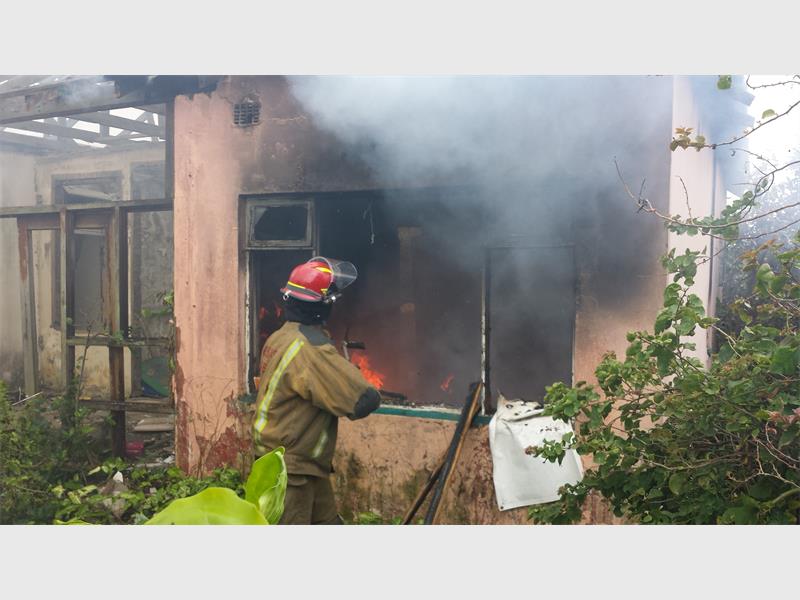
KZN Emergency Medical Services attend to multiple cases every year that involve fires, and the number of incidents increase as winter approaches and during the winter months.
According to the Robert Mckenzie from the Emergency Medical Services, this may be attributed to several factors, which include the cold, which results in people making fires for heat, the fact the sun sets earlier and rises later, resulting in the increased use of candles, and the activities where the fire is used are more likely to occur inside due to the cold.
“Most fire related cases that are responded to involve, fires, burns wounds, smoke inhalation and accidental ingestion of liquid gel fuels. Many people rely on candles, lanterns and braziers to provide light and heat, the major risk being that these light and heat sources have an open flame, which poses a fire risk if it is knocked over, or if something falls against it. Considering the likely hood of these devices being used in a confined and poorly ventilated environment, like a small room, with the doors and windows closed, the smoke produced by the flames can result in respiratory conditions,” he said.
Another common cause of fires is illegal or unsafe electrical connections. This can range from where cables are connected to a power source illegally or unsafe wiring, where the wiring has not been done correctly. Plug points are also often over loaded with multiple devices connected to a plug.
Mckenzie said when needing to use candles, gas stoves or braziers, consider the following safety points:
DON’T
Leave candles or cookers unattended.
Leave cooking pots unattended while they are being used on a stove.
Allow children to play around fires.
Use candles or cookers near curtains or on an uneven surface.
Use illegal or unsafe electric connections.
Go to sleep with candles or fires/braziers used for heat still burning.
Lock people inside a house.
Use homemade cookers or heating appliances.
DO
Ensure adequate ventilation when using braziers or generators and preferably don’t use them inside.
Teach children about fire and its dangers.
Extinguish all flames/fires before leaving them unattended or going to sleep.
Store stove fuels and flammable fluids safely away.
Keep matches away from children.
If there is a fire or it is suspected that there may be a fire, immediate action needs to be taken.
Raise the alarm/wake up others in the house, this may also mean neighbours, depending on the living arrangements.
Evacuate the building, crawl if necessary.
If clothes are on fire, lie on the floor and roll.
Only put water on burn wounds.
Remove burnt clothing and jewellery from burnt areas of the body.
Don’t go back into the burning structure.
Call emergency services.
The storage of liquid fuels (paraffin, liquid jell fuels) used in stoves and lanterns is also very important as they may be accidentally consumed by children and they themselves are a fire risk.
The following precautions can be taken with regard to liquid fuels:
Store the fuel away from where the devices are used.
Don’t store fuel in beverage containers.
Use a container that seals well and preferably has a safety cap.
Educate children in the house about the fuel and store it out of their reach.
If cooking with gas, close the valve of the cylinder correctly after using it.
“Despite there being many aspects of fire safety these are a few basic concepts that can help prevent the start and spread of fires, which can not only cause burns but also severe complications from inhaling the smoke produced by fires,” said Mckenzie.