Durbanites march against Monsanto
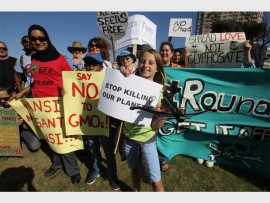
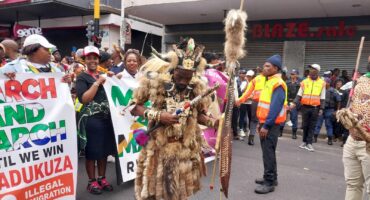
Durban residents marched against Monsanto for food sovereignty and seed freedom on Saturday.
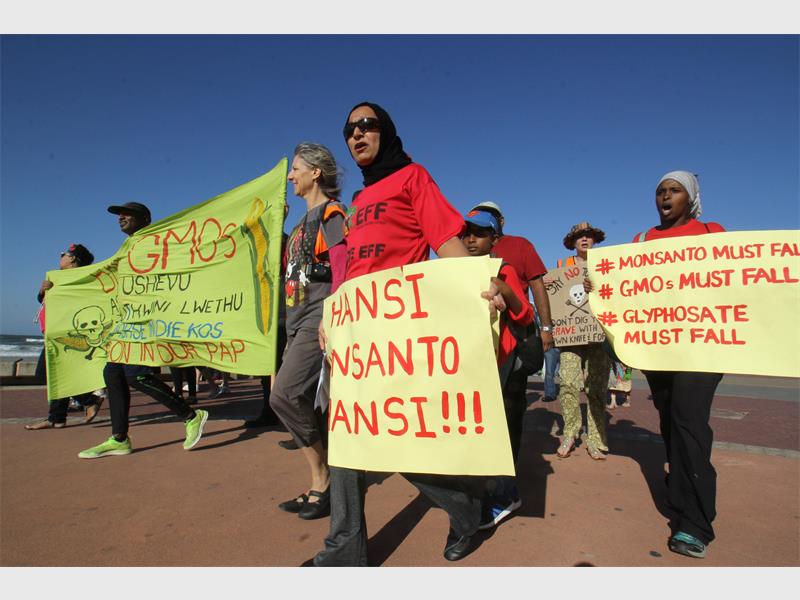
DURBAN was one of seven South African towns which joined the worldwide March Against Monsanto (#MAM) on Saturday, 21 May.
These symbolic marches targeted Monsanto and five similar multinational companies that currently control world food production.
Monsanto is at the forefront of pushing ‘genetically modified’ (GM) crops worldwide. The multinational is also infamous for peddling dangerous chemical products while downplaying their toxicity. These include Agent Orange (2,4D herbicide) used by the USA in the Vietnam War, the pesticide DDT and PCBs, which are now banned internationally.
South Africa approved the first commercial genetically modified crop in 1997. Now as much as 87 per cent of maize, more than 90 per cent of soya and all the cotton grown in South Africa is GM. South Africa also imports GM Canola and a small amount of GM rice. GM maize and soya are not only consumed whole but are also found in thousands of processed foods. However, most South Africans are not aware of the contents of their staple foods due to poor labelling.
Independent scientists are increasingly finding that GM crops are not safe. Animal experiments indicate allergic reactions; disturbances in the immune system, problems with the growth and development of cells and organs, inflammation and damage to organs, increased and earlier onset of cancers, and reproductive problems.
“This year’s MAM in Durban was calling for food sovereignty and seed freedom, and the event began with a symbolic seed swap. Seeds are our most precious heritage, carefully selected by our ancestors over thousands of years to suit local environments and cultures. But our seeds and thus our food is at risk,” warned Karen Read, one of the MAM Durban organisers.
Multinationals like Monsanto have been buying up seed companies globally and lobbying for laws which criminalise seed exchange between farmers. Monsanto now owns almost 25 per cent of commercial seeds worldwide. After a series of mergers in South Africa, Monsanto and its rival DuPont Pioneer, now own 90 per cent of the market for maize, wheat and sorghum. Not only are they monopolising the market, but companies like Monsanto have laid claim to life itself by patenting seed through the process of genetic modification. The company owns the genetic material, including the seeds or crops containing those genes, and farmers must pay license fees to use it even if they have saved seed themselves. This goes against centuries of farming practice.
Both food pricing and safety have been at the forefront of South African’s concerns this year. The crippling drought has created a food shortage, and is predicted to drive up food prices by 25 per cent.
Delwyn Pillay from Greenpeace local group Durban said the drought has been used as an excuse for dumping poor quality American poultry in South Africa. A preferential trade programme on agricultural goods under the African Growth and Opportunity Act (AGOA), coupled with farming subsidies, is enabling the USA to put cheap chicken on South African shelves.
“The import of chicken into our local market has the potential to really hurt our farmers; putting pressure on them to lower their standards to compete with the GMO-fed chickens from the US. This is a direct threat to our food sovereignty!” he said.
Although the drought is part of a naturally occurring el Nino cycle, it has been hugely exacerbated by climate change. Ironically, the industrial farming promoted by Monsanto et al is the cause of at least half of all climate change emissions.
“Rather than a rethink, these companies are using the drought to peddle even more of their products including more herbicide for ‘climate smart’ conservation agriculture to pushing GM crops for ‘drought tolerance’ into Africa,” said Vanessa Black of Earthlife Africa Durban.
Black said agribusiness keeps a grip on the food system through scare tactics which make us believe that we wouldn’t be able to feed the growing population without their technologies, but this is a lie.
“We produce more food per person than ever before but one in three people in the world suffers from malnutrition, one third of the food produced is wasted and 400 million people are obese. Clearly there is a problem with the way in which we currently produce and distribute food,” she said.
Alice Thompson from Earthlife Africa Durban said we should transition to Agroecology – farming that is in tune with nature as practiced by traditional small-holder farmers – if we hope to feed the world in a sustainable way and without negatively impacting people or the planet.
“Ecological farming methods both prevent climate change and help us to cope better with climate change impacts, such as the drought we are experiencing,” she said.