Booms, Bins & Bags project tackles Mngeni River pollution
The implementation of the Booms, Bins and Bags project aimed at preventing pollution in the Mngeni River from reaching Blue Lagoon and the KZN coastline is in the pipeline.
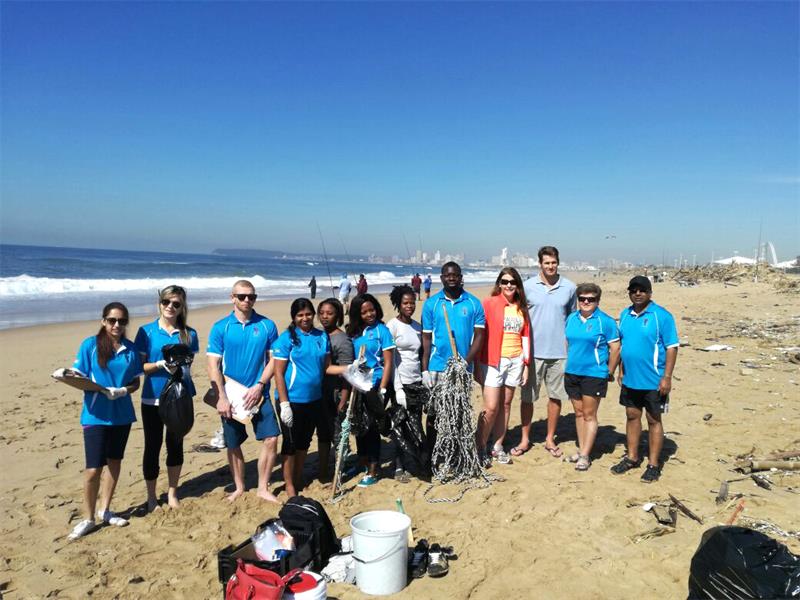
JUST weeks after the Durban beachfront was ravaged by pollution from the unseasonal mid-winter rains, a ground-breaking project funded by the Paddle For The Planet initiative held last year will see the implementation of the Booms, Bins and Bags project aimed at preventing pollution in the Mngeni River from reaching Blue Lagoon and the KZN coastline.
Paddle for the Planet is a global paddling relay that unites paddlers, creates awareness and is a movement for conservation. The goal is to have simultaneous paddling events happening sequentially, at a specific time, in every time zone and in each country around the world, uniting paddlers of any type of paddling craft through the Global Relay.
In addition to raising awareness Paddle for the Planet raised R60 000 in donations, which has been entirely ploughed into the pioneering pollution control project on the Mngeni estuary.
The Paddle for the Planet awareness day raised R60 000 for the protection of waterways and oceans and with that money a collaboration of academics, scientist and environmentalists formalised the concept of Booms, Bins and Bags.
The team that was put together comprised experts from the MACE Labs at the University of KwaZulu-Natal, the Duzi Umgeni Conservation Trust (DUCT) as well as volunteers from Paddle for the Planet spent a lot of time gathering information to decipher where the best position to put the booms and bins would be.
Through a period of intense research the team was able to gather enough data from their various points on the Durban beach near Blue Lagoon in order to make an educated judgment call as to whether their programme will be a success or not after their pilot phase.
Establishing baseline levels of sediment particle size as well as microplastic concentration has meant that they will be able to clearly judge the success of their project when the first booms, bins and bags are installed on the troubled Mngeni River.
“The tests have given us a chance to see the effects of microplastics and polystyrene pollution. The whole testing phase was set up in order for us to try and get more insight into how plastics break down and their effect on the ecology,” Dr Deborah Robertson-Anderson, the Director of MACE Labs said.
More information can be found at www.paddlefortheplanet.org