‘No human rights without sign language rights’
Two years after South African Sign Language became the country’s 12th official language, many deaf South Africans still face exclusion. From banks to healthcare facilities, access remains a challenge as International Day of Sign Languages is marked today.

DESPITE the historic recognition of South African Sign Language (SASL) as the country’s 12th official language in 2023, little progress has been made to improve access and inclusion for the deaf community.
That’s according to the KZN Blind and Deaf Society (KZNBDS), which is calling for greater awareness, training, and policy implementation. The declaration of SASL as an official language was signed into law on July 19, 2023, following a constitutional amendment passed by Parliament in May.
While this was a significant victory, KZNBDS says the momentum has since stalled. “A deaf person needs to be able to access information and resources in SASL — that is the only time their rights are truly recognised,” said Diane Mariah-Singh from KZNBDS. She noted that while September is celebrated as International Month for Deaf People — with September 23 marked as International Day of Sign Languages — many deaf South Africans still face exclusion.
“We still have deaf people who go to SASSA, banks and healthcare facilities needing to explain with great difficulty exactly what they need. It’s a huge challenge,” said Mariah-Singh as she called on institutions and government departments to invest in training staff. “We need people to learn sign language. This is very import because deaf people need someone at these offices to provide them with information to a sufficient degree or at basic level,” added Mariah-Singh.
Also Read: ‘Get involved,’ calls Talk Sign campaign
In 2018, SA made a breakthrough with 52 candidates registering for the first SASL Home Language matric exam. The sign-based assessment required candidates to plan, edit, and record themselves signing their responses to essay questions and other transactional texts, using the structures of SASL.
“We are also calling on mainstream education to introduce SASL as part of the curriculum so that children can begin to learn it at an early age. This will help us in the future. This will normalise deafness and encourage inclusion. If children grow up learning that diversity includes whether we hear or we are deaf, then we will have less exclusion in that generation,” said Mariah-Singh.
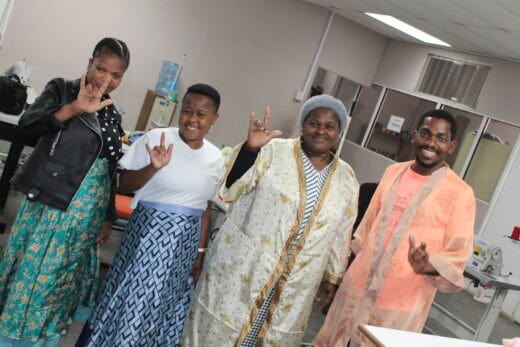
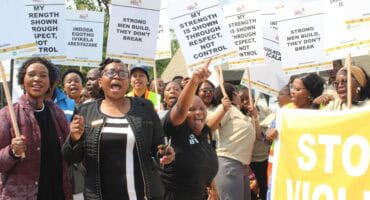
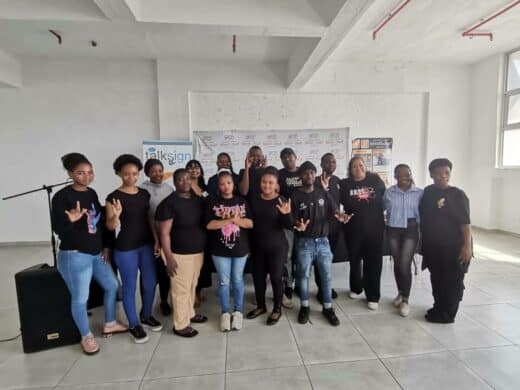
In partnership with UKZN, throughout September, KZNBDS has been raising awareness on deaf culture. Under the theme ‘No human rights without sign language rights’, they advocated at various events throughout eThekwini for the cultural recognition and acceptance of SASL, reinforcing the dignity and human rights of deaf individuals.
As part of the event in KwaMashu on September 16, UKZN audiology students engaged patients with health education and conducted screenings while staff from the KZNBDS educated attendees on deaf etiquette and taught basic sign language.
Mariah-Singh called on employers to adapt. “A deaf person may qualify for a job but is expected to bring their own interpreter to the interview which may be pricey. Ideally this should be provided by the employer who needs to sensitise the staff if a candidate is successful. Learn how to communicate and accommodate a deaf person,” urged Mariah-Singh.
Those interested in learning SASL can contact Diane Mariah-Singh at socialwork1@bdskzn.org.za or call 031 309 4991.
For more from Berea Mail, follow us on Facebook, X and Instagram. You can also check out our videos on our YouTube channel or follow us on TikTok.
Click to subscribe to our newsletter – here