Special schools plays a vital role in the optimal functioning of a community
Boksburg lacks special school facilities, as there is only the Isipo Sethu special school, which is located in Vosloorus.
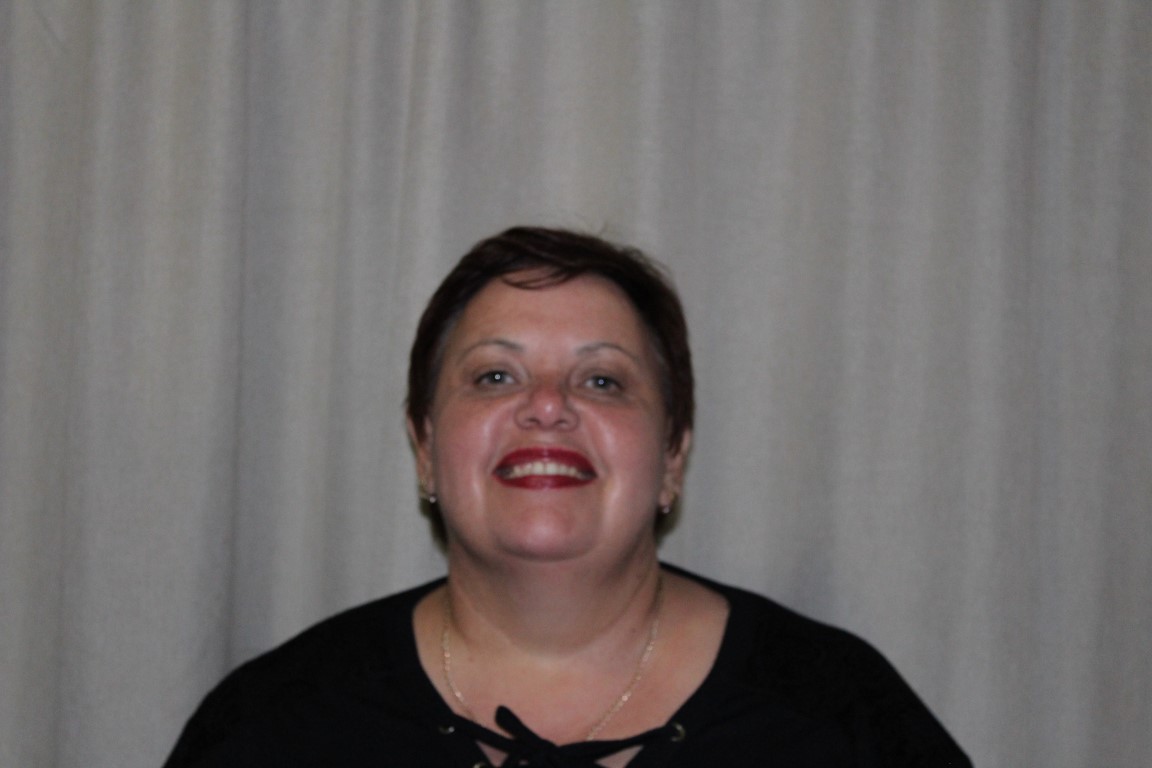
The Boksburg community houses experts, dreamers, doers and survivors. One of the experts that are homed in Plantation is Dr Hester Costa, director of inclusion and special schools at the Department of Education.
Costa said in the greater Ekurhuleni there are 28 special schools, including schools at child and youth care centres, that provide a range of support needs.
Costa reiterates that it is important for the community to know about inclusion and special schools as it forms a big part of the optimal functioning of any community.
“Every child will at some stage in their lives have support needs, whether it is an academic challenge or whether it is a learner who struggles to cope when parents divorce.”
She said it is important that parents feel free and safe to interact with the school-based support teams when challenges are identified at home or at school.
“Open communication is critical to ensure that your child accesses the appropriate support.”
Costa said special schools are a natural part of any education system.
“There are special schools for children who experience challenges with learning and development, but in Gauteng, we also have a few special schools for learners with a focused interest or ability, such as schools of the performing arts.
“As members of the Boksburg community we must celebrate the achievements of every learner, not only those learners that are blessed to obtain the multiple distinctions in Grade 12,” said Costa
She said it is great that the Advertiser also celebrates the achievements of learners who excel in academics, leadership, sports and cultural activities.
“It is wonderful because of special care given that some learners have learned to eat independently, some can now take care of a vegetable garden and some have learned to read or communicate with others,” said Costa.
- A growing passion
She remains passionate about the potential that these schools hold and what they are achieving.
Costa grew up in a very small mining community, Venterspost, and has been staying in Boksburg for the past 14 years.
When she completed school and for many years thereafter, access to learning and information was mostly available only in formal education settings.
Costa began her studies at the University of Pretoria where she qualified as a speech therapist and audiologist.
“I always knew there are learners who also go to special schools but my interest really deepened when I started to work as a speech therapist. I was fascinated by how learners’ potential was unlocked when they are provided with the appropriate support and setting.
“Given that I then started my employment in education, I wanted to qualify as an educator so I could understand the learning requirements.”
She decided to qualify as a pre-school teacher where most of the learners should ideally be identified as in need of support.
“I then realised that knowledge about remedial teaching is critical given that most children in need of support at school also face academic challenges. I enrolled for a part-time post-graduate diploma at the University of Johannesburg.”
During this period she took up a post at the District Office in Benoni/Brakpan working with learner support.
“Being part of the project I was eager to learn more about the whole issue of HIV/Aids.”
Costa completed a Masters degree in Philosophy, exploring and describing male adolescents’ views on HIV/Aids with the view to developing guidelines for the development of relevant prevention/intervention programmes.
She said she was blessed to have a study partner with whom she worked so well and they decided to continue with their doctorate studies as part of a project driven by the University of Johannesburg relating to aggression as the theme.
“My thesis was about the facilitation of mental health in educators experiencing aggression in secondary schools.”
This study opened a whole world of psycho-social challenges. She also realised that educators need to be cared for in terms of their mental health in order to ensure that they are productive and inspiring teachers.
- Unlocking potential
Costa feels strongly about inclusion and special schools as she has direct family members with disabilities and has a first-hand experience of how the right support structure and development can unlock their full potential to live a successful and independent life.
As the current director of inclusion and special schools, there are several highlighted aspects that Costa focuses on.
• Ensuring sound school management and governance in special schools.
• Expanding access to education for learners experiencing barriers to learning and development.
• Increasing the number of full-service schools.
• Increasing the number of special schools.
• Capacity building of educators, therapists and support staff.
• Monitoring and supporting the supported provisioning by psychologists, counsellors and all therapy dimensions in special schools and those provided at a district level.
• Early identification of learners with support needs, support provision by school-based support teams, district-based support teams and the eventual admission of a learner to a special school based on confirmation or diagnosis of a disability or support needs.
• Ensuring curriculum support with specific reference to curriculum differentiation in public ordinary and special schools.
• Implementing the National Conditional Grant for learners with severe to profound intellectual disabilities. These learners are mostly in care centres or stimulation centres.
- Misconceptions
According to Costa, the biggest misconception about special schools is that the staff are not working as hard as staff in public ordinary schools.
“Staff in special schools have to accommodate a range of individual support needs relating to health, social challenges, learning, mental health of learners, parent support needs etc. on a daily basis,” said Costa.
She is also saddened that some belief that learners in special schools have no potential.
“On a daily basis, I am surprised about what learners are able to achieve in view of the challenges they have to face.
“Inclusion provides for the acknowledgement and providing of all learners given their differences in talents and support needs. It requires of us to find the least restrictive learning environment where the learner will be able to develop and learn to his or her full potential.
“Let us broaden our horizons and understanding of achievement, but more so let us be thankful for all the blessings we receive on a daily basis. Let us celebrate the good of life in all its diversity.”