
Local support group raises cancer awareness
Speakers reminded the attendees that early detection is crucial to fighting breast cancer, and it is important to know the risks or the signs to look out for.
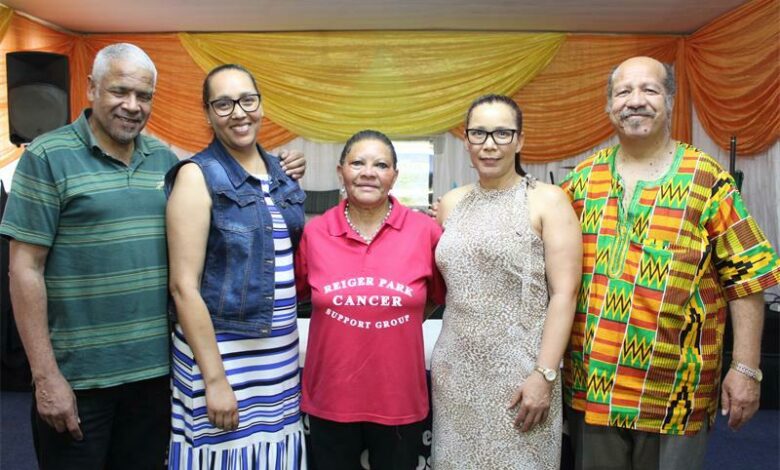
October is Breast Cancer Awareness Month, and to mark the annual campaign, Reiger Park Cancer Support Group hosted an informative talk on cancer to raise awareness of the disease on September 23.
Besides providing awareness, it aimed to educate and offer support to those suffering from cancer or affected by the disease.
The panel of experts who gave lectures on the subject included Professor B Magobotha from the University of the Witwatersrand, Dr Meloney Botha from Pretoria, and local healthcare practitioners Dr Agatha Wilhase and Dr Edward Henk.
They reminded the attendees early detection is crucial to fighting breast cancer, and it is important to know the risks or the signs to look out for.
One of the event organisers, the Reiger Park Cancer Support Group founder-cum-chairperson, Ulita Billings, described the event as a success, very educational, and informative.
“The attendees had the opportunity to ask any questions to the panel, and this active participation was valued. All information shared was strong and uplifting. The group felt honoured to have these experts to share their knowledge, wisdom, care and passion with the public. We give God all the praise, glory and honour for making this event such a big success,” said Billings.
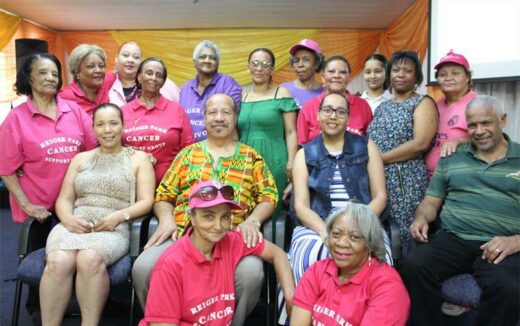
Billings thanked the panel of professionals, caregivers, survivors, and members of the public for supporting the initiative, as well as Pastor D. Bell for making the venue, End Time Revival Church, available for the event.
Breast Cancer Awareness Month
According to the South African Government (www.gov.za), the incidence of breast cancer among South African women is increasing and it is one of the most common cancers among women in South Africa. It is the most prevalent cancer amongst white and Asian women and the second most common cancer among black and coloured women.
Facts about breast cancer
The South African government shared these facts about breast cancer:
- Early detection of the condition can lead to effective treatment and a positive prognosis. About 90% of patients survive for many years after diagnosis when breast cancer is detected at its early stages.
Regular self-breast examinations and regular mammograms are key to early detection.
Presenting yourself early for treatment may result in more effective treatment, leading to a reduction in pain and suffering and a significant decrease in the loss of life.
The government stated the designation of October as Breast Cancer Awareness Month in South Africa reflects a nationwide drive by public and private healthcare structures to raise awareness of this debilitating disease across all races and class structures.
Statistics South Africa report
According to Statistics South Africa’s report titled Cancer in South Africa (2008-2019), published on March 28, 2023, breast cancer is the most invasive cancer in females and also one of the leading causes of cancer deaths in females. It can also affect males in rare cases.
Cancer Diagnosis
According to the StatsSA report, in 2019, females accounted for 51.3% (43 811) of cancers diagnosed, while males accounted for 48.6% (41 491). Cancer diagnosed in males increased by a slightly higher percentage, 56.3% compared to females, where diagnosed cancers increased by 52.3% between 2008 and 2019. The median age in years at diagnosis of cancer was 59 for females and 64 for males.
Cancer incidence
Among females, breast cancer was the most diagnosed malignancy in 2019 and accounted for 23.2% (10 172) of all cancers diagnosed in women, followed by cervical cancer at 15.9% (6 945) and colorectal cancer at 4.5% (1 952).
Among males, the most diagnosed cancers in 2019 were the prostate, colorectal and lung. These jointly accounted for one-third of all cancers diagnosed among males.
Mortality from cancer
Cancer-related mortality was based on a total of 43 613 deaths due to cancer. While overall mortality decreased by 24.1%, from 598 553 in 2008 to 454 014 in 2018, deaths due to cancer increased by 29.3%, from 33 720 in 2008 to 43 613 in 2018.
Females comprised 51.2% (22 334) and males 48.6% (21 208) of the 43 613 cancer-related deaths. The median age in years at death due to cancer was 62 for females and 64 for males. Between 2008 and 2018, cancer-related deaths increased by 34.2% for females, while those for males increased by 24.3%.
The leading cancers contributing to death among males in 2018 were the bronchus and lung, contributing 18.7% (3 964) of cancer-related deaths, followed by prostate cancer at 16.7% (3 534), oesophagus 7.5% (1 587), colorectal 6,8%, and liver and intrahepatic bile ducts 5.2% (1 100).
These leading cancers accounted for half of all cancer-related deaths among males.
Among females, cancers of the cervix uteri, breast, bronchus and lung and colorectal contributed half of all cancer-related deaths. Cancer of the cervix uteri accounted for 17.9% (3 994), breast 17.0% (3 796), bronchus and lung 9.2% (2 060) and colorectal 6.1% (1 371).
More information on cancer can be found: at https://www.statssa.gov.za/publications/03-08-00/03-08-002023.pdf
Breast cancer symptoms
What are the early signs you should look out for?
Women are advised to let their breasts be checked regularly as early breast cancer usually does not show symptoms. As the tumour grows, it can change how the breast looks or feels.
Common changes include:
• A lump or thickening in or near the breast or in the armpit area
• A change in the size or shape of the breast
• Dimpling or puckering in the skin of the breast
• The nipple becoming inverted (turning inward into the breast)
• Abnormal discharge from the nipple
• Scaly, red, or swollen skin on the breast, nipple, or areola (the dark area surrounding the nipple)
• The skin of the breast taking on an orange peel look or feel or constant pain.
If you notice any symptoms of breast cancer, CANSA advises that you see a professional health practitioner as soon as possible.
You can find more information on how to check your breasts for cancer symptoms at www.cansa.org.za