Toxic acid mine drainage turns Boksburg Lake red: TCTA confirms contamination source
TCTA has warned that the water is not safe for human consumption and urged all residents near Boksburg Lake and downstream not to drink water from the lake or any connected streams, rivers, or dams until further notice.
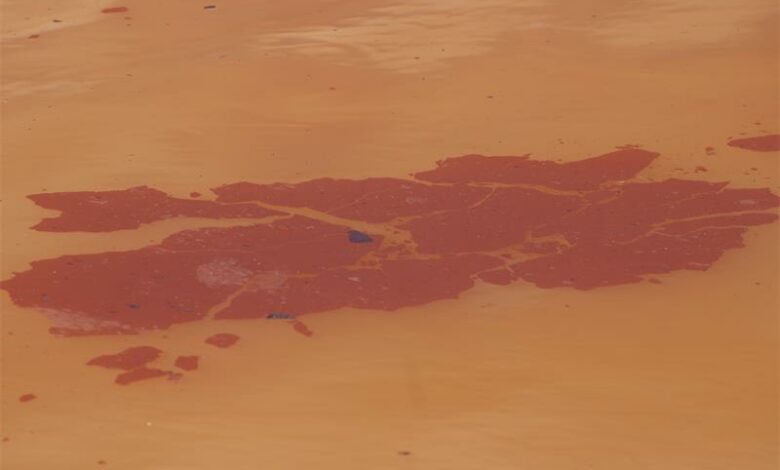
Contrary to initial assumptions, it has been confirmed that toxic acid mine drainage (AMD) is responsible for the discolouration and contamination of Boksburg Lake and other local dams and waterways.
Residents raised the alarm when the lake recently turned a rusty red, initially believed to be due to a chemical spill, possibly from nearby upstream factories. However, the state-owned Trans-Caledon Tunnel Authority (TCTA) this week confirmed that the colour change was caused by AMD from the Central Mining Basin seeping into the concrete stormwater channel near the Campbell Road (Cason) bridge.
The source of the leak has been traced to the New Blue Sky incline shaft, located approximately 100m north of the observation point. Although the shaft is capped, it appears that mine water has found a pathway to the surface.
The reddish discharge flowed into the lake via the stormwater channel that runs through upstream industrial areas, including Cason and Andebolt.
Water quality warning
“The decant associated with the Central Basin has affected the water quality in Boksburg Lake,” said Goitseone Kgwele, TCTA’s Operations Manager for AMD plants.
According to Kgwele, the red colour is typical of AMD exposed to oxygen, a finding confirmed through chemical analysis.
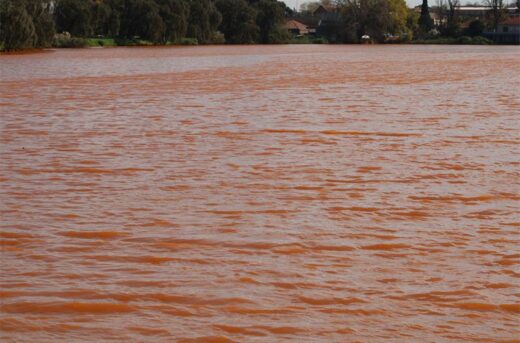
TCTA has warned that the water is not safe for human consumption and urged all residents near Boksburg Lake and downstream to Cinderella Dam not to drink water from the lake or any connected streams, rivers, or dams until further notice.
In response, a water quality monitoring programme was swiftly implemented by officials from the Department of Water and Sanitation (DWS) and TCTA. The programme was introduced to assess the water from the decant point downstream to Natalspruit and determine if further mitigation is required.
“At the point of decant, the pH level was recorded between 5.7 and 7.2. In Boksburg Lake, the pH ranged between 5.0 and 6.5,” Kgwele explained.
“By the time the water reached Cinderella Dam, pH levels had normalized to within the acceptable range of 6.5 to 9.5, as set by the DWS to meet water resource objectives in the Vaal River System.”
Kgwele added that, although the AMD decant is expected to subside naturally within days, its presence in the lake will likely persist for a longer period.
Ongoing operations and challenges
Kgwele noted that the Central Basin AMD treatment plant has operated without major disruptions, despite minor issues over the past year.
“It maintained an average treatment capacity of 57 megalitres (ML) per day, and the mine shaft water level remained well below the decant threshold prior to the start of the recent rainy season.”
He acknowledged that TCTA had been aware that water levels in the mine void were rising and approaching the surface during the rainy season but said it was impossible to predict when and where the water would surface.
“To manage this uncertainty, TCTA began monitoring possible decant points in the vicinity of Boksburg Lake.
Evidence of decant was first observed on May 21. At that time, the flow volume was low, though it was already clear the AMD was impacting the lake’s colour.”
A routine inspection conducted on May 2 showed no signs of AMD leakage. However, residents began noticing changes in the lake’s colour around May 15.
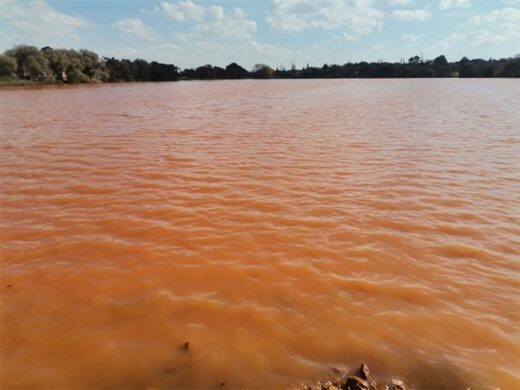
On May 23, the Council for Geoscience identified a point on the canal upstream of the lake where clear water entering the canal turned reddish on contact.
Additional sources of pollution
In addition to the AMD, other sources of pollution have contributed to the lake’s degradation. Kgwele confirmed that while the red hue results from iron precipitation, the lake’s pH levels have also been negatively affected by further pollutants.
A reliable source, speaking on condition of anonymity, told the Boksburg Advertiser that a damaged sewer system upstream had worsened the situation. The system allegedly discharged sewage into waterways that feed into the lake.
TCTA’s role in AMD management
TCTA operates and maintains three AMD treatment plants on behalf of the DWS—located in the Western Basin (Randfontein), Eastern Basin (Springs), and Central Basin (Germiston). These plants are designed to treat contaminated water from underground mine voids before it is discharged into nearby rivers.
The Central Basin plant has a maximum operating capacity of 72ML/day. It is currently running at 64.7ML/day, with an average of 56.8ML/day over the past year, including periods of planned maintenance.
Also Read: WATCH: Lake water turns rust red after suspected industrial chemical leak