
Poor air quality is commonly known for its contribution to, among others, respiratory and cardiac diseases.
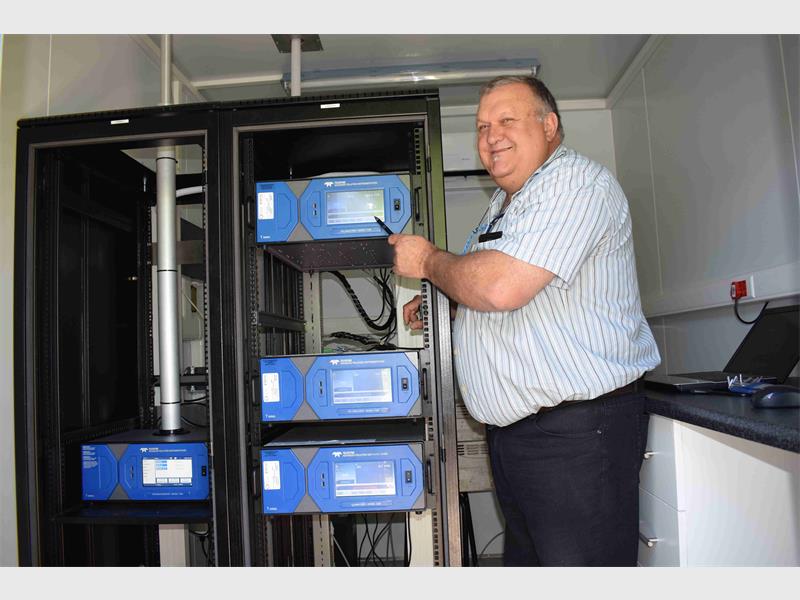
The City of Ekurhuleni, being an industrial hub, has deployed continuous Ambient Air Quality Monitoring Stations across the city to identify sources of potentially harmful emissions.
The locations of the 10 Ambient Air Quality Monitoring Stations were strategically selected based on results of a feasibility study that identified areas with high concentrations of air pollutant such as industrial areas and areas with high traffic congestion.
The monitoring stations assess ambient air pollutant concentrations to which the surrounding communities are exposed.
Some of the Ambient Air Quality Monitoring Stations are located in Bedfordview, Springs and Tembisa.
Also read: Ekurhuleni maintains low water consumption
The information obtained from the monitoring provides an indication of the quality of the air and can be used to determine the impacts of the air pollutants on the environment, as well as health impacts on the community.
Bobby Marilli, the city’s air quality practitioner (AQP) explained that the city has a legal obligation to monitor ambient air in terms of national environmental management: Air Quality Act No. 39 of 2004.
“The most harmful kind of air pollution is the ones we can’t see with our naked eye,” Marilli said.
“Air pollution occurs if there is a change in the composition of the ambient air caused by smoke, dust, gases, fumes, aerosols and odorous substances which are harmful to the environment.”
Ambient air refers to any unconfined portion of the atmosphere or outdoor air.
The atmosphere or outdoor air is composed of a mixture of gases such as nitrogen, oxygen, carbon dioxide, a small amount of Argon and other gases.
Also read: Speedboat to ensure Ekurhuleni’s water bodies are ship shape
The station’s monitor pollutants that interfere with acceptable levels of compositions of the atmospheric air and AQP intervene whenever an alarming pollutant source is detected from the system.
Marilli further explains that the burning of waste is also an under-appreciated source of air pollutants as the most dangerous emissions can be caused by burning rubble.
When waste is burnt, harmful quantities of dioxins, a group of highly toxic chemicals, are emitted.
Dioxins are the most toxic pollutants to the human organisms, explained Marilli.
Where industries are identified as sources of air pollutants, AQP visit the premises to evaluate compliance with the air quality standards.
The standards prescribe the acceptable level of pollutants that cannot be exceeded during a given time in a defined area.
The community can get involved by reporting any air pollution or odour problems in their area to the following AQP in their areas for intervention:
• East Region (this area includes Brakpan): Flip Visser / Chris Kapp, Flip.Visser@ekurhuleni.gov.za, 011 999 8768, Chris.Kapp@ekurhuleni.gov.za, 011 999 8759.
• North Region: Samukelo Shongwe, Samukelo.Futshane@ekurhuleni.gov.za, 011 999 3525.
• South Region: Edmund van Wyk, Edmund.vanWyk@ekurhuleni.gov.za, 011 999 2470.
Follow us:
For more #hyperlocal news at your fingertips, visit Springs Advertiser, Boksburg Advertiser, Benoni City Times, African Reporter