Could new technology help restore Lonehill Dam?
Scientists and community leaders are weighing up continuous tracking and biodredging to tackle persistent pollution and sludge at a northern Johannesburg landmark.
Scientists and water rehabilitation specialists are exploring a proposal to improve Lonehill Dam’s water quality, with real-time monitoring and sludge management among the interventions under consideration.
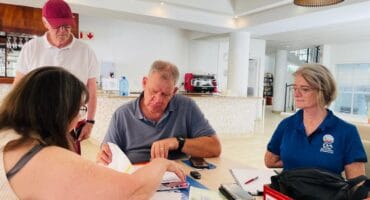
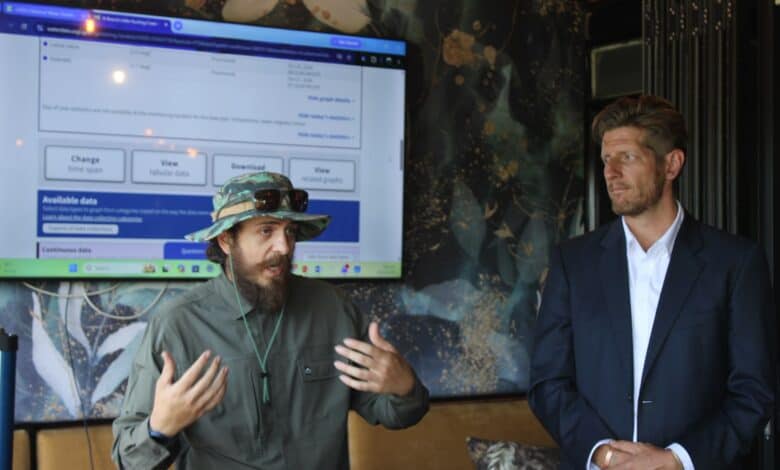
Dr Kyle van Heyde, a scientist and researcher at the Agricultural Research Council (ARC), and Kyle Odgers, of Mobile Blue, presented their proposed approaches during a site visit attended by Gauteng DA Shadow Health MEC Jack Bloom, City of Johannesburg representatives and members of the Lonehill Residents Association (LRA).
Read more: Lonehill Residents Association seeks R200 000 for dam restoration
Nadeem Abrahams, the LRA’s environmental head, outlined the dam’s challenges, including aquatic plant removal, which has shifted from daily to weekly interventions, while Mark McClue, of Solutions for our Collective Environment (Source) Primary Co-operative, presented water quality observations and Van Heyde introduced a proposed independent water quality baseline, sludge profile and bathymetry assessment to help establish the dam’s condition and guide possible rehabilitation.
Odgers presented Mobile Blue’s proposed approach, combining in-situ biodredging for sludge digestion with ongoing water quality monitoring. The longer-term objective is to improve water quality and restore sensitive biodiversity once rehabilitation targets are achieved.
Odgers highlighted the limitations of traditional water sampling, which captures conditions at a particular moment rather than continuously tracking changes.
“Now, the problem with traditional water check is we go in, we take a sample, and that sample is one point in time,” he said, explaining that continuous monitoring could help detect pollution discharged outside scheduled inspections.
“They will say, cool, we know the inspectors come on a Tuesday, we know they come at 13:00, so Friday, 03:00 in the morning, we’re going to flush our system out.”
Also read: Sewage spills foul Jukskei River as residents demand permanent fix
The proposed technology uses sensors to collect readings and transmit data to a dashboard. Depending on the requirements, the equipment can measure indicators including dissolved oxygen, temperature, turbidity and chlorophyll A.
By comparing readings from different monitoring points, investigators could also narrow down where pollution originates.
“If you pick up a detection in, say, the third one downstream, but you don’t pick it up in the second or the first, it can only have come from that third catchment,” Odgers explained.
Also read: Kingfisher Park outreach raises R45 000 for local animal welfare
Odgers said monitoring could help authorities investigate pollution while improving public access to information about water quality. “It’s giving the rivers a voice but then enabling the people who can make decisions and action solutions to actually go and solve the problem.”
He also highlighted the educational value of sharing environmental data with students and communities.
“You empower people through transparency and you empower people by allowing them to use the data to understand what we mean by water quality and protecting our rivers,” Odgers said.
The visit included a walk towards the Lonehill Beach area and technical discussions with Bloom and the team.
The rehabilitation remains at the proposal stage, with no confirmed implementation date or final plan announced during the visit.
Follow us on our Whatsapp channel, Facebook, X, Instagram and TikTok for the latest updates!