
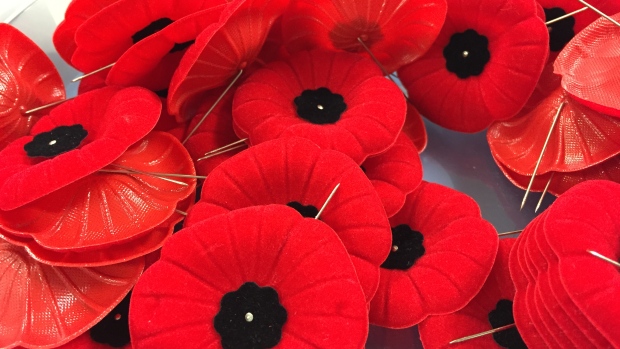
On this day, in 1918, at the eleventh hour of the eleventh day of the eleventh month, the guns fell silent to end the First World War (1914-1918), the largest global man-made catastrophe known until that time. The ‘war to end all wars’ cost the lives of a total of 8 634 300 soldiers. Twenty years later, the Second World War (1939-1945) saw the loss of 24 517 000 combatants’ lives. In addition to these statistics, millions of civilians died during both conflicts.
As a comparatively young country which permitted only a small segment of its population to bear arms, South Africa nevertheless made significant contributions to the Allied causes in both world wars and in the Korean War (1950-3). In the First World War, 245 419 South Africans of all races volunteered for military service; during the Second World War, 342 692 South African men and women of every race came forward; and in the Korean War, 826 men saw service with No 2 Squadron, South African Air Force while ten officers of the South African Armoured Corps served with the British Army. Will we remember them?
Ideas of silent remembrance for those who died for their country emerged around the world at the time of the First World War. The horrendous slaughter of that war and the grieving it caused sent shockwaves around the world. When the war took a turn for the worse in 1918, many areas in South Africa called for a halt of activity at midday to ‘…direct the minds of the people to the tremendous issues which are being fought out on the Western Front’. The Mayor of Cape Town, Sir Harry Hands, declared this policy official on 14 May 1918 and, on 14 December 1918, following the signing of the armistice in November, an impressive public display of remembrance was observed in Cape Town. At the firing of the midday gun, traffic came to a halt, all hats were raised and the public stood in silence as the Last Post and Reveille sounded through the streets.
The implementation of the ‘Two Minute Silence’, traditionally held throughout the British Empire (now the Commonwealth of Nations), has its roots in South Africa. There were various people around the world who felt that an official period of silent remembrance would be appropriate. In Melbourne, Australia, a plaque commemorates Edward George Honey, who, it is believed, first promoted the idea. In a letter published in the London Evening News on 8 May 1919, Honey called for a five-minute silence to mark the first anniversary of the armistice, but no evidence exists to suggest that any official action was taken in this regard.
It was the proposal by Sir Percy Fitzpatrick, well-known South African philanthropist, author and politician, which was acted upon. Fitzpatrick had been deeply affected by the loss of his son, Nugent, in France in December 1917. In commemoration of the Armistice, he appealed to King George V for a two-minute pause to be observed annually throughout the Empire at the eleventh hour of the eleventh day of the eleventh month: one minute in remembrance of the fallen in war; and one minute in gratitude for those who survived. Fitzpatrick had access to the King, who was moved by the idea. The official call of the King was published in the Sunday Times on 7 November 1919 and read as follows:
THE GLORIOUS DEAD
King’s call to his people
Armistice Day Observance
Two minutes’ pause from work
The King invites all his people to join him in a special celebration of the
anniversary of the cessation of war as set forth in the following message:
To all my people
Buckingham Palace
November 11, is the first anniversary of the Armistice, which stayed the world-wide carnage of the four preceding years and marked the victory of Right and Freedom. I believe that my people in every part of the Empire fervently wish to perpetuate the memory of the Great Deliverance, and of those who laid down their lives to achieve it.
To afford an opportunity for the universal expression of this feeling it is my desire and hope at the hour when the armistice came into force, the eleventh hour of the eleventh day of the eleventh month, there may be, for the brief space of two minutes, a complete suspension of all normal activities. During that time, except in rare cases where this may be impracticable, all work, all sound, and all locomotion should cease, so that, in perfect silence, the thoughts of everyone may be concentrated on reverent remembrance of the Glorious Dead.
No elaborate organisation appears necessary. At a given signal, which can easily be arranged to suit the circumstance of each locality, I believe that we shall gladly interrupt our business and pleasure, whatever it may be, and unite in this simple service of silent remembrance.
By: Allan Sinclair from the Ditsong National Museum of Military History courtesy of the Northern KwaZulu-Natal Courier.
Other articles you may be interested in:
Remembrance service to honour fallen soldiers