
Undertaker begs for ‘proper’ burial ground
Allison Smit of RAFS Funeral Services cried foul over the high groundwater levels at Kromvlei Cemetery, saying it was a health risk because “this water flows somewhere”.
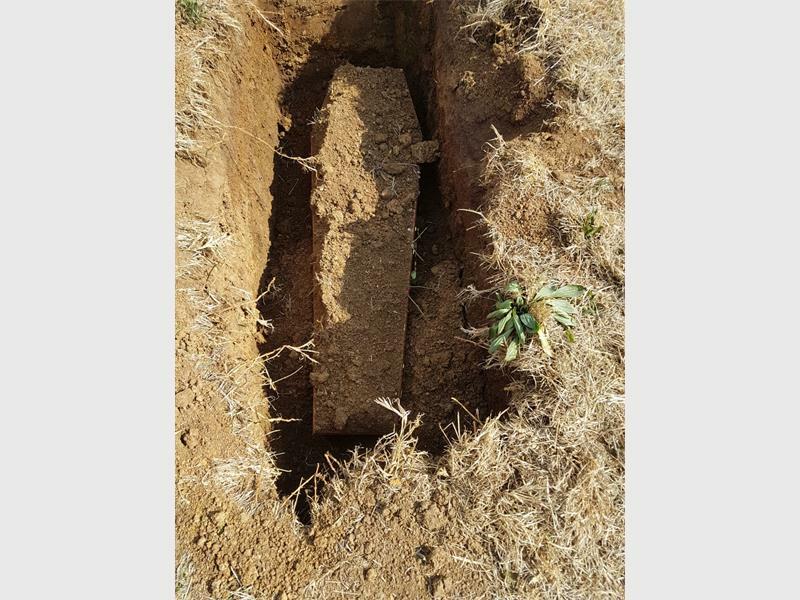
Laying a loved one to rest should be a dignified experience. However, the soggy ground at Kromvlei Cemetery makes that almost impossible.
Mortuary owner Allison Smit of RAFS Funeral Services informed the Alberton Record of the high groundwater levels at Kromvlei.

Smit said the soggy ground made it difficult for undertakers to do burials, and in the rainy season, the problem deteriorated.
“This affects our business. Sometimes you have to wait because staff are draining water from the grave. Now you have an overstretched family thinking you will put their loved one in the water. And it is not just water, it’s mud once they drain the water out,” she said.
According to Smit, who has used the Kromvlei burial grounds since 2014, this problem has worsened.
“I was there a few months ago. We had to drain the water because we couldn’t wait for the pumps to pump out the water. We used a bucket and poured dry sand into the grave so it didn’t look so muddy at the bottom. I don’t think anybody would want to bury their loved one in water,” Smit explained.
She suggested the CoE should offer them [undertakers] a proper burial ground to give the deceased a dignified burial.
“Why don’t they close the graveyard, find us a new burial space and put us somewhere else? I think in February and March, the graveyard was closed because all the graves we had opened were full of water and knee-high. I don’t want to bury there anymore. There are high groundwater levels, and our method of burying in Ekurhuleni doesn’t work,” Smit said.
City’s intervention
In an interview, Zweli Dlamini, the Ekurhuleni spokesperson, said he would ensure further investigation of the matter and provide a long-term solution.
“The Parks Department must go there to see if this land is still durable. That investigation must inform us if it is an area we must block off because of this situation. It normally happens in a low-lying area of a cemetery. Water flows from the top to the lowest-lying area when it rains. So when it rains, it becomes too prevalent in a certain part of the cemetery,” he explained.
He said they would need to assess how bad the situation was and might consider blocking off the affected sections.
“Because when you bury someone, you want to bury them with dignity. You don’t want to bury them as if you’re throwing them away. I will ensure the issue is investigated and there is a determination of a way forward.
“People do not plan to say, ‘let them bury here so the graves can be swallowed by the earth’, or whatever the case may be,” said Dlamini.
He said this was not an uncommon issue, and other cemeteries had, in the past, faced a similar problem.
“If this problem becomes prevalent in a particular corner, we would ask where else we could allocate graves and not have the problem in the same cemetery. That becomes the first option while we look for a long-term solution,” he said.