Mogoerane family grateful for the 40th commemoration of Thelle
At 17, Thelle was already conscious of the political situation in the country and the oppression that black people were going through.
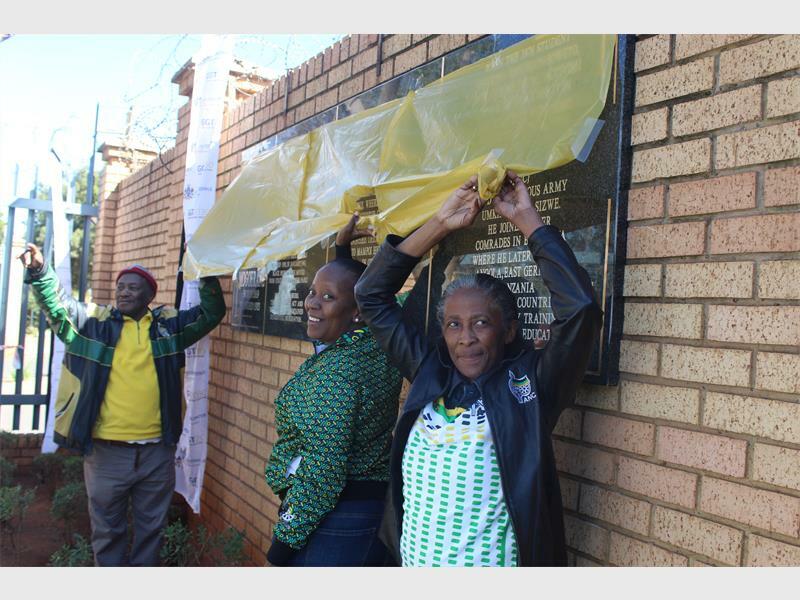
Thelle Mogoerane Regional Hospital boasts a new plaque with a photograph of the Vosloorus liberation struggle soldier Thelle Simon Mogoerane and his biography.
This is part of commemorating the 40th year of his death. Anti-apartheid soldiers Mogoerane along with Jerry Mosololi and Marcus Motaung were hanged on June 9, 1983 for attacks on apartheid-era South African police stations.
They unveiled the plaque in the presence of the Mogoerane family near the entrance inside the hospital premises on June 10.
Family members included Thelle’s son Tshepo Simon, brothers Toffee ‘Harare’ and Thabang, sister Mathapelo ‘Nthoroane’, Thandeka Mogoerane, cousins and grandchildren.
The family appreciated continued efforts to remember and celebrate Thelle.
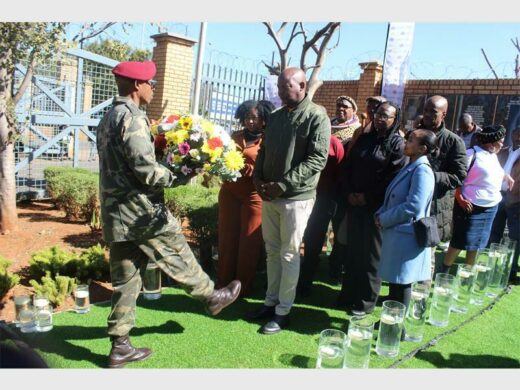
Toffee said it was not a mistake that they honoured him because it was about his impact on South African society.
He thanked the government under former Gauteng premier David Makhura for honouring him by naming an institution of this magnitude after him.
“The person who made sure that we are here today is Thelle. We are taking ourselves back 40 years when the racist apartheid regime took his life at the age of 24,” said Toffee.
He said at 17, Thelle was already conscious of the political situation in the country and the oppression that black people were going through.
“At some point, when he was 15, he was travelling to Pretoria with my aunt. He asked how it was possible that the back of the train had only blacks and was overcrowded, while the front portion of the coaches had only white people who were few.
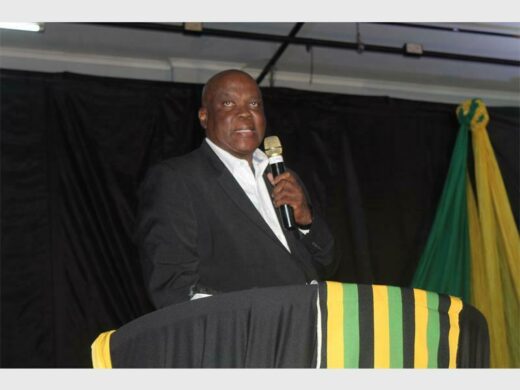
“He could not understand how we got to that situation, whereas we were all South Africans. Those are some things that made him see the situation of the country. He did not understand how we, as black people, were so many yet being oppressed by few people.”
Toffee said Thelle wrote a placard saying ‘away with oppression’, and ‘away with Afrikaans’ because police were killing black people.
Then he felt it was time for him to leave the country to join Umkhonto We Sizwe, the military arm of the ANC, at the age of 17.
“You can imagine when we received the message from friends saying Thelle has left the country, we as a family became worried. Parents are asking themselves, where is this young man? What is he doing? How safe is he? And what is he eating?
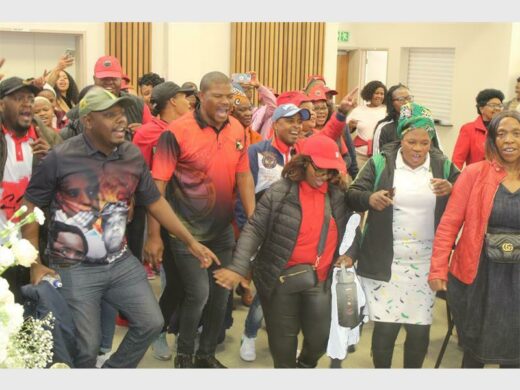
“He was still a teenager whose parents did not understand. No one knew where he was,” Toffee explained.
“When he joined the ANC, he could choose to further his studies or become a soldier. He wanted to become a soldier, determined to fight the apartheid system and help liberate our people.
“He took a conscious decision clearly and soberly, not under any influence. He understood what he was doing. As much as many young South Africans went into exile, they did not expect to die, but they knew that death is there irrespective of whether you are in or outside the country.”
He said the family ultimately understood that he was with other young stars from different parts of the country, but they did not know exactly where he was. Only in 1979, when he visited them, they could see him.
“We were surprised. We did not believe we would see him. On an early Saturday morning, he knocked on our door. Fortunately, I was the one opening the door. I could not believe it. I could not even recognize him.
“We were so happy to see him. It was good spending the whole week with him. When my mother asked him where he was, he said he was on leave because my mother did not understand,” he said.
Toffee explained that for safety reasons, he could not talk to them. He could not say why he was there and what he was doing.
It was only on Monday when Thelle was playing jazz records that he realised he had a scar and placed a cotton wool on it.
“I became worried. I was anxious to know what was going on, but he could not tell me. He assured me it was a minor thing. Only later, I found it was during one of their operations when he got injured at a fence at one police station. I think it was Orlando police station.”
He said the last time the family saw Thelle was when he left. The family read in the Afrikaans news on a Friday that Thelle, Motaung and Mosolodi would appear in court without the family being informed about their arrest.
“We only learnt about their arrest from the television. The following day on Saturday, one of my late friends, Sammy Sekgole, had a newspaper where we read about Thelle’s arrest.”
The family went to court until the last day, which was on August 6, 1982. According to Toffee, a racist white judge sentenced them to hell.
“Thelle and his friends knew what they did and prepared for this. It was not by mistake for them to be part of the operations.”
Chairperson of the TMRH board Thandeka said this day is about a dream that one man had that his people and country would be free.
“As a young black female in a senior management position at the hospital board, I am grateful for the fruits of the labour nourished by the blood, sweat and tears of comrades who sacrificed their lives and were executed by the apartheid regime for us to live this life,” said Thandeka.
Tshepo said he was grateful for the event because he did not know his father.
“I am very grateful that he lived his life the way he did – as an exemplary way of saying this is how young men should fight,” said Tshepo.
The two-day commemoration organised by Vuka Heritage, Cultural Research Foundation and other local fraternal structures started on June 9, with a visit to the Kgosi Mampuru Prison (then known as Pretoria Central Prison) where the Moroka three (Thelle, Marucs Thabo Motaung from Dube, Soweto and Jerry Semano Mosololi from Diepkloof, Soweto) were detained.
It followed a visit to Mamelodi Cemetery, Pretoria, where the Moroka three were buried side by side in 1983.
It concluded with the unveiling of the plaque and a march to the Vosloorus Civic Centre where the commander of the G5, Lieutenant General Solly Shoke, gave a keynote address.