Bloemendal open cast coal mine poses threat to Blesbokspruit and Marievale Bird Sanctuary
Coal demand is not increasing but decreasing over the years because of installation of renewable energy power generation. This applies for export coal as well.
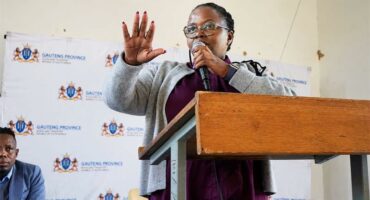
A public participation meeting regarding the proposed Bloemendal coal mine (an open cast coal mine planned in the middle of an agricultural hub for the Gauteng province) was held at Endicott/ Vischkuil Community Centre on July 10.
The meeting was organised by Enviro-Insight as part of the Environmental Impact Assessment (EIA) process by discussing the Draft Scoping Report (DSR) and obtaining comments and questions from the interested and affected parties. Submission of written comments on this report had already closed on June 28.
In its presentation, Enviro-Insight highlighted some important factors in the DSR, in an attempt to resolve and highlight outstanding issues. Before the presentation started, members of the public raised the issue whether questions should be handled during the presentation or thereafter. It was decided to do this after the presentation. Also before the presentation started the point was raised that many applications for coal mining rights in the area took place over the preceding years, and every time one has to go through the time consuming process of the EIA, while former applications have been rejected.
It was also mentioned that the company Totapix applied to the DMR (Department of Mineral Affairs) for the prospecting rights, which was accepted by the DMR on June 7.
Compilation of the draft scoping report commenced on April 7 and is said to be submitted for review by authorities and finalised not later than August.
The actual EIA phase than takes place from September until December, whereby alternatives may be considered and evaluated before the go-ahead is given. A decision and appeal process would then take place over the next 107 days. The total duration of the process is 300 days from start of the application of prospecting approval by Department of Mineral Affairs (DMR) that was May 21 for this project.
Any environmental assessment or draft scoping report starts from a baseline environmental state. In this regard a grading (from high to low) is given of the estimated impact. Specialist studies also have to be conducted on among others, the impact on the agricultural potential and food security and a study for an integrated water use licence application in context of the National Water Act (IWULA-NWA).
Draft scoping reports are available at Nigel and Endicott/Vischkuil library. The presentation was followed by a questions-and-answer session. Members of the public commented that the coal quantity per annum of 26 Mta was considered high. Enviro-Insight admitted that this was a mistake and needs to be altered to 26 Mt (Run of the mine coal = coal not beneficiated yet) in total over 20 years for phase 1.
It was mentioned that more information should be given about the exact figures of employment that is thought to be created by this mine. The issue regarding boreholes raised questions on what consequences it will have in the long run on the water table.
Other questions raised by concerned members of the public among which many from Heidelberg and Nigel were: “what will the additional impact be on the road and infrastructure by the extra coal trucks on the road? There is already evidence now that these items are degrading. What will the lasting impact of this mine be on agriculture and nature reserves in this area?
A concerned Heidelberg resident told HERAUT that the rehabilitation of mines is often neglected and contamination of ground water with acid water takes place.
“Examples are recent coal mines established in the Witbank area,” he said.
Many comments were also made during the meeting about the actual need for the coal. There is doubt that the coal quality is good enough to serve as export coal. There is no real clarity or insight how urgent Eskom needs this coal.
“Is the supply from the present mines not enough?”
Some people commented that the impact of Bloemendal Coal Mine on local employment and agriculture would be severe and that many people including farmers and secondary dependable industries would lose their livelihood income, work and future.
Farming in the area was described as great because it established itself over many generations. Additionally the farming land which will be affected, has great potential for further development such as export of biomass from soya beans.
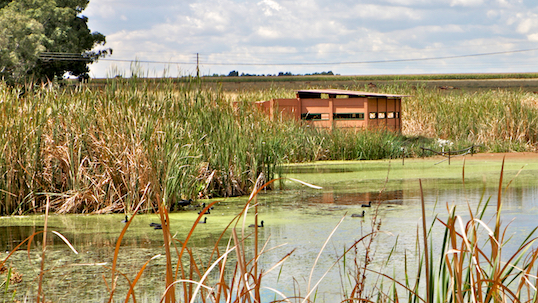
Other comments included the effect of an open cast coal mine on tourism in the area. Highly protected nature areas like the Blesbokspruit and the Marievale Bird Sanctuary would also be negatively affected.
Several answers were provided by representatives of the relevant local municipalities.
The meeting was closed and members of the public ensured that all comments were duly noted and that it will be dealt with in an appropriate manner.
Follow us on: