Shongweni’s Sibonelo Khwela eyes historic Dusi K2 victory
Shongweni paddler Sibonelo Khwela and partner Msawenkosi Mtolo aim to make history at the Dusi Canoe Marathon.
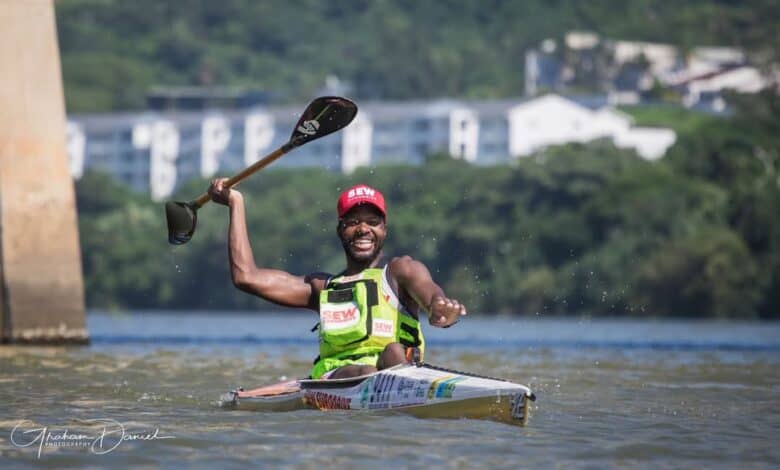
SHONGWENI resident Sibonelo Khwela always takes pride in being part of the starting line at the Dusi Canoe Marathon.
“Standing there fills me with excitement. It is an achievement on its own.”
Khwela and his partner Msawenkosi Mtolo are aiming to become the first black paddlers to win the Dusi Canoe Marathon (K2) this weekend.
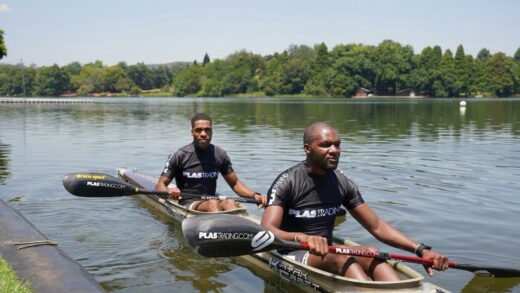
Canoeing has long been a sport dominated by white athletes, and Khwela said black athletes are slowly coming through and shining in the sport.
He said his journey began in 2005.
“I was playing soccer when a club called uMzinyathi Canoe Club started looking for young black athletes to train and develop at Shongweni Dam. Luckily, I was one of the young people selected. That is where I was introduced to canoeing and first heard about the Dusi.”
At the club, Khwela learnt of Thulani Mbanjwa, who had been competing in the Dusi for many years and said he was inspired by him.
“In 2006, during my first Dusi, I watched him compete for first place with his partner, leading for three consecutive days. I was amazed. That performance inspired me deeply.”
Also read: Durban mothers launch global campaign after superyacht tragedy
Recalling his first Dusi racing experience, Khwela said he went into it with very little knowledge.
“I knew it was a three-day race, but I did not understand the true challenges. Still, I enjoyed every moment, and from that day, I never looked back. After finishing school, I focused fully on canoeing because my parents could not afford further education.”
Growing up near Shongweni Dam, Khwela said soccer was the only sport available.
“I come from a big family, in my home there are almost 25 people, including aunts, uncles, siblings and cousins. My dream was to finish school and help support my family.
“Many people did not understand why I left home carrying a paddle. They thought it was a waste of time and did not believe canoeing could be a profession.”
He revealed that one of his biggest challenges was losing his father at a young age.
“He was a taxi owner and was shot when I was only seven years old, and I never truly knew him. I did not always have support in my sport, and at times I felt frustrated and full of doubt.”
Inspiration runs deep
Things began to change for Khwela when Martin Dreyer introduced the Change a Life Academy in 2008.
“I was one of 10 athletes selected. He provided us with proper equipment and the opportunity to train at a high-performance level in Cato Ridge. The programme was sponsored, and it gave me hope.”
In 2009, Khwela achieved his first top 10 finish at the Dusi.
“Martin supported me professionally when I had stepped away from school, and I will always be grateful.”
His proudest moment came in 2014 when he won the Dusi with Andrew Birkett.
“Andrew was already a Dusi champion with two titles under his name. Winning alongside him was a dream come true. That partnership shaped me into the person and athlete I am today.”
According to Khwela, the Dusi is different from any other race. It is 120km over three days.
Also read: Northdene couple raring to go ahead of Dusi Canoe Marathon
“You paddle hard on the river, then carry your boat up and down steep mountains during the portages. It is one of the toughest and most unique races in the world. Training is intense, four full months, twice a day. You must pace yourself carefully and conquer each day strategically,” he advised.
Today, Khwela said he mentors young athletes who look up to him, not only in the Dusi but also in sprint canoeing, where some travel overseas to compete.
“Athletes like Bongani Ntinga and Sandile Mtolo, who finished third in the Dusi K2 last year, are doing very well. I help where I can with training programmes and equipment. Most of my equipment is sponsored, and when I can, I pass it on to young athletes who need it.”
Asked what changes he would love to see in the Dusi and sport in general, Khwela said he would love for more black athletes to receive support and sponsorship.
“Sponsorship brings income, stability, and opportunity. Education is also important. Although I have Grade 12 and have completed short courses, I believe education remains vital.”
He credits his success to the many people who have supported him though the years.
“My mother was my first supporter, even though she did not fully understand the sport. Martin Dreyer supported me professionally at a critical time. I also have close supporters like Cliff Bridge who continue to help me, and my wife has believed in me for the longest time. Today, my family fully understands and supports my journey.”
He added that sponsorship and community support are vital.
“Instead of criticising young people, we should encourage them. Without opportunity, many talented young athletes may fall into drugs, alcohol, or crime. Sport is a powerful tool that shapes young lives. It teaches discipline, patience, and focus. It moves young people away from negative influences.
“My message to businesses, especially in townships, is for them to invest in young people through sport. Sponsor them. Support them. Help shape their futures. Sport can change lives. I am living proof.”
For more from the Highway Mail, follow us on Facebook , X and Instagram. You can also check out our videos on our YouTube channel or follow us on TikTok.
Click to subscribe to our newsletter here