Sophisticated criminal networks behind human trafficking in SA
Authorities say Ethiopians and Somalis entering the country illegally blurs the line between trafficking and irregular migration.

SOPHISTICATED criminal networks involving international syndicates are among the concerns raised by authorities investigating the crimes of trafficking in persons in South Africa, with prosecutors noting that cases before courts are “becoming bigger”.
By bigger, senior Advocate at the National Prosecuting Authority (NPA) Carina Coetzee, who is also the co-chair of the National Intersectoral Committee on Trafficking in Persons (NICTIP), explained that this means more accused persons being prosecuted, with an increase in the number of victims rescued.
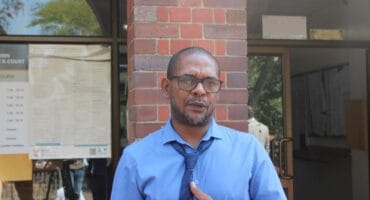
The Deputy Director General (DDG) at the Department of Justice (DoJ), Lucky Charles Mohalaba, who co-chairs the NICTIP, said the sophistication includes the use of technology to lure victims. Mohalaba added that the criminal networks behind these crimes also involve hospitals responsible for the cultivation of human body parts.
Coetzee said though it is difficult to say whether the number of cases being prosecuted has increased or decreased over the years, the number of accused persons has gone up, citing figures for the 2025/26 financial year which saw 32 accused convicted for 120 charges of trafficking in persons (TIP), which include sexual exploitation, forced labour, slavery, servitude, adoption, forced marriage, removal of body parts, and others.
These cases, said Coetzee, involved more than 130 victims, with 25 of them being children.
“We are also trying to follow the money so that we can try to arrest as many perpetrators who are involved,” said Coetzee.
Mohalaba said it has been noted that in Sub-Saharan Africa, a number of victims of human trafficking end up in forced labour or being sexually exploited.
Cases of the sexual exploitation of trafficked persons have also been recorded in South Africa, said Mohalaba.
He added that it has been observed that some of these victims are part of Ethiopian or Somali migrants who usually come into South Africa in large groups pursuing employment offers despite not possessing work visas, or having entered the country irregularly. These groups, he added, are usually kept at premises for long periods of time and allowed a few moments out in the public.
Mohalaba said one of the challenges that arise when some of these victims are rescued, or captured by authorities, is that when interrogated, they give responses which suggest they have been coached to say they came to South Africa looking for opportunities.
This, he added, makes it difficult to investigate cases of human trafficking and so authorities end up reverting to irregular migration when such instances unfold.
Also read: Human trafficking and deceptive recruitment: What can be done?
“That is why awareness is extremely important,” said Mohalaba.
He added that raising awareness on human trafficking is one of the goals of the Prevention and Combating of Trafficking in Persons Act (PACOTIPA), the signing of which by the president, he said, was a step in the right direction for the country to comply with international obligations.
Mohalaba explained that the Act was put in place to define what constitutes an act of human trafficking, which includes deceptive recruitment, using various modes of transport to move victims and keeping people at a premises for long periods of time or harbouring.
With the month of October used to raise awareness on human trafficking in South Africa, Mohalaba said this was also a time to celebrate the survivors and “reflect” on the victims who did not make it or were left “scarred”.
The government, added Mohalaba, is working with civil society organisations, NGOs and other stakeholders across the country to raise awareness on human trafficking.
Coetzee said under the Act, victims of human trafficking who are forced into criminality, including being drug mules or working at a scamming compound, are not punished or prosecuted for these offences.
The Act, she added, also criminalises the failure to report human trafficking.
“If you are harbouring someone you suspect is a victim of human trafficking, you have a duty to report this because a failure to do so could result with you being held liable,” said Coetzee.
The Act also allows for corporate bodies to be prosecuted, said Coetzee.
Coetzee and Mohalaba reiterated that members of the public should be wary of deceptive recruitment methods and know all there is to know about countries abroad where work opportunities are made available to them.
For more from the Highway Mail, follow us on Facebook , X and Instagram. You can also check out our videos on our YouTube channel or follow us on TikTok.
Click to subscribe to our newsletter here