
No lights, no police work at Sebenza SAPS
Police minister Nathi Nhleko announced that government was in the process of rolling out back-up generators to police stations across several provinces
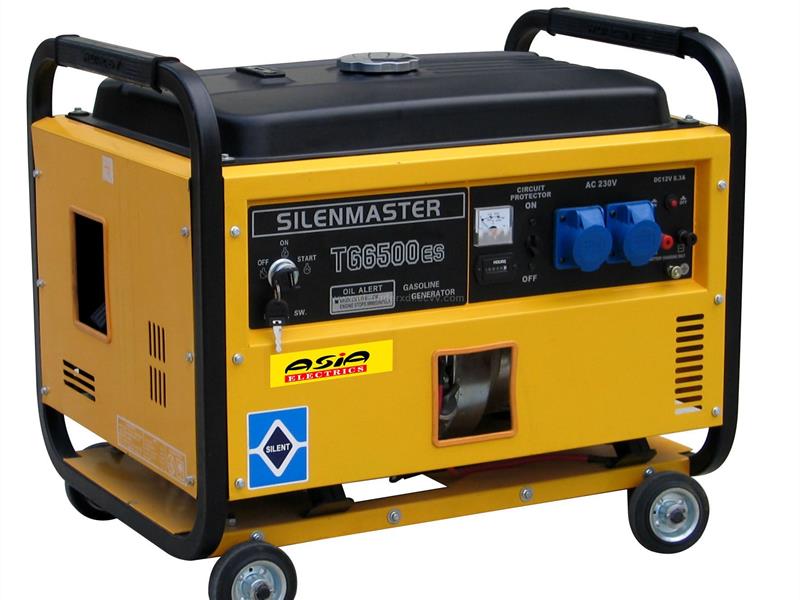
ONLY two of Kempton Park’s police stations have generators, meaning they are not affected by Eskom’s nationwide load shedding.
Sebenza SAPS, on the other hand, is not so lucky.
The police station faces constant struggles during times when load shedding is implemented as the public facility has no generator to use as back-up.
Unlike Kempton and Norkem SAPS offices, whose generators kick-in moments after load shedding starts, the Sebenza SAPS offices basically shut down.
This is because almost all of the ‘essentials’s work with power, including computers and telephones.
It also means dockets for opened cases can’t be logged onto the police station’s system and phone calls can’t be made because phones are offline.
“We are basically forced to do everything manually when there is no electricity, which then becomes extra work because when the power is back on, we have to log all that information onto the computers,” Sharon Tsotsotso, the station’s spokesperson, said.
“We therefore struggle to trace dockets and it takes even longer to register case numbers. And with the computers being down, it also means we don’t have access to our emails.”
But luckily, Tsotsotso said, a generator might finally be installed during the process of the station’s renovations, which are currently underway.
This comes after police minister Nathi Nhleko announced that government is in the process of rolling out back-up generators to police stations across several provinces to prevent power disruptions, which leads to stations being unable to function effectively.
According to a statement released by the government’s news agency, Nhleko was responding to Parliamentary questions submitted for written reply regarding the impact of load shedding on the ability of the SAPS to efficiently provide services for the community.
“The SAPS is in the process of putting out a tender for the procurement of mobile back-up generators to be distributed by the provinces as and where the need arises,” Nhleko elaborated.
“The National Department of Public Works has been requested to register projects for the provisioning of generators at the non-devolved police stations.”
He said funding had been made available for the 2015/ 2016 financial year and all devolved police stations without generators would be provided with a generator by the end of the current financial year.
During the past few years, Eskom has been implementing load shedding due to, among other things, a shortage in generating capacity versus an increasing demand for energy.
In December last year, cabinet announced the establishment of an energy “war room”, in which an inter-ministerial committee – led by deputy president Cyril Ramaphosa – looked at short, medium to long-term solutions to tackle the electricity challenges.
Amongst these solutions, the war room would also look at alternative energy sources to help take the pressure off the power grid.
Nhleko said in his Parliamentary reply that police were also looking at alternative ways of generating electricity, such as including solar perimeter lighting in all renewal and new generator and electrical maintenance contracts.
Five devolved police stations in the Eastern Cape, the Afsondering, Katkop, Lukholweni, Mbizeni and Zamuxolo police stations, are fully dependent on solar power.
Nhleko expressed that load shedding had an adverse effect on service delivery – from affecting the registration of case dockets to a huge security risk posed to detainees in holding cells.
According to Nhleko, not all of the country’s 1140 fully fledged police stations had generators.
“Of the 1 140 police stations, 197 do not have generators. Of the 197 police stations, 184 police stations are non-devolved police stations, which is the responsibility of (the Department of Public Works) and 13 are devolved, which is the responsibility of the SAPS,” he said.
In his recent address to Parliament, president Jacob Zuma said government had completed a medium term outlook model for the supply and demand of electricity.
He said that to increase supply, Eskom was implementing a structured planned maintenance programme to ensure the availability of all power stations is improved.
“Eskom has also commissioned the supply of 100 Megawatts from the Sere Wind Farm in the Western Cape, while 827 Megawatts of cogeneration contracts have been signed, adding much needed capacity,” Zuma said.
“It must be noted that Eskom added 160 000 households to the electricity grid in the past financial year, which added to the demand of electricity.”