
The IMFO’s first woman president
As the president of the organisation, her duties include leading the board by facilitating the effective contribution of the board to all directors and promoting effective and constructive relations between the board and management.
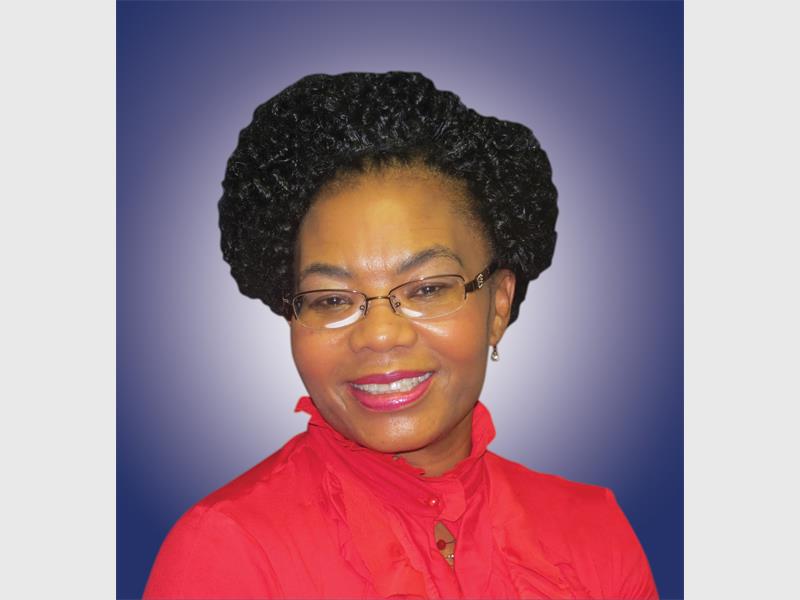
Ms Jane Masite is the president of the Institute of Municipal Finance Officers (IMFO), a professional body established in 1929 with the objective of developing and promoting municipal finance practitioners.
The IMFO provides effective advice in putting in the development, setting and maintenance of high financial standards and controls in public finance and governance, at various levels of government and its stakeholders.
The IMFO head office is in Kempton Park.
Ms Masite holds a Bcom, Chartered Internal Auditor, Certified Fraud Examiner and External Quality Assurer (IIA) qualifications. She is not only the president of the IMFO, but also the Deputy Municipal Manager: Internal Audit at Emfuleni Local Municipality.
As the president of the organisation, her duties include leading the board by facilitating the effective contribution of the board to all directors and promoting effective and constructive relations between the board and management.
“I chair and lead board meetings as well as the annual general meeting of the IMFO. I am the primary spokesperson for the IMFO at all levels. I also represent the views of the IMFO to members, the general public, governmental authorities, regulators and other stakeholders. I develop and maintain key strategic relationships with stakeholders,” she said.
Ms Masite pointed out that over the years the mandate of the organisation has changed to incorporate the promotion of the finance and other governance practitioners in risk management, internal audit and performance management in the public sector.
“I joined the IMFO 15 years ago. The passion for local government finance and related professions, being auditing, risk and performance management, drove me to the IMFO,” she said.
When asked what a typical day on the job looks like, Ms Masite said there was no such thing as a typical day.
“My role as a deputy municipal manager involves a lot of multi-tasking and strategising, so what I do from one day to the next can be very different,” she said.
“My typical day is all about my full-time job, so I spend most of my time strategising for the internal audit assignments and providing reasonable assurance to management on the internal controls environment. I also try to devote time to mentoring my subordinate teams and spending time in management meetings. However, as president, I also have to commit some of my days and a few hours for IMFO work, which includes reviews of meeting agendas, minutes and other critical issues which need presidential attention.”
In the next five years, Ms Masite sees herself as the CEO or chairperson of a listed company.
“I would also like to establish an institution that will aim to mentor young women and the youth in order for them to take the batons from us,” she said.
As a female president, the challenge Ms Masite faces at the IMFO is growing the institute.
“The challenge is scaling the membership to deliver some really challenging year-on-year growth targets set for the next years, while still maintaining the spirit that launched our business, preserving the aim and not losing the magic that makes the IMFO special,” she said.
“The institute has grown to a size where it is imperative to have standardised and repeatable processes in place to operationally enable us to manage ‘business as usual’ effectively and efficiently in the public sector. At the same time, we need to be ready to respond quickly to new and exciting initiatives from members, thereby fostering the benefits of sharing knowledge and the know-how,” she said.
In her spare time, she loves reading and watching movies.
Ms Masite said black women employed in top positions were faced with challenges such as fear of failure, being criticised on all levels, the ‘pulling-down’ syndrome from other women in the related market, working harder than their male counterparts and emotional loneliness.
She pointed out that the female presence in leadership was considered complementary.
“It is valued for the nurturing and caring traits required in team-based structures and pursuing the ‘support roles’ in first-line management responsibilities,” she said.
“Historically black women are caged by the chains of society, that they are more inclined to rather pursue ‘support roles’ than first-line management roles.”
Ms Masite said she definitely thought South Africa was ready for a female president.
“Yes, of course. We do have capable and powerful women cadres who went through the ranks who can become president. Gender remains a defining dimension of modern organisations. Women, however, are true professionals with high self-esteem and the will to survive the changes required in the future; our government is sincerely calling for gender equality at the top,” she said.