
New-look power alerts on television
If the dial is in the black zone, load shedding has been implemented somewhere
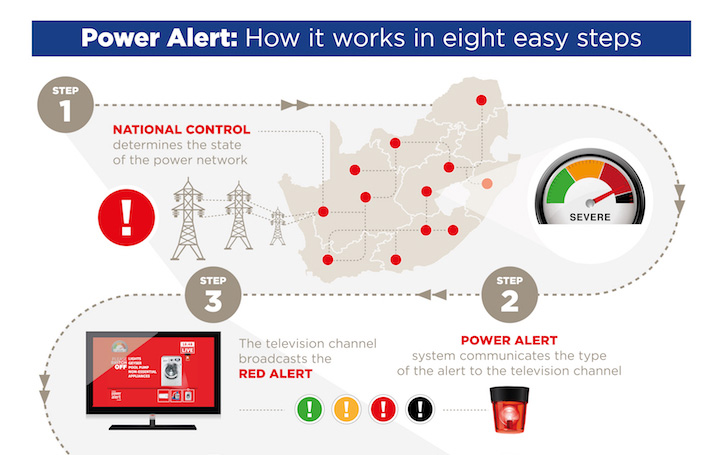
HOUSEHOLDS which have been switching off geysers, pool pumps and non-essential appliances and lights between 5pm and 9pm weekdays in response to power alerts are the reason for the remarkable success of the power alert system since inception in 2006.
With power alerts forming part of Eskom’s strategic commitment to keep on communicating with its customers about the current state of the power system, consumer research has shown that the messages need to be refreshed and additional details added.
The new look power alerts have been broadcast on SABC 1, 2 and 3; eTV; MNet; Kyknet and Mzansi Magic since May 9.
The first new information element of the new-look power alerts is a clock that indicates the time when the alert is shown on television, and the word “live” below the clock. Just as in the event of live sports broadcasts, the word reminds households that a power alert reflects the status of the power grid in real time.
The second new information element is an indicator of how close we are to experiencing an electricity shortage. Looking like the temperature gauge in a car, the face of the indicator is an arched zone of four colours – beginning with green on the left, followed by orange, then red, and ending with black on the far right. A dial, moving from left to right across the arch, indicates the severity of demand pressure on the national power grid:

• Positioned in the middle of the green zone, the dial tells households that the electricity supply is stable. A green “Thank You” message is broadcast to acknowledge smart and efficient electricity use by households.
• Positioned on the edge of the green zone, just before moving into the orange zone, the dial tells households that the electricity supply is limited and very close to becoming strained; this represents a green alert: “Please switch off all unnecessary lights to prevent the electricity supply from becoming strained”.
• Positioned in the orange zone, the dial tells households that the electricity supply is strained and under pressure; this represents an orange alert: “Please switch off all unnecessary lights plus the geyser and pool pump to prevent the electricity supply from becoming severely under pressure”.
• Positioned in the red zone, the dial tells households that the electricity supply is severely under pressure; this represents a red alert: “Please switch off all unnecessary lights plus the geyser, pool pump and all other appliances to prevent load shedding”.
• Positioned in the black zone, the dial tells households that load shedding is occurring in certain areas in South Africa. The black alert urges households to switch off all unnecessary lights plus the geyser, pool pump and all other appliances to prevent load shedding from spreading to more areas in the country.
“Although we do not anticipate implementing load shedding this winter and beyond, Eskom urges households to use electricity sparingly at all times so that all of us can take responsibility for avoiding load shedding,” said Khulu Phasiwe, Eskom spokesperson.
“Moreover, energy efficiency goes beyond just avoiding load shedding; it is also about minimising your monthly electricity bill and reducing your carbon footprint at the same time.”
Phasiwe thanked all households who have so far reacted to alerts and helped to keep the power grid stable. He encouraged everybody to partner with Eskom to ensure security of power supply.