Cuban medical specialists arrive to assist Gauteng Health
The team are here to alleviate pressure in the Gauteng health sector for the next three years
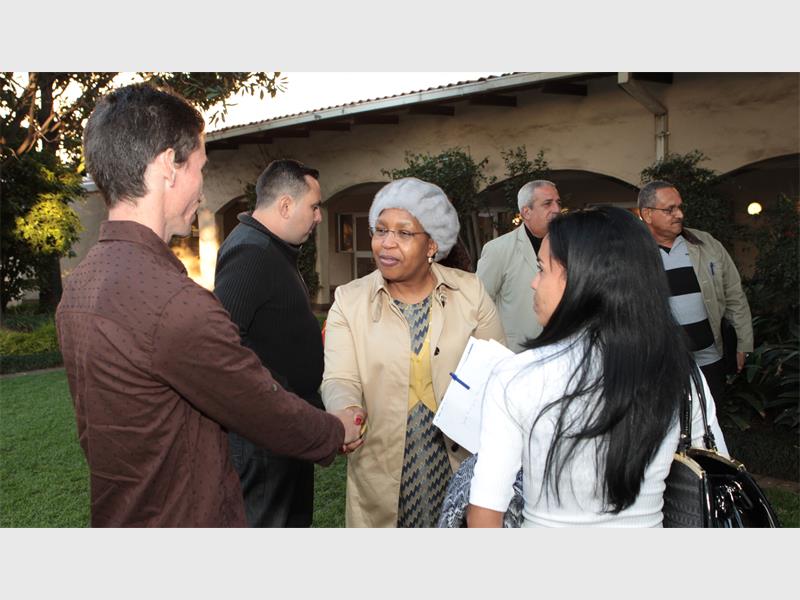
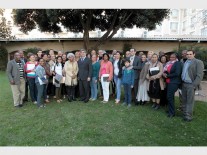
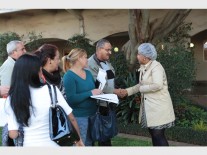
GAUTENG MEC for Health Qedani Mahlangu welcomed around 25 Cuban medical specialists, on Friday, at an induction ceremony held at the Garden Court Hotel, at OR Tambo International Airport.
The medical specialists will be here for the next three years.
They have been appointed by the department of health to assist with health care challenges in the province.
Gauteng Health Department spokesman Steve Mabona said the Cubans would be strategically placed at clinics across the province, to help reduce the pressure on tertiary institutions and to strengthen primary health care and ensure that quality health care is provided.
“The healthcare sector worldwide is experiencing a shortage of health professionals and the country has also seen a large number of professionals migrating to overseas countries, for better salary offers, therefore crippling the system,” he explained.
”This initiative is aimed at boosting the primary health care in the province, which is the first point of call for the majority of poor people who cannot afford private health care.”
The MEC started her welcome address by acknowledging the role Cubans played in South Africa during apartheid, especially in the health sector.
She said that new policies had been put in place post 1994, to transform the health system in the country into an integrated, sustainable and comprehensive national health system.
Despite these efforts and significant investment, the South African health sector is still confronted by key challenges.
These she said included the complex, quadruple burden of diseases, comprising HIV/AIDS and TB.
“HIV prevalence remains unacceptably high; 9.6 per cent of pregnant women between the ages 15 and 24 are HIV-positive. We are aware Cuba is doing well on this one and hope you are going to play a significant role in assisting us.”
Other challenges include high infant and maternal mortality rates, high levels of trauma resulting from injuries and violence, and non-communicable diseases.
Mahlangu said there were serious concerns about the overburdened public health care system.
“Your presence at our clinics should alleviate pressure at our hospitals, our people believe in consulting with medical practitioners; this partnership is crucial as a form of intervention,” she told the Cuban doctors.
Significant increases in and continually rising private health care costs was another major challenge she said was facing the health sector.
“The private sector is more bottom-line driven, their care for patients is sometimes questionable; it is not affordable to consult at private health facilities and this necessitates public sector attending to a majority of patients.”
Mahlangu emphasised that there was a staff shortage.
“We have a shortage of health professionals in South Africa. Twenty-five per cent of newly qualified undergraduate and postgraduate health professionals in South Africa do not enter the public health sector after qualification,” she added.
”There has been a notable trend for South African trained health professionals to migrate to overseas countries,including the UK, Canada, USA and the Middle East. We cannot overemphasise your presence and the responsibility bestowed on you.
“As you are aware, staff shortages result in work overload and ineffective health service delivery, which more often than not contributes to poor health outcomes and to public dissatisfaction.
”This is why we had recruited you to South Africa and Gauteng, to help alleviate the burden on our health sector.’
Mahlangu said the National Department of Health had identified a need to recruit health professionals from overseas countries, including Cuba, as well as recruiting South African health professionals working overseas back to the country.
“As Gauteng Health, we are on that path of changing the health sector,” she added.
She pointed out the language barrier challenge, but encouraged the Cubans, saying that with time they should adapt to the environment.
“As Cubans you have a history similar to ours, you bring with you not only your medical expertise, but a certain mind-set of social responsibility and selflessness.”
She said the department’s vision was to daily provide high quality, efficient and accessible healthcare to transform people’s lives, and also warned them about protests during election time.
“You come to South Africa when the country is preparing for local government elections. As with any elections we expect some electioneering and protests, however, this should be peaceful,” . Thus we repudiate the current violent protest as a means for political ends. We expect all this to quieten down within two months.”
“I invite you to be part of the solution in curbing our challenges in the health sector, don’t lose sight of why you are here. Make South Africa your home for the next three years. All work and no play makes Peter a dull boy. Enjoy our beautiful climate, natural resources, wild life and the bright light of Gauteng. Welcome to the Gauteng Department of Health.”