
Spring brings with it a ‘ring of fire’ solar eclipse
On September 1, the moon will pass in front of the sun
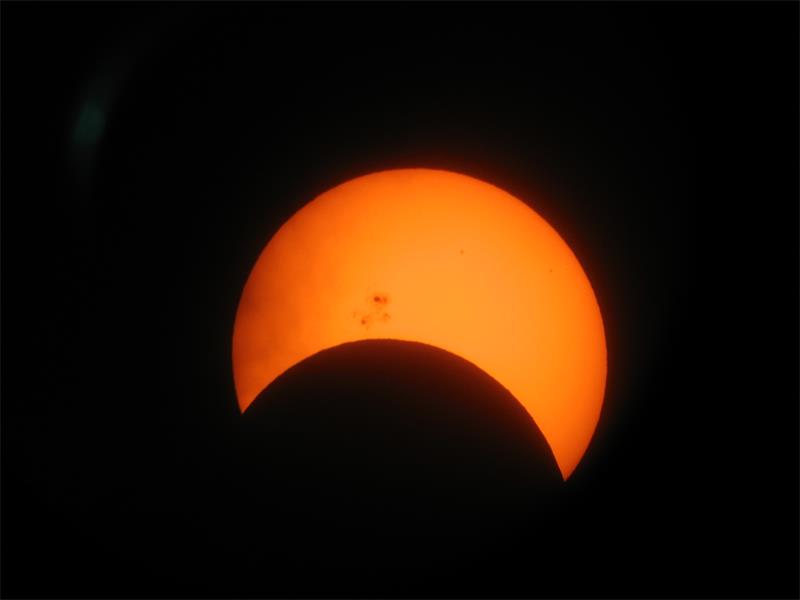
SPRING this year brings with it a “ring of fire” solar eclipse.
The eclipse on Thursday, September 1, will be best observed in Central Africa, especially Tanzania, and Madagaskar.
On September 1, the moon will pass in front of the sun, creating a brilliant ring of sunlight visible from areas around the southern Indian Ocean.

When the moon creates a ring of sunlight during an eclipse instead of completely blocking the solar disk, it’s known as an annular eclipse or “ring of fire” eclipse. And although the September 1 event won’t be a total eclipse of the sun (or of the heart), it will still be a stunning sight leading up to another annular eclipse in February 2017 and the total solar eclipse in August 2017.
For most viewers in Africa, the eclipse will be a partial solar eclipse. The annular phase of this solar eclipse will not be visible in Johannesburg but will be observed as a partial solar eclipse.
Solar eclipses occur when the moon comes between the Earth and the sun, lining up with the sun as seen by spectators on Earth. In a total solar eclipse, the moon lines up perfectly with the sun and blocks out all light. But in an annular eclipse, the moon doesn’t completely cover the sun; this is possible because the orbits of both the Earth and the moon are elliptical (that is, not perfectly circular).

As a result, the edges of the solar disk peek out from behind the shadow of the moon, leaving a ring of sunlight.
Every 18 months or so, there is one annular eclipse and one total solar eclipse somewhere on Earth. Eclipses don’t occur every time the moon passes between the Earth and the sun because the moon’s orbit is tilted about 5 degrees compared to the Earth’s orbit around the sun.
When the moon’s shadow crosses the sun but its centre doesn’t align exactly with the centre of the sun, it’s known as a partial solar eclipse – when the moon sits either a little too high or too low to totally cover the sun.