Human Rights Commission visits Tembisa Hospital
Arising allegations indicate that the provision of healthcare services at the hospital have been substandard
The South African Human Rights Commission (SAHRC) conducted a site inspection to the Tembisa Hospital on May 15 following allegations of the hospital’s failure to provide adequate healthcare services to the communities.
The SAHRC initiated this on-going investigation that has started on April 9, following media reports of patients being subjected to inhumane treatment at the hands of hospital staff.
Arising allegations indicate that the provision of healthcare services at the hospital have been substandard.
At the crux of the investigation are allegations that patients are made to sleep on the floor, there are unreasonable delays in providing healthcare services, there is a shortage of medication and qualified staff and patients are ill-treated.
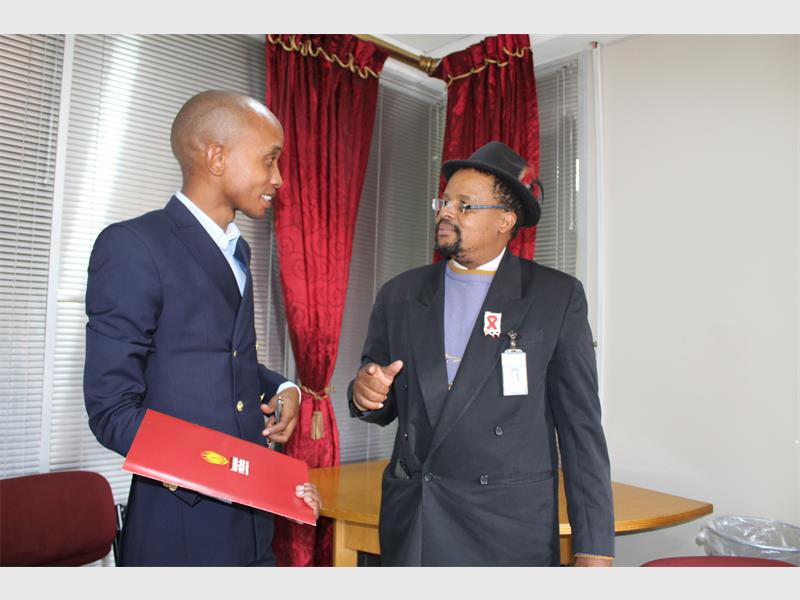
The commission’s Gauteng provincial office met with the hospital’s CEO Lekopane Mogaladi during the media briefing session whereby he addressed the delegation about the challenges faced by the hospital.
The right to access healthcare services is a fundamental right guaranteed by the Constitution and in light of this, the commission views all related violations in a serious light.
Mogaladi explained to the delegation that the hospital was experiencing overcrowding due to a shortage of beds and inadequate infrastructure.
“Our intervention regarding the issue of beds is that we are currently exploring the idea of purchasing foldable beds in the interim seeing that space is a challenge. We have also come up with an initiative to have an alternative building technology ward which will be a 24-hour bed ward of which we are currently engaging with a private donor, this will be a great initiative,” said Mogaladi.
Mogaladi added that Tembisa Hospital was built a long time ago from its establishment since 1972 with the sole purpose of servicing the then population of Tembisa not including foreign nationals, other people from Gauteng and from various provinces.
“Now the catchments area of Tembisa alone has grown with the establishment of new areas, but the hospital has not grown. Therefore, there are challenges with infrastructure seeing that the hospital services a very large population (estimated at 2.5 million people) however with limited space. Although the hospital is overburdened, we cannot however chase patients away. We have to respect their right to access healthcare services, and unfortunately, we find ourselves at a compromised situation,” explained Mogaladi.
He further said the ever-increasing burden of diseases is a contributing factor.
“Tembisa Hospital is regarded as a tertiary hospital (although not yet fully fledged), however with no district, nor regional hospital, therefore, has to see all the patients that could be seen at a regional or district level, therefore, resulting to overcrowding. The hospital is faced with a shortage of staff,” added Mogaladi.
Mogaladi said they are currently undergoing a management process regarding the filling of posts by the provincial office.
“We do not have a shortage of medication,” he said.
When asked how was the state of the hospital’s cleanliness following previous allegations that rats invaded the hospital, Mogaladi said although they have a shortage of cleaners, they are however doing their level best to keep the hospital clean at all times.
“The Environmental Health and Safety Unit and Infection Prevention and Control Unit ensure that proper assessment of cleaning is done and daily monitoring of the state of cleanliness in the hospital is done. We have fumigation services for pest and vector control to keep our environment clean at all times as a result, we did not have an invasion of rats,” added Mogaladi.