
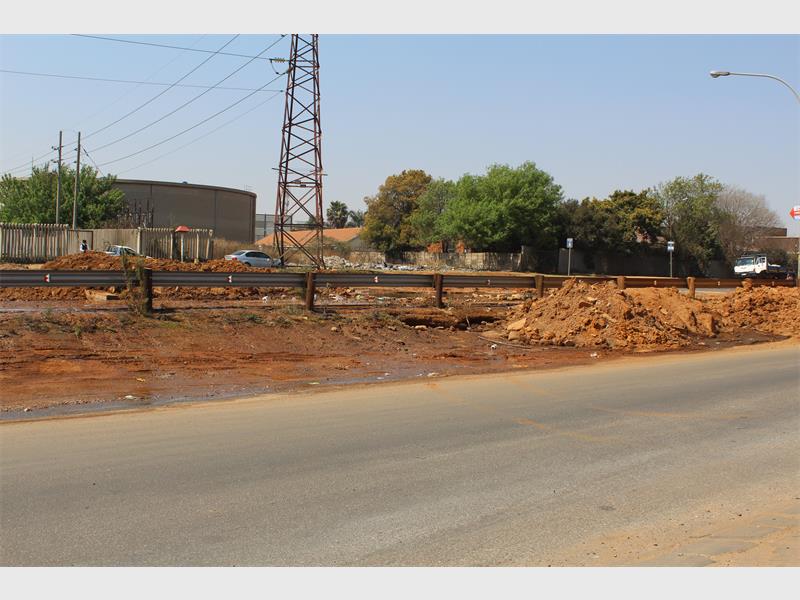
With an ageing water and sanitation network in Kempton Park, the City of Ekurhuleni has a mountain to climb to stay on top of things.
Kempton’s water pipes span 1 078km and its sewer pipes 962km, and all of them are old.
Ward councillor Jaco Terblanche recently met with the water and sanitation department regarding the recurring water pipe bursts in the city.
“Most of the water pipes are asbestos cement (AC) pipes, while the sewer lines comprise clay (vitro) pipes and most of the infrastructure was installed after 1950,” said Terblanche.
Also read:
• 500 water outages in Kempton in just one month
Some of the oldest pipes are in Isando (1960), Edleen (1965), Spartan (1965), Cresslawn (1965), Aston Manor (1967), Glen Marais (1967), Bonaero Park (1967), Kempton Park extensions (1967) and Croydon (1968).
“Over time, AC pipes undergo gradual degradation in the form of corrosion, for example, internal calcium leaching due to conveyed water or external leaching due to groundwater. Such leaching leads to the softening of the pipe which affects its mechanical strength,” Terblanche said.
AC pipes are nearing the end of their service life and an assessment is essential to determine their remaining lifespan. A proactive replacement plan should be developed, Terblanche added.
AC pipes’ projected life expectancy is 50-70 years but it depends on soil conditions, movement and root intrusion.
Another problem the metro faces, are the steel pipes which are mainly distribution lines. These lines supply large volumes of water to reservoirs and zone networks.
These pipes are subjected to erosion, especially near electrical lines and railway crossings and is difficult to repair as highly skilled welders are needed.
Areas in Kempton Park with steel pipes are Isando, the central business district, Kempton Park West, Chloorkop, Birchleigh, Birchleigh North, Cresslawn and Terenure.
Terblanche added: “The department also experiences a backlog with the maintenance of valves in the CBD and Isando. Most of these critical valves are covered with tar and pavements.”
The sewer pipe network, which poses another huge problem, comprises clay pipes which have a lower pressure tolerance.
“It is brittle and can easily crack and allow the intrusion of roots, which results in blockages.”
To solve this problem, Terblanche said, would require a capital project in the long term. A short term solution would be to target hot spots.
Population growth and development are also placing huge pressure on the existing networks. Bredell, for instance, was established as an agricultural area but today it also houses commercial and industrial activities.
The CBD, which was developed for house per stand, now deals with apartment blocks with 50 units on one such stand.
With the current roll-out of fibre in most suburbs, the metro has another problem to deal with as service providers damage the infrastructure.
“These providers work in an area without applying for way leaves, which results in damage to infrastructure and an interruption in service delivery,” Terblanche said.
Other elements which put unnecessary pressure on the sewer system are the illegal discharge of fats into the system by restaurants, industrial discharges and the dumping of foreign objects into the system.