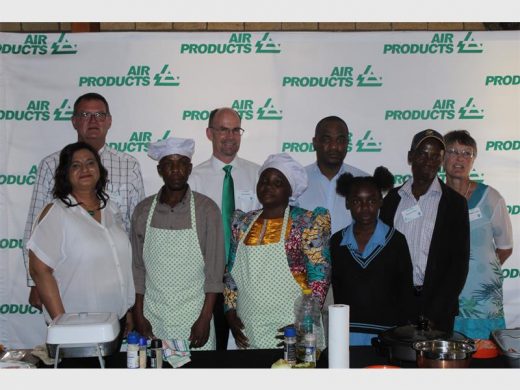
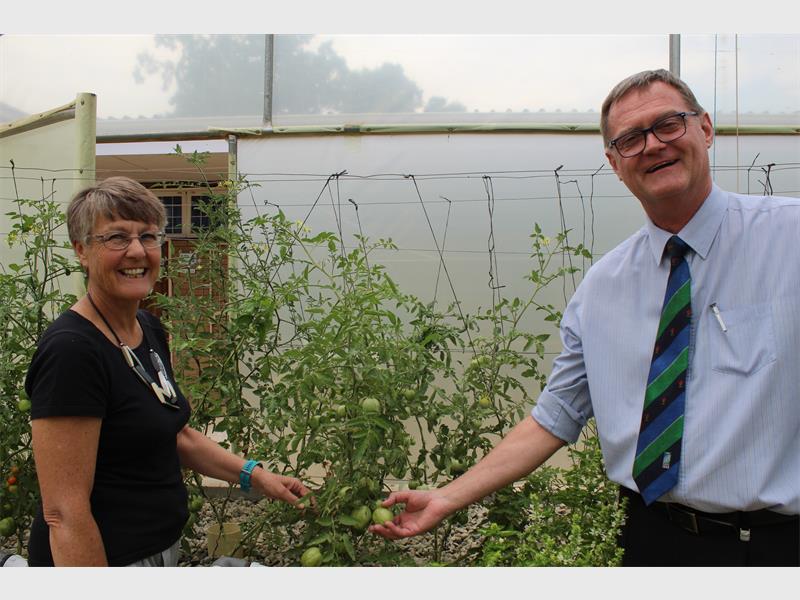
A green thumb partnership, led by INMED South Africa (SA) and Air Products SA, has seen the growth of a thriving aquaponics garden built two years ago at Laerskool Kempton Park in Rhodesfield.
This innovative adaptive-agriculture project at the full-service school is led by INMED SA and funded by Air Products SA. It has set the benchmark for introducing new technical skills, such as aquaponics in schools.
“Laerskool Kempton Park introduced aquaponics as a subject two years ago, following the installation of an aquaponics system by INMED SA in September 2017,” André Page, the school principal said.
He explained that the system not only offers an educational platform for learners across all grades to learn about adaptive agriculture, but also provides a sustainable supply of vegetables and fish for the school’s feeding scheme. The feeding scheme benefits numerous underprivileged learners with a supply of healthy food.
As a bonus to the aquaponics system, INMED SA included a traditional garden with a twist.
“Because some learners at Laerskool Kempton Park have learning challenges, we also installed a special sensory garden, featuring a barefoot walking path of various textures, water and sounds, fragrant fruit trees, brightly coloured plants and garden toys,” said INMED SA programmes director Unathi Sihlahla.
Page stated: “Teachers use the aquaponics system and the sensory garden as teaching tools and therapy for their learners. Aquaponics is not labour intensive, therefore children can assist with the planting and harvesting of the vegetables and herbs, provide care and feed the fish.”
Sihlahla described aquaponics as an agricultural technique adapted to climate change by fusing aquaculture and soil-less crop growing.
Rob Richardson, Air Products managing director, highlighted that this partnership has supported many other schools in addition to Laerskool Kempton Park.
“We place emphasis on making a difference, and more importantly in the current strained economy, we believe transferring skills and assisting communities to become self-sustainable has a socio-economic development advantage.”
Sihlahla paid tribute to Air Products for its continued support over the years and for taking the risk of investing in the then unknown field of aquaponics.
“Because of these programmes and partnerships, our organisation has been announced as one of three finalists for the Zayed Sustainability Prize in the food category. Over 2 000 organisations that are making an impact on sustainable development from 129 countries were nominated.”