
Electronic waste: take action now
South African communities and businesses are facing a growing environmental challenge of E-waste. What is E-waste all about ?
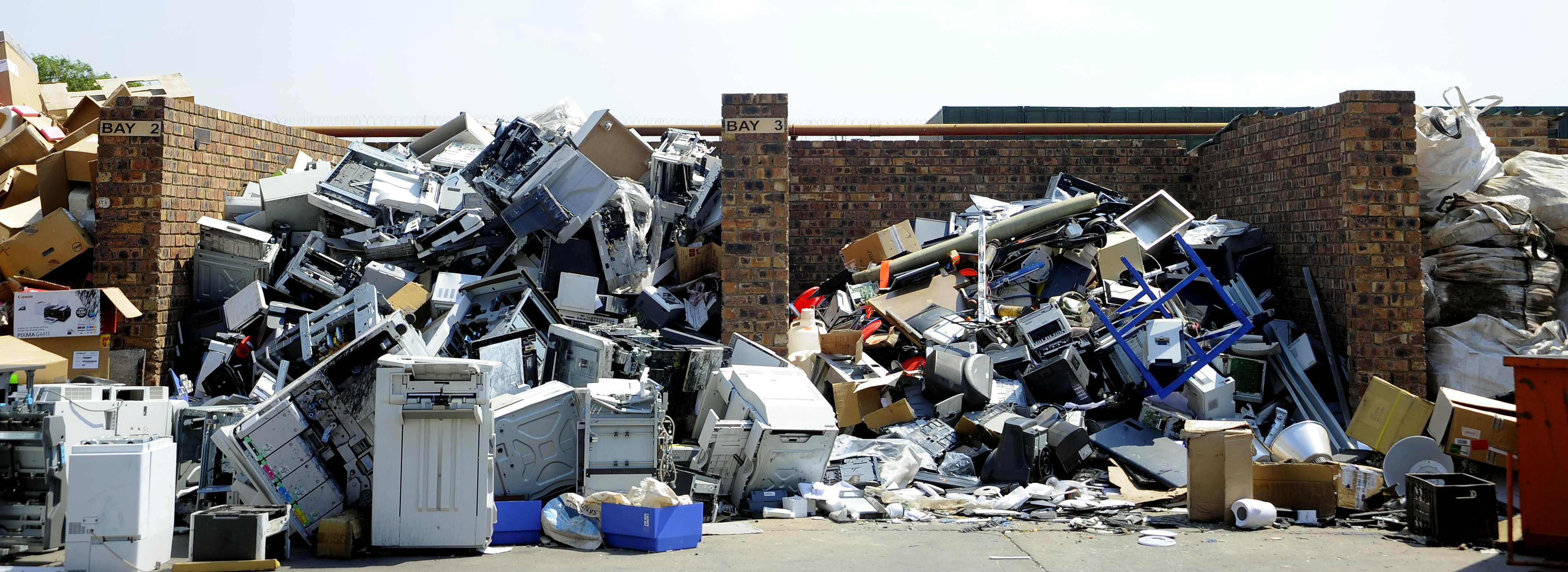
Electronic waste, or e-waste describes discarded electrical or electronic devices. As technology has become integral to our daily lives, so the amount of e-waste has exponentially increased, especially during the last 20 years. E-waste is considered the “fastest growing waste stream in the world” according to the World Economic Forum. In 2018, more than 50 million tonnes of E-waste was generated worldwide, equivalent to more than 4500 Eiffel Towers.
Little thought is given to where discarded electronics end up. The troubling part is that often electronics end up in landfills, exposing our already fragile environment to hazardous chemicals and volatile substances. Some of the most dangerous materials, according to the World Health Organisation include – cadmium, chromium, brominated flame retardants. Once these substances have entered the soil, it can take decades for them to disappear. Not only do these materials affect soil quality, but also surrounding water sources. Considering that South Africa is a water scarce country, more effort must be made to protect our most precious resource.
Keith Anderson, chairman of the e-Waste association of South Africa (EWASA) paints a grim picture, estimating that each South African citizen generates 6.2kg of e-waste per year. This equates to 360 000 tonnes of e-waste per year, a figure that the Department of Environmental affairs also corroborates. To put this figure into context – as South Africans we generate the weight of the Empire State Building in e-waste every single year.
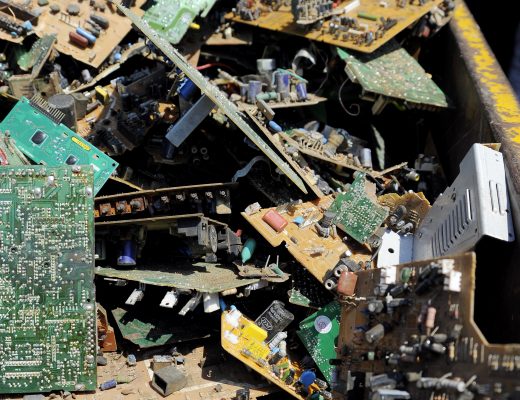
Below is a list of the major contributors to e-waste in South Africa*:
125 000 tonnes from large household appliances such as:
- Fridges, stoves, washing machines, tumble driers, air conditioners, stoves/ovens, DVD players, televisions, stereo speakers, cameras, safety equipment, etc.
78 000 tonnes from consumer equipment such as:
- Fax machines, phones, projectors, modems, photo copiers, cellphones, observation cameras, movement sensors, remote controls.
77 000 tonnes from IT equipment such as:
- PCs and servers, screens, keyboards and mouse, scanners and printers, headphones, ink cartridges, cables, etc.
40 000 tonnes from small household appliances like:
- Kettles and toasters, vacuum cleaners, compact florescent lamps, toasters and kettles, hairdryers, rechargeable batteries, microwaves, coffee machines, irons.
- While the range of products falling under the heading of e-waste is virtually unlimited, the break down above gives a good idea of the state of affairs when it comes to e-waste in South Africa.
E-waste has become a major concern to government, businesses, households and environmental activists simply because some electronic equipment and/or its components contain substances that are considered dangerous to the environment and human health if they are disposed of carelessly. Although these dangerous substances are usually only contained in small amounts, they have great potential for causing serious environmental damage.
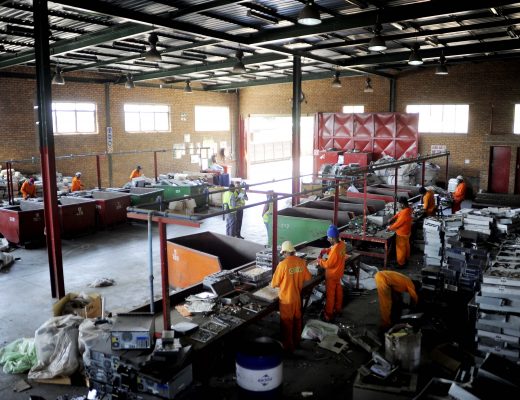
How does e-waste affect soil, water and air?
Soil
As soon as e-waste is dumped, it starts breaking down. Depending on the objects themselves, this could potentially leak many types of dangerous chemicals into the ground, among them – lead, arsenic, and cadmium. Plant life is affected, and depending on the environmental circumstances, could also enter the food supply. Once these chemicals are present in food, it can cause catastrophic health complications for the people consuming the tainted food.
Air
Increasingly, air quality around the world is becoming a concern shared by all. South Africa is home to many mines, and coal-powered power stations. Our air quality ranks among some of the worst in the world on some days. The ever-increasing flood of e-waste is further contributing to the decrease of our air quality. Often e-waste is burnt to retrieve metals such as copper, and steel, resulting in hydrocarbons being released into the air, adding to the ever-increasing threat of global warming, and resulting climate change.
Water
Of all resources, water is the most susceptible to pollutants found in e-waste. Chemicals such as lead, barium, and lithium can potentially enter water sources, turning our life giving resource into a dangerous and carcinogenic soup that can cause serious health complications. Products like compact fluorescent lamps (CFLs contain mercury which should be separated from other wastes in order to minimise the risk to groundwater.
E-waste affects every aspect of our lives, and those of future generations. Become a more active citizen, and think before you replace your electronics. When you do replace them, make a conscious effort to re-use, or recycle your old electronics. Desco provides end-to-end e-waste recycling solutions. Be part of the solution, and contact them today.
*(Source – Green Cape, Waste Economy, Market Intelligence Report)