Endangered frogs subject of new study in the Cape
Field experts at Bionerds have confirmed two new localities for the endangered Cape platanna expanding the known range for this acidic, black-water, specialist of the Cape lowlands.
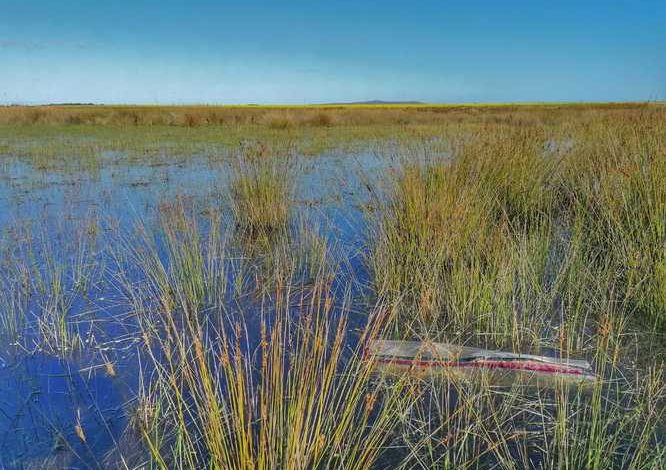
In a bid to better understand the distribution and threats facing several highly threatened and endemic amphibians, the Endangered Wildlife Trust’s (EWT) Threatened Amphibian Programme (TAP) recently launched a project in the Western Cape.
It focusing on five of the most range-restricted frogs of the region.
This work by the EWT, previously based in Modderfontein is done in partnership with the Bionerds, supported by the Whitley Fund for Nature and the Amphibian Survival Alliance.
Still in its infancy, this work has already yielded promising results by using distribution modelling and a survey technique developed by the EWT’s Conservation Science Unit. Field experts at Bionerds have confirmed two new localities for the endangered Cape platanna, expanding the known range for this acidic, black-water, specialist of the Cape lowlands.
ALSO READ:
CoE answers to calls about Bonaero Park sewage complaints
The project also includes the rough moss frog, the micro frog and the newly described moonlight mountain toadlet all of which are listed as critically endangered.
EWT has also included the endangered Cape platanna and Western leopard toad into survey work, as these often occur sympatrically with the micro frog. All are situated within the centre of endemism of the Cape floristic region, home to some of South Africa’s most unique and threatened frog species.
The rough moss frog has a tiny range of 0.9 km2, making it very vulnerable to threats such as alien and invasive plants and fire.
The distribution of the micro frog, occurring at just four localities across seven km2, is highly fragmented and impacted by urbanisation, agricultural expansion, the spread of alien vegetation and drainage of breeding habitats.
The distribution of the moonlight mountain toadlet is not well understood, although the proliferation of alien and invasive plants poses a severe threat to the species.
Urgent, targeted habitat protection and management at key sites will benefit all three species.
The broad project objectives are to:
1. Improve understanding of the distribution of each target species, and to quantify this.
2. Identify and quantify key threats to inform conservation actions.
3. Identify formal habitat protection mechanisms and initiate landowner engagement, to secure critical habitat for these species. Fieldwork started in late July, with field surveys being carried out on the Agulhas Plain for both the Cape platanna and the micro frog.
The surveys are based on the distribution models developed by the EWT.
Also follow us on: