
Let us celebrate the magnificent marine wildlife that can be found in False Bay.
This feature will highlight the mega predators of False Bay, their dependence on the bay and interconnectivity with other species within the bay. We will also talk about seasonality, the Bay’s unique aspects and any human impact facing these animals within the Bay.
Indeed if you look at the definition of a predator being , “an organism that lives by preying on other organisms“, then I would need several pages to merely scratch the tip of the ice berg as predators in False Bay are so abundant in so many forms. The bay is a veritable marine coliseum of combat and all that enter the bay must compete.
The bay’s honour’s list is impressive with a few worthy mentions being Africa’s largest island bound seal colony at Seal Island numbering over 60 000, Africa’s largest fixed land based penguin colony at Boulders Beach, one of South Africa’s largest cormorant breeding colonies on the Cliffs adjacent to Smitswinkel Bay and arguably along with Dyer Island and Mossel Bay the world’s greatest concentration of Great White Sharks.
Add to this a seasonal abundance of Southern Right Whales, a semi resident population of Brydes whales, migrating Humpbacks and other whales and an annual influx of at least 5 species of dolphin.
READ MORE: Shark Cage Diving Cape Town
Indeed one of the dolphin species, the Common Dolphin, sometimes form schools of over 1000 individuals. If this wasn’t enough there are also a multitude of marine bird species, including threatened species such as bank and crowned cormorants and African oyster catchers.
After winter storms the bay can be home to many open ocean birds including shearwaters, skua’s, petrels and occasionally albatross amongst others. Quite simply False Bay is a naturalist’s paradise. Seasonality and the ever changing tapestry of conditions plays a huge part in what predators are to be found in the bay at any one time and to understand this the bays mega fauna needs to be looked at during the different seasons. Certainly from the amount of press they receive Great White Sharks at Seal Island are the most talked about predators commonly encountered in False Bay in previous years.
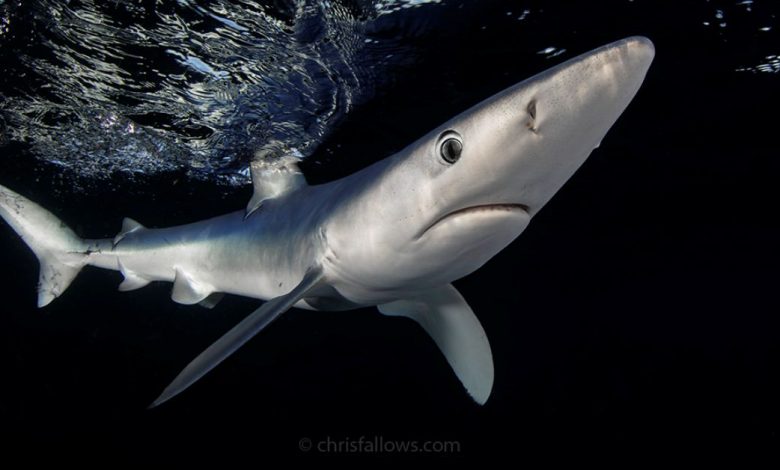
Due to the wide range of temperatures and habitats the bay attracts a vast array of large shark species from Ragged tooth, Bronze whalers, Hammerheads ,Sevengills and Common threshers to occasional visitors to the bays entrance such as Mako and Blue sharks. Less known but equally interesting are the small species such as the Puffadder and Brown Shy sharks as well as the Leopard and Striped cat sharks that usually hunt amongst the kelp.
All of these species are in fact endemic to the West and South coast of South Africa and Namibia. Slightly larger are the Spotted gulley, Black spot and White spot Smooth hound and Soup fin sharks which all congregate seasonally in different areas within the False Bay. Smooth hound and Soup fin sharks were up until the mid -nineties still abundant with massive schools numbering thousands of individuals being found in areas such as Wolfgat, Roman Rock , Black Rocks and Rocky Bank.
Sadly these sharks have been heavily fished particularly in the past two decades and now occur in far smaller numbers. Apart from the sevengill sharks the predominant reason the larger sharks come into False Bay in summer is to dine on the huge shoals of Sardine, Anchovy, Mullet, Maasbanker and Squid that routinely mass within the confines of the bay as well as feeding on larger bony fish and smaller sharks which also feed on the bait fish.
The 2,5-3,0m long seven gill cow sharks are primarily scavengers and will feed on a range of prey from molluscs, crustaceans and small fish to scavenging seal carcasses. Indeed these prehistoric looking sharks are truly the masters of their kelp forested world and are rightfully now becoming a major diving attraction in the Seal Island area.
The popularity for divers to see these sharks alive once again highlights the value of non- consumptive uses of our shark resources.
You might also be interested in: Unique Bush and Beach Holiday Destinations in South Africa